Our Favorite Patagonia Hike

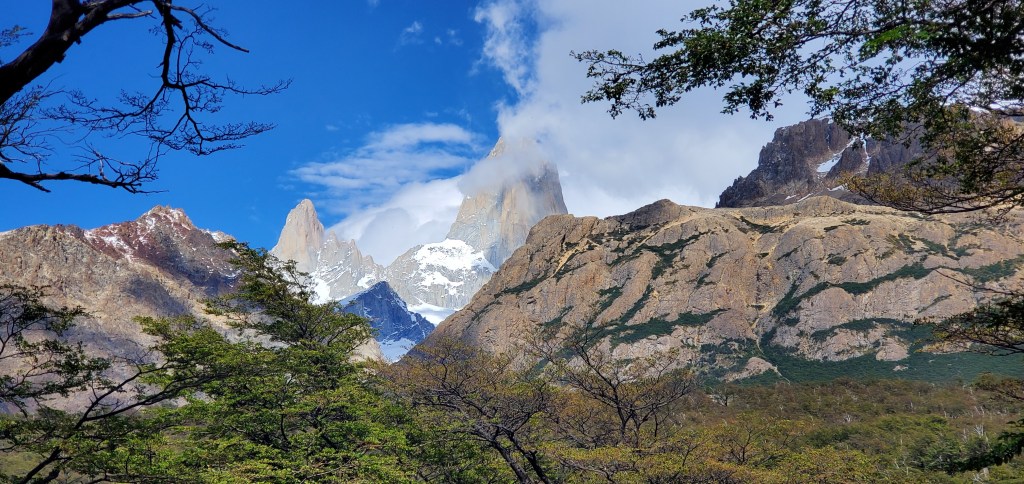
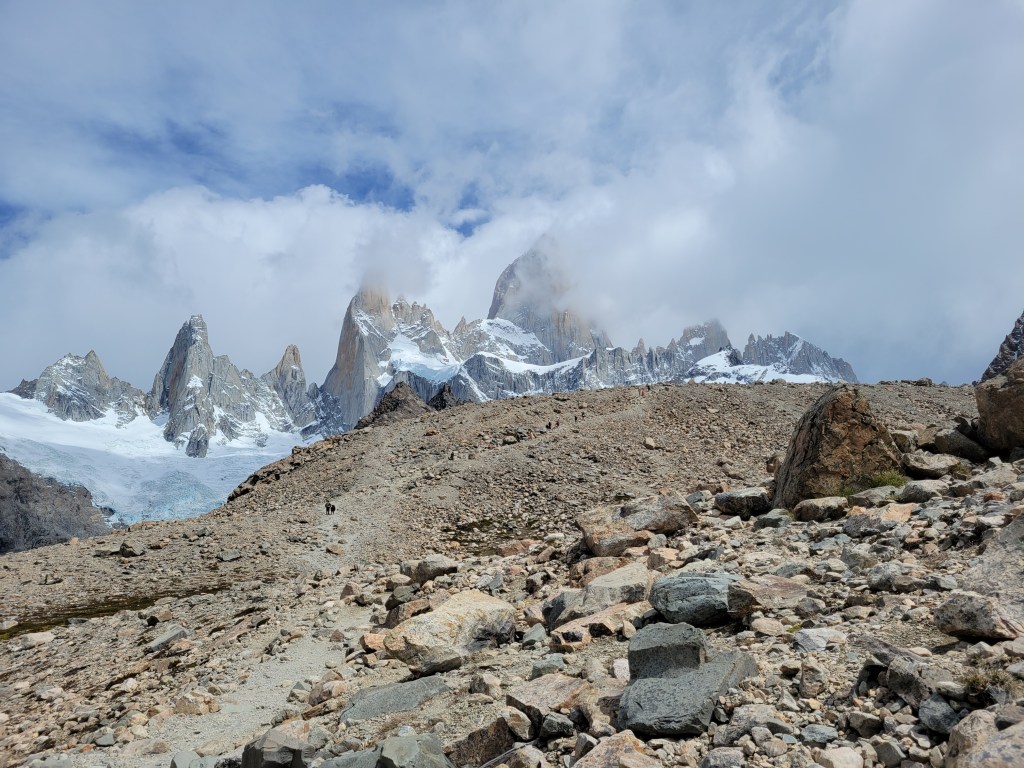
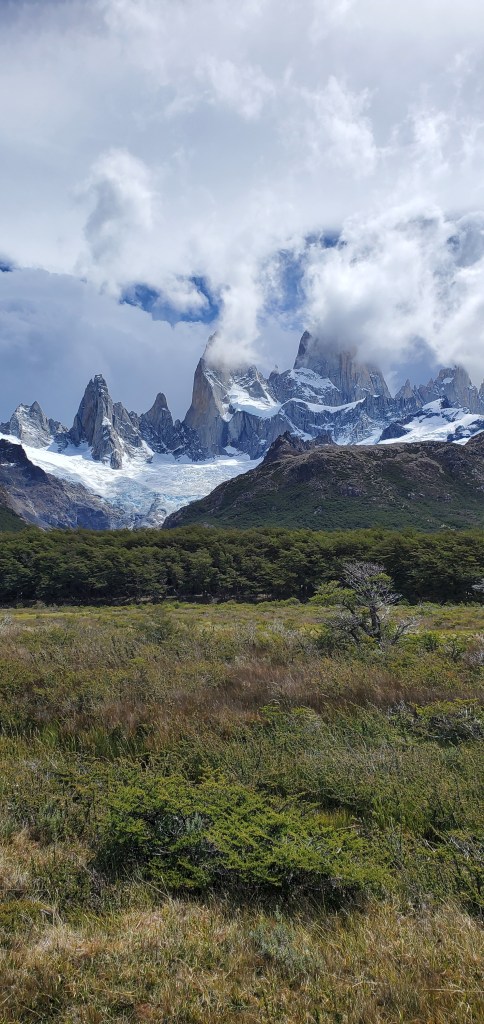
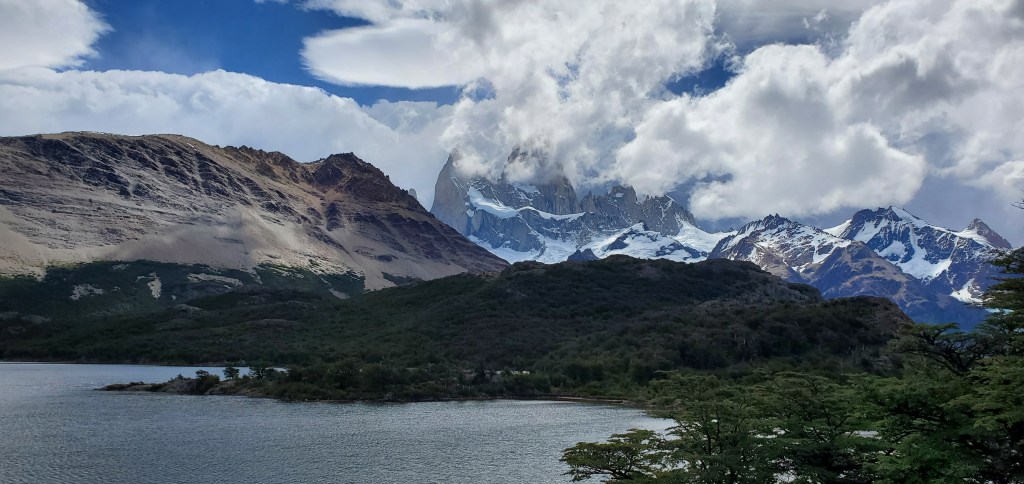
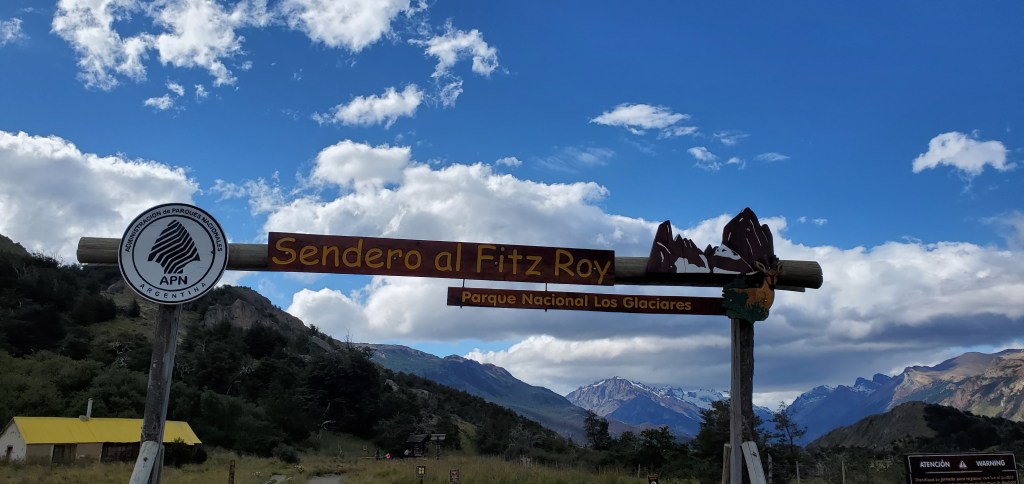
Towards the end of our Phase 2 travels in South America, we visited the Patagonia region in Argentina. It was December when we visited, so it was the middle of summer. Due to Patagonia being so far south, the sun didn’t set until around 10pm. After flying from Buenos Aires to El Calafate and staying a couple of days, Leandro (who my dad had charmed when he first drove us from the airport to town) drove us north 2 hours to El Chalten. El Chalten is known as the Argentine Capital of Trekking. Its most famous hike is the Laguna de Los Tres hike to see Mount Fitz Roy. Named after Robert FitzRoy, captain of Darwin’s ship the HMS Beagle, the mountain is also on the logo of outdoor recreation gear company Patagonia. Though we did the Fitz Roy hike (article here), our favorite hike by far in El Chalten was the Glacier Huemul hike.

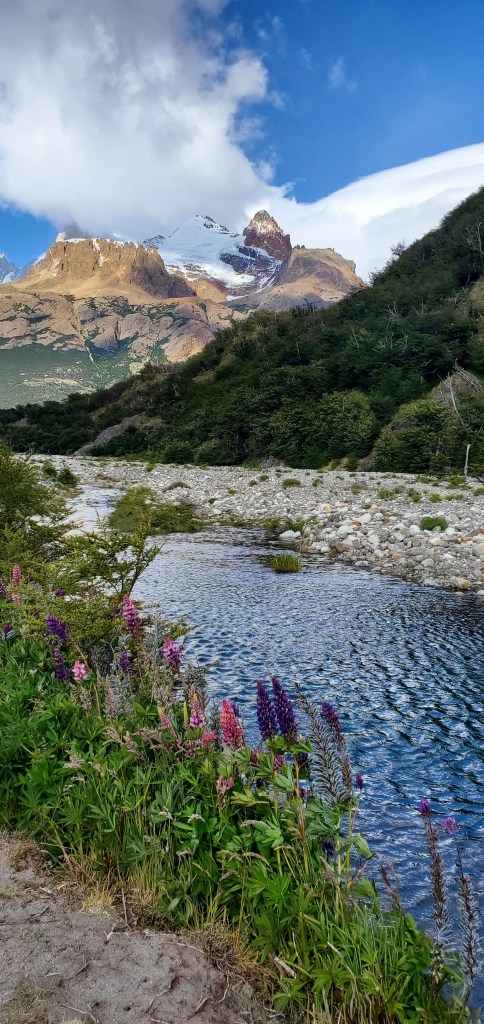
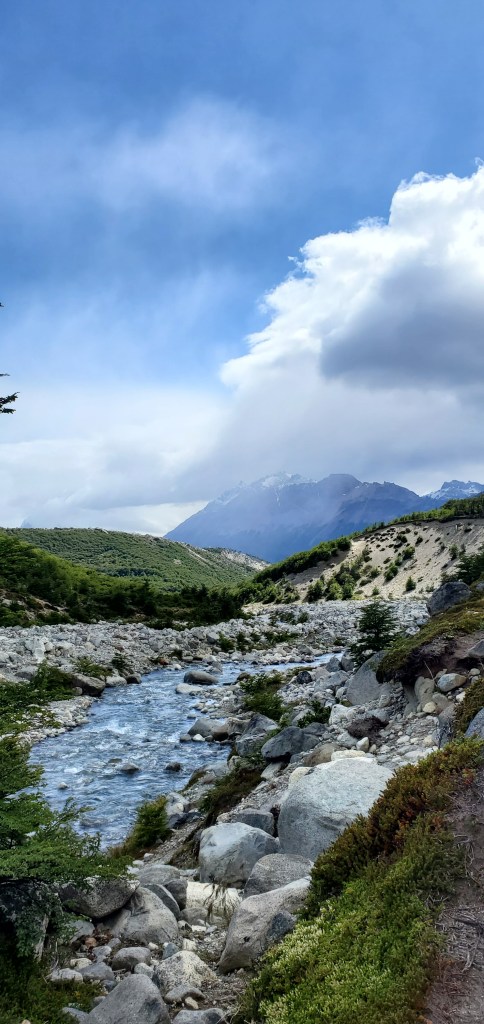
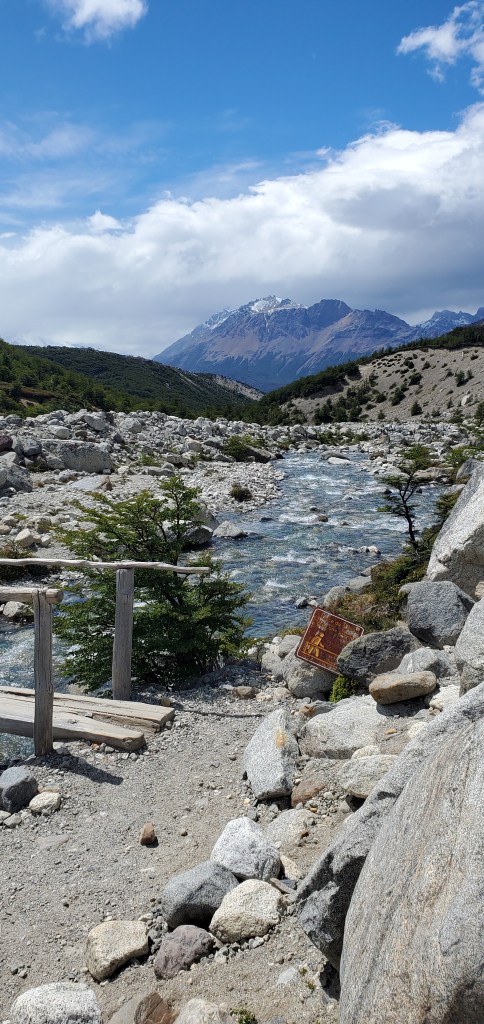
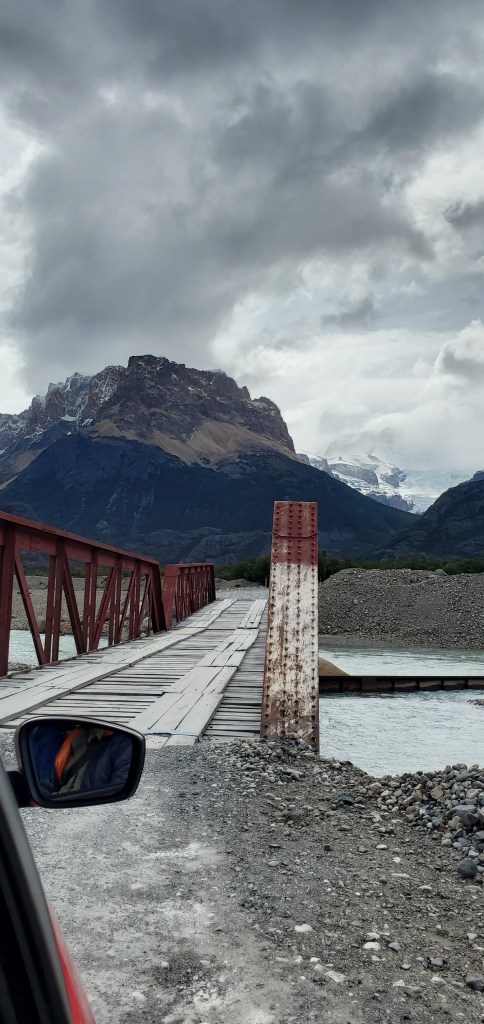
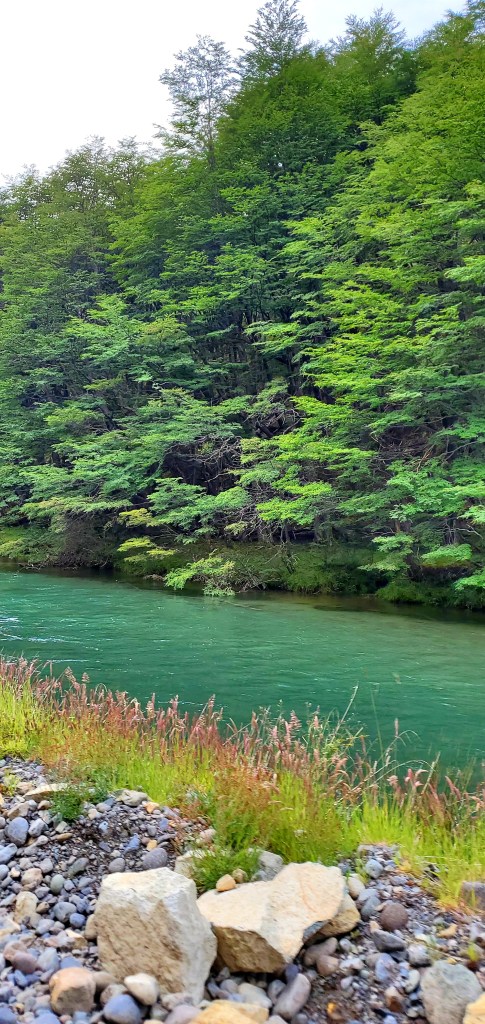
After checking into our hotel room and dropping our bags, Leandro took us an hour deeper into the Patagonia wilderness for a short but gorgeous hike. The drive was quite bumpy since it was on an unpaved, gravelly, rocky road. The views just from the car ride were definitely worth it. We drove along an icy blue river, through a mossy forest, and past a shrubby marsh, among many other views.

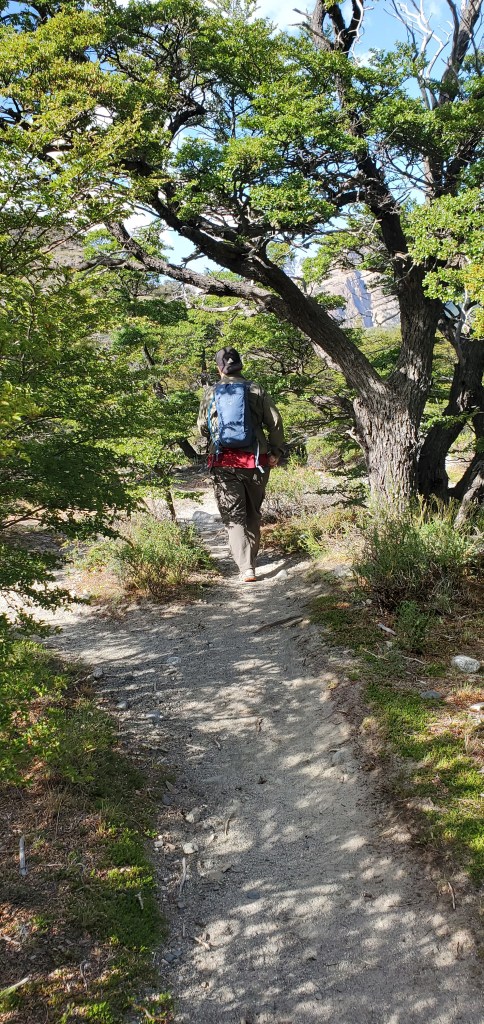
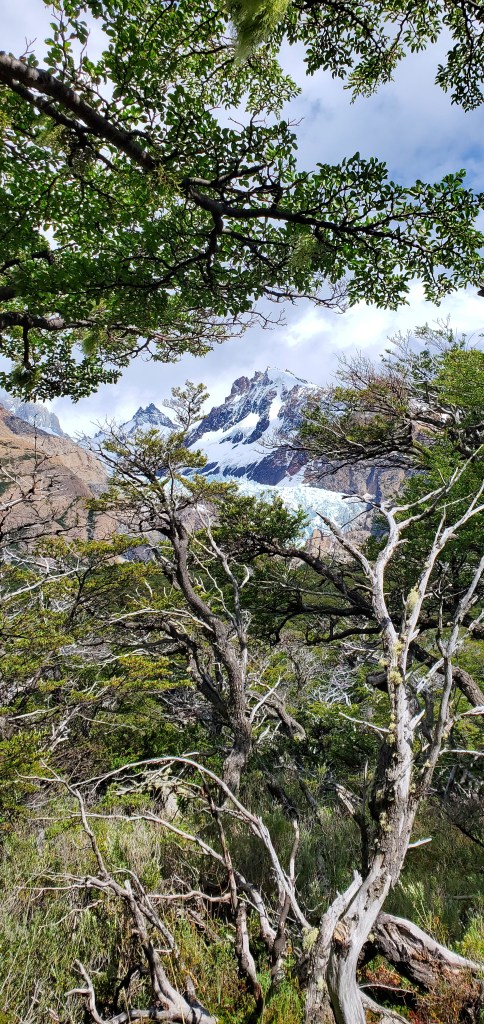
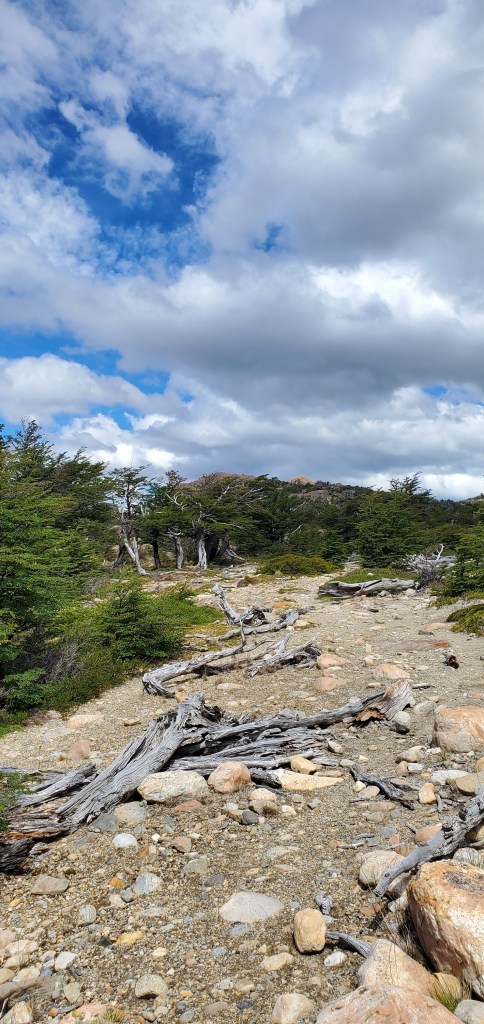
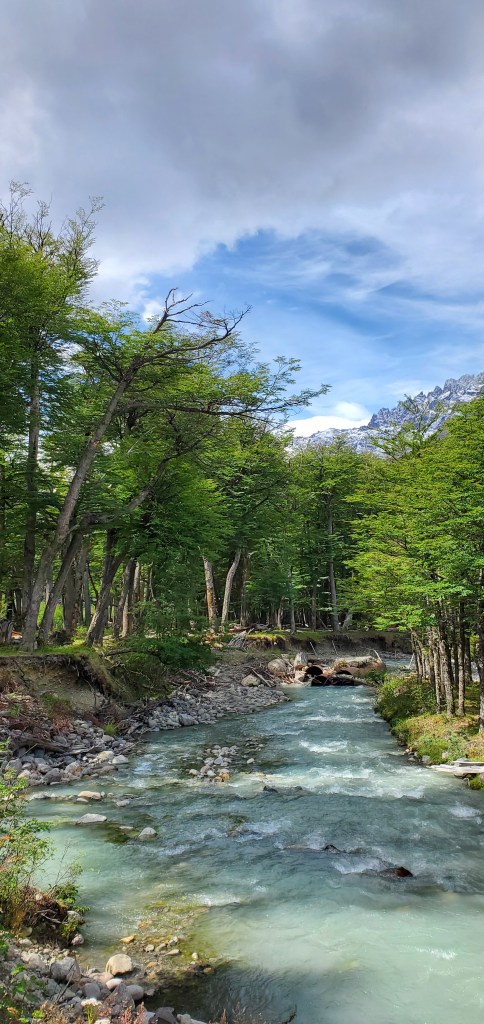
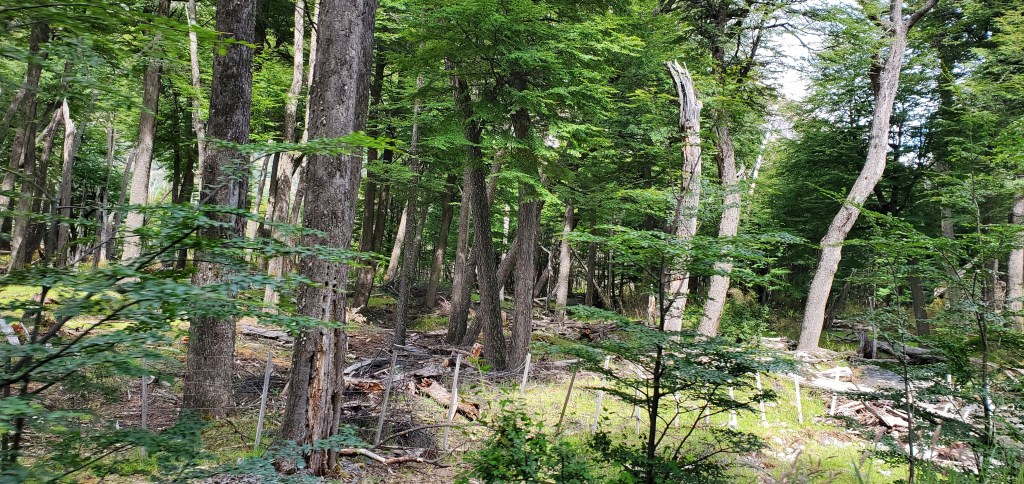
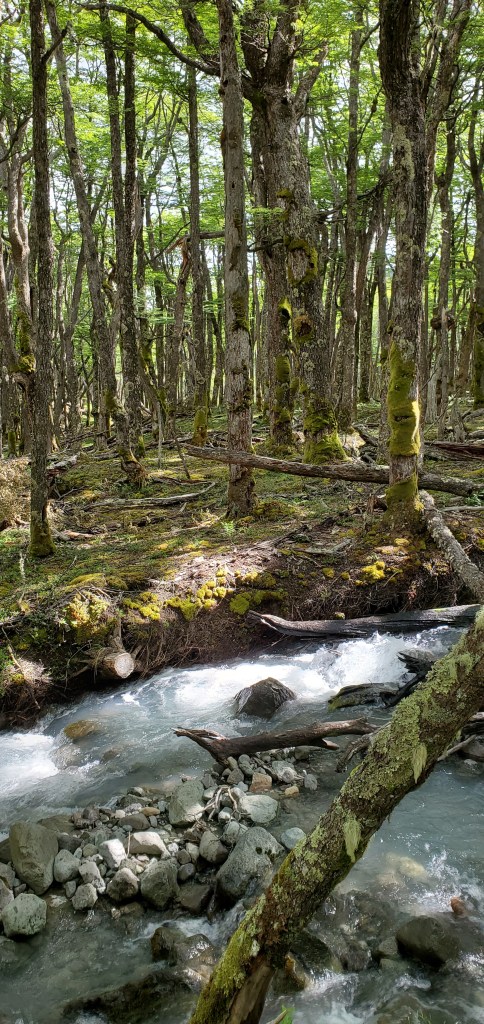
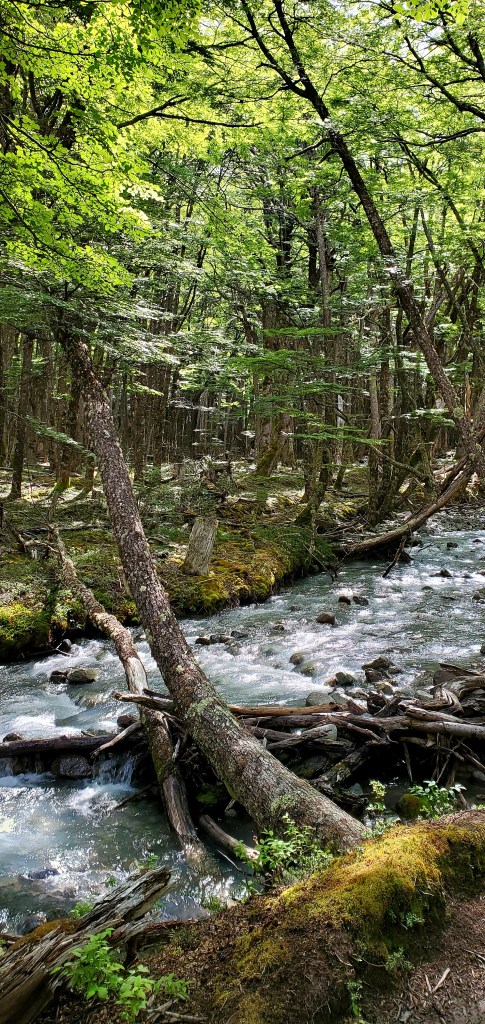
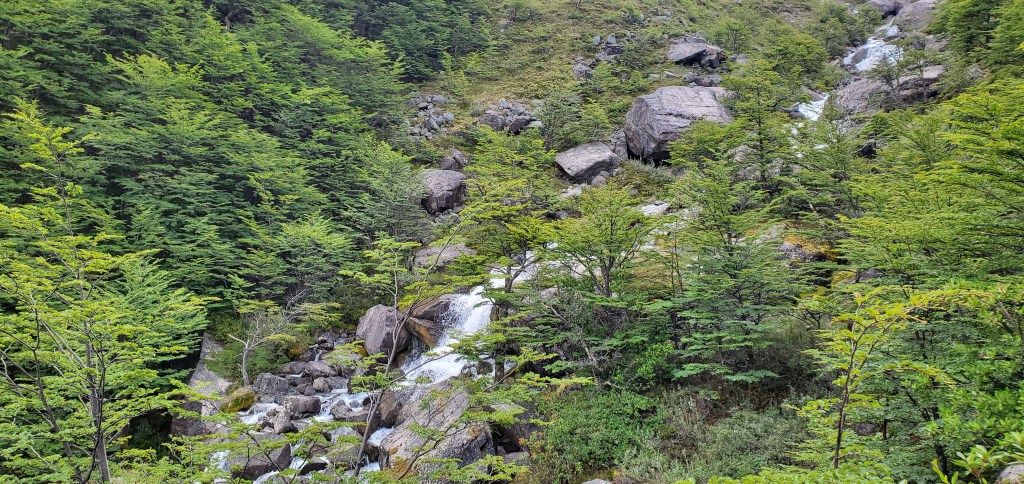
The Glacier Huemul hike (2 miles round trip) was definitely one of the best hikes we’ve done. We parked in the parking lot and paid the relatively cheap entrance fee. We hiked around 45 minutes mostly flat along a bubbling stream through a picturesque mossy forest.

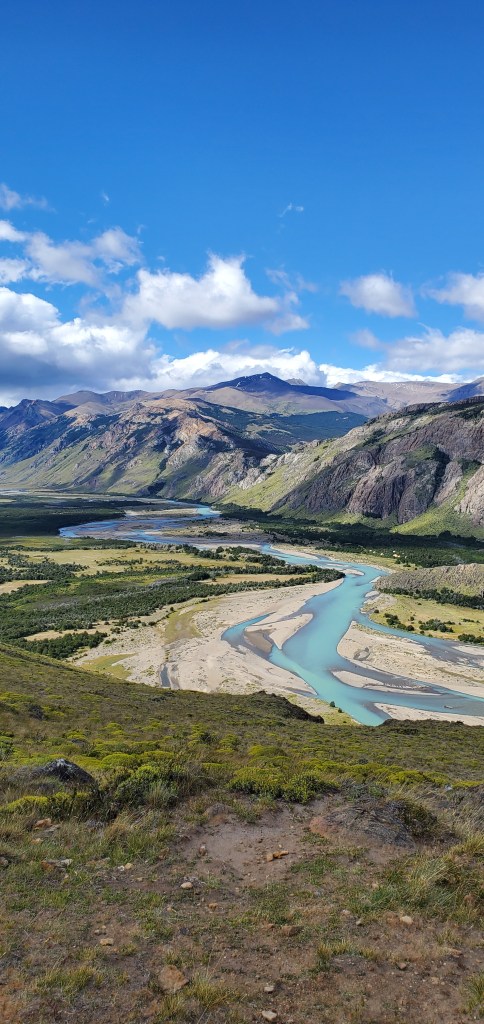
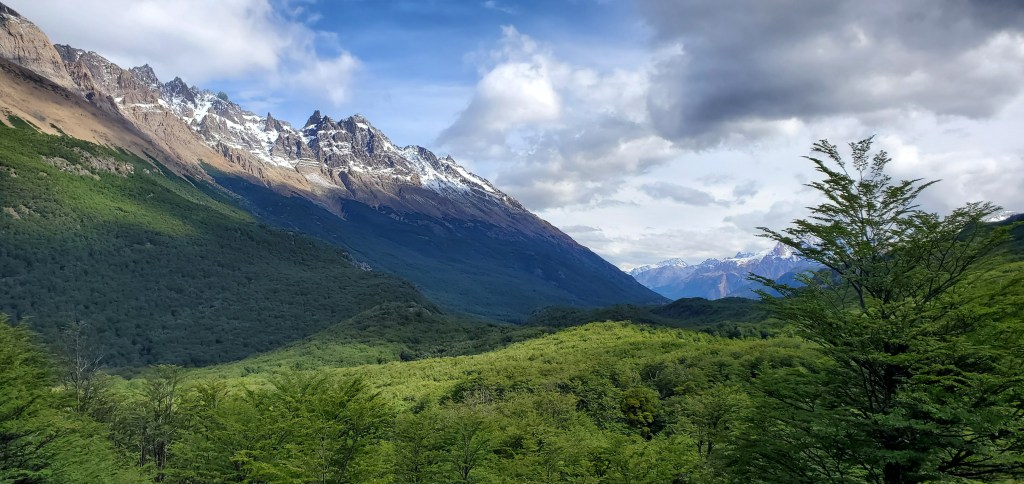
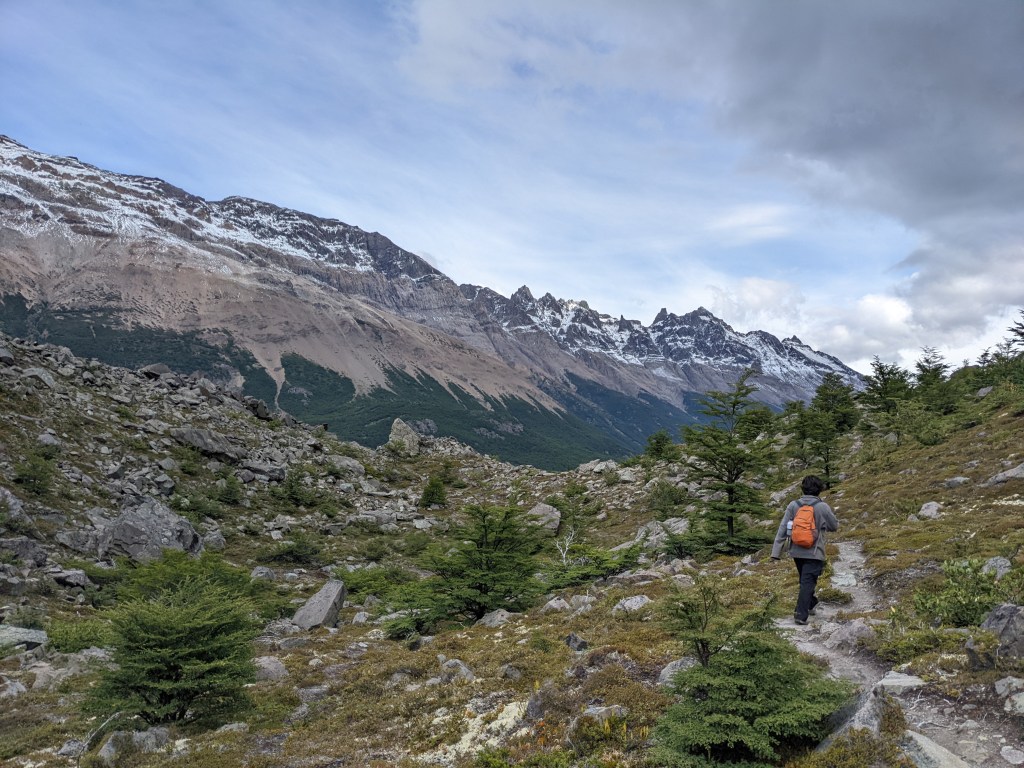
It wasn’t difficult at all, but we stopped so often to take pictures that it took much longer. There were also a couple of pull-offs along the trail that offered views of the valley we had driven through and a couple of smaller waterfalls that feed into the creek.

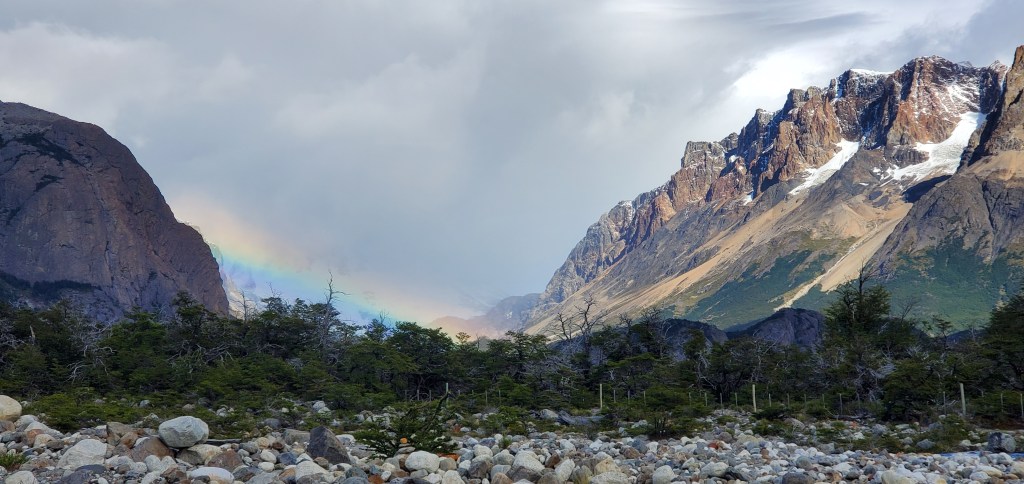
Patagonian valley that leads back to El Chalten
Icy waterfalls through the bright green forest

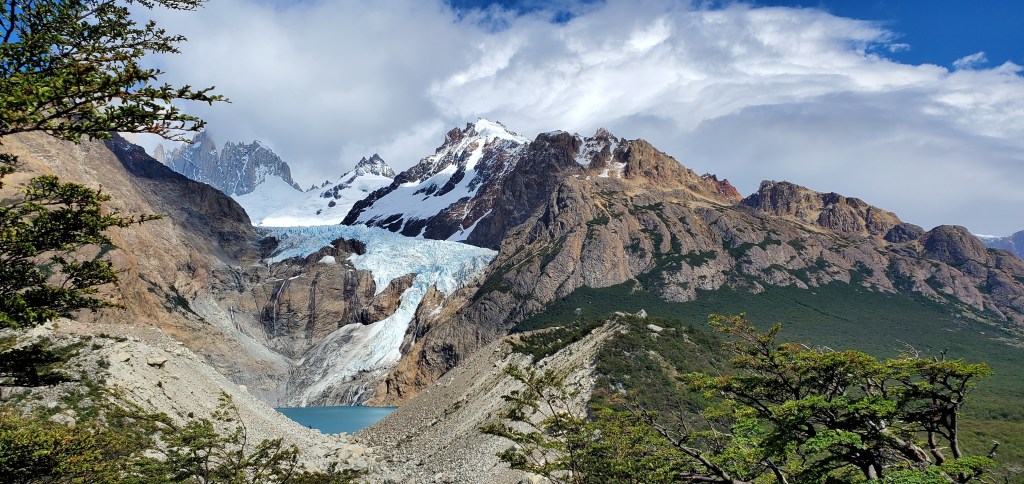
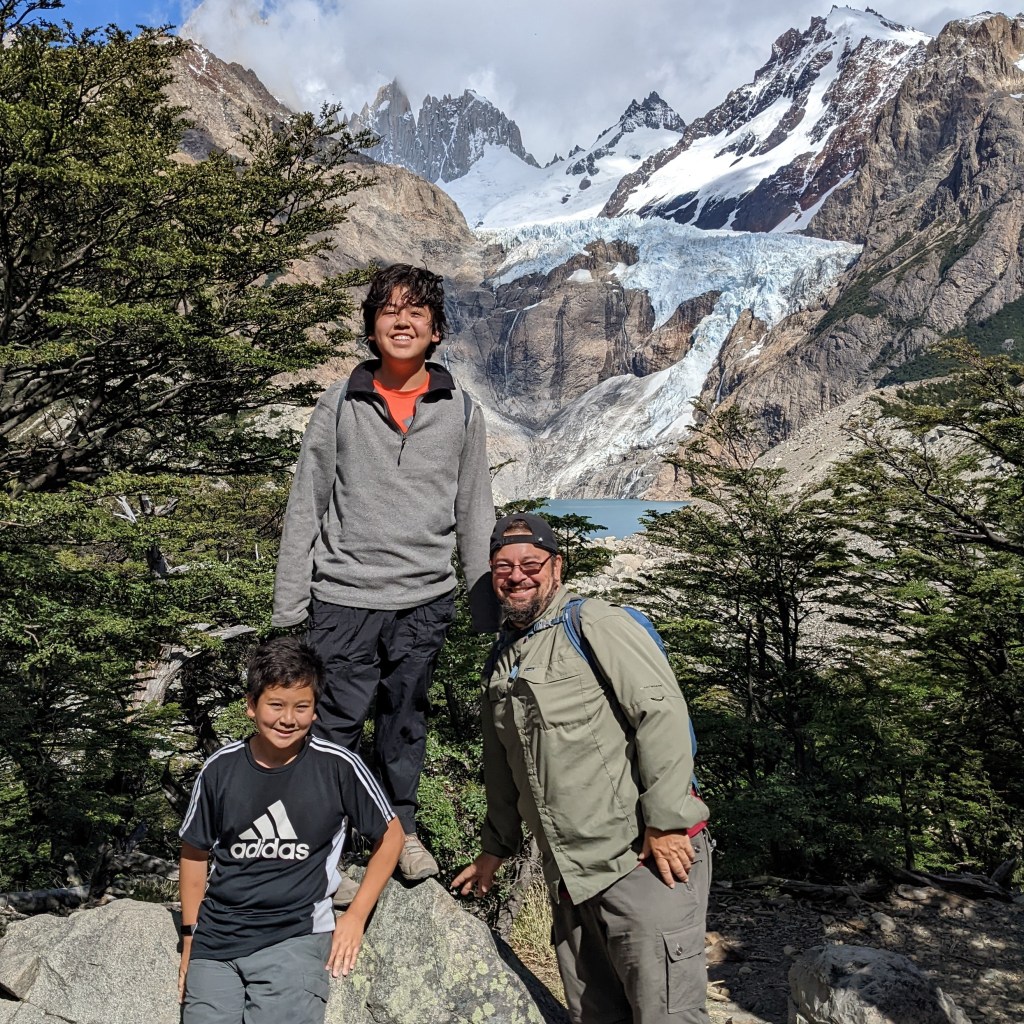
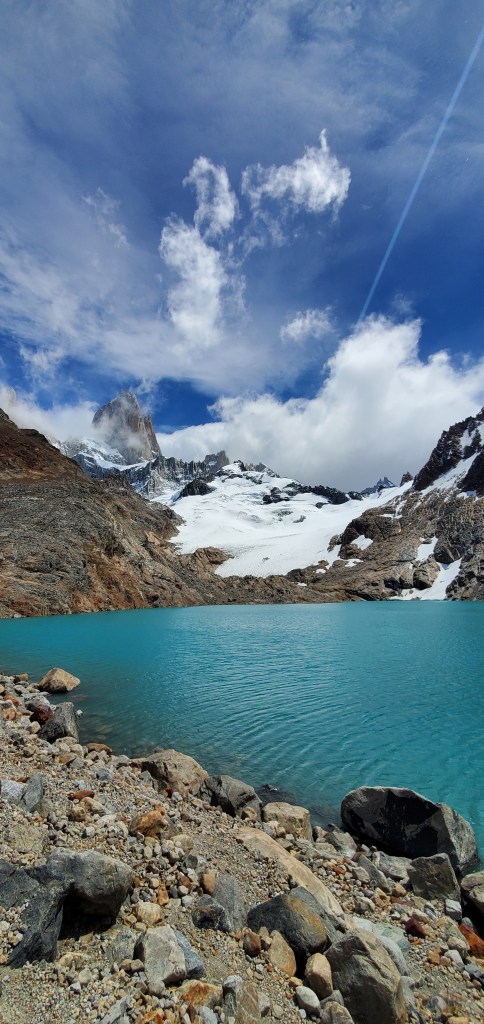
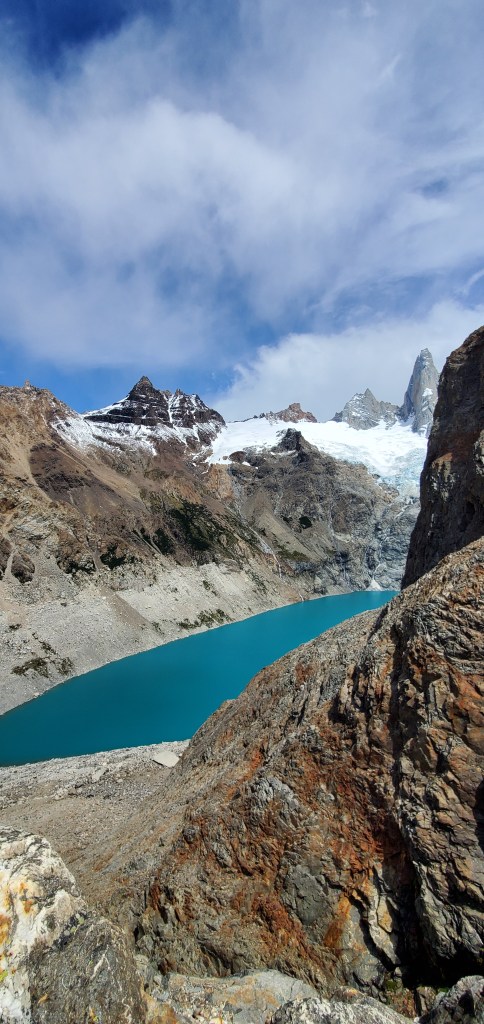
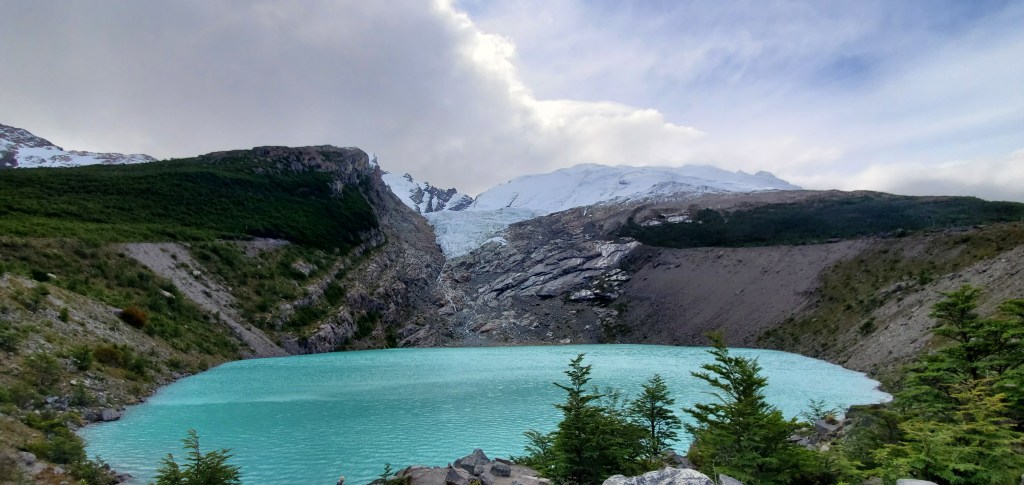
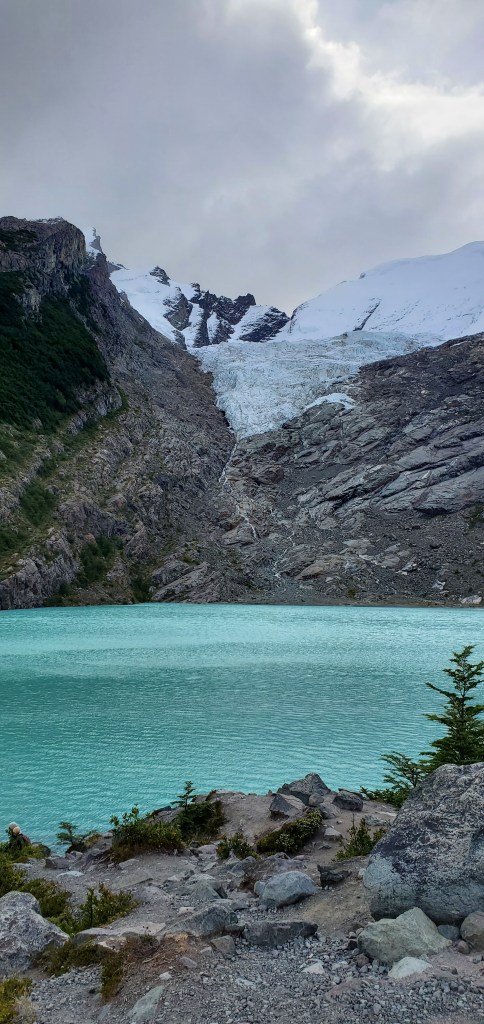
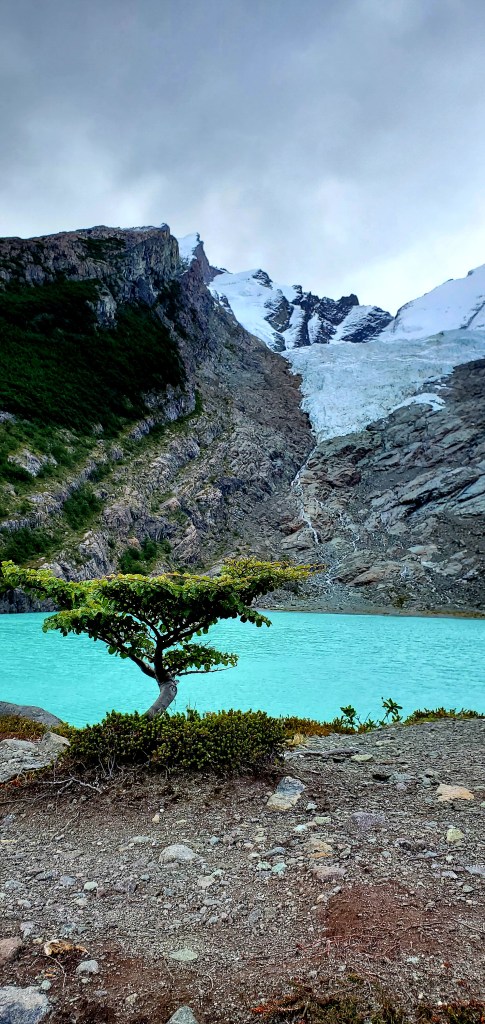
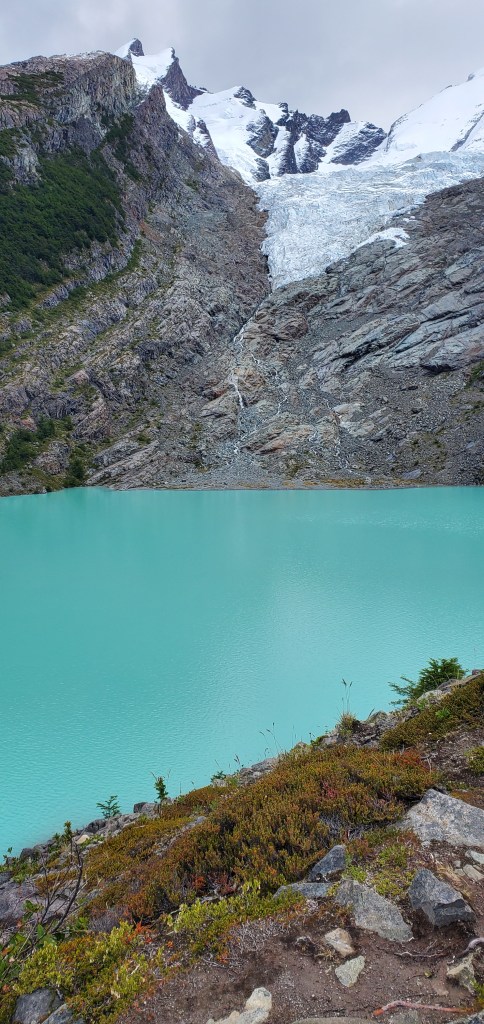
The last 200m was a steep uphill. They even had installed rope railings along the side to help you climb up. Even if it was difficult, it was well worth it as we were presented with a deep-turquoise glacier lake at the top. 

Glacier Huemul

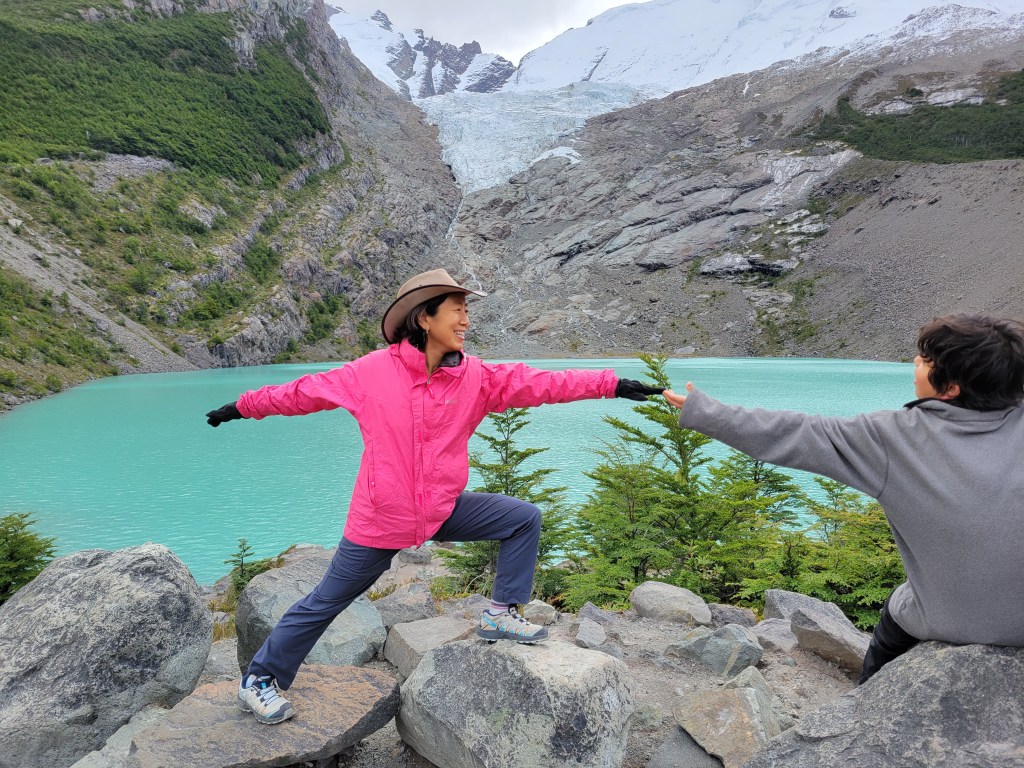
We took plenty of pictures and spent a little while absorbing the beauty of the lake.

Recreation of Michaelangelo’s The Creation of Adam, just prettier

Afterwards, my mom and I explored a little.

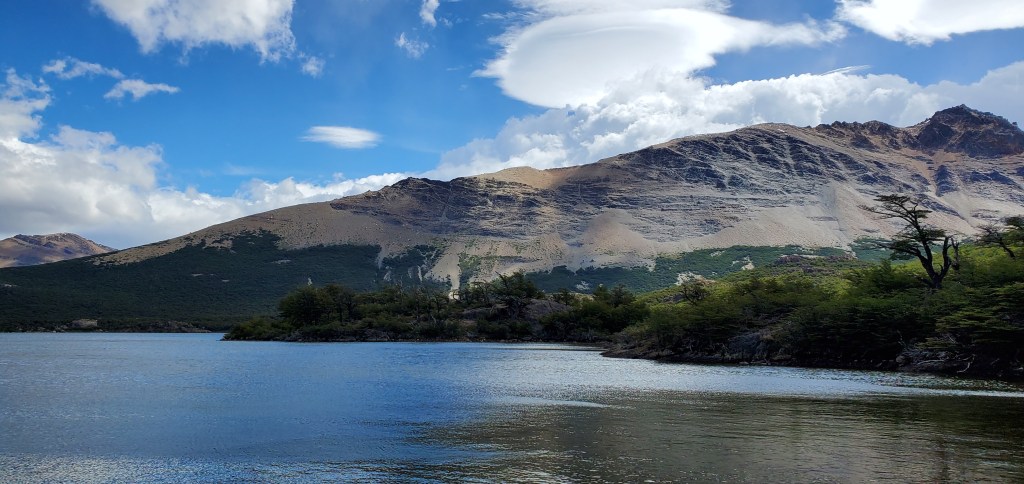
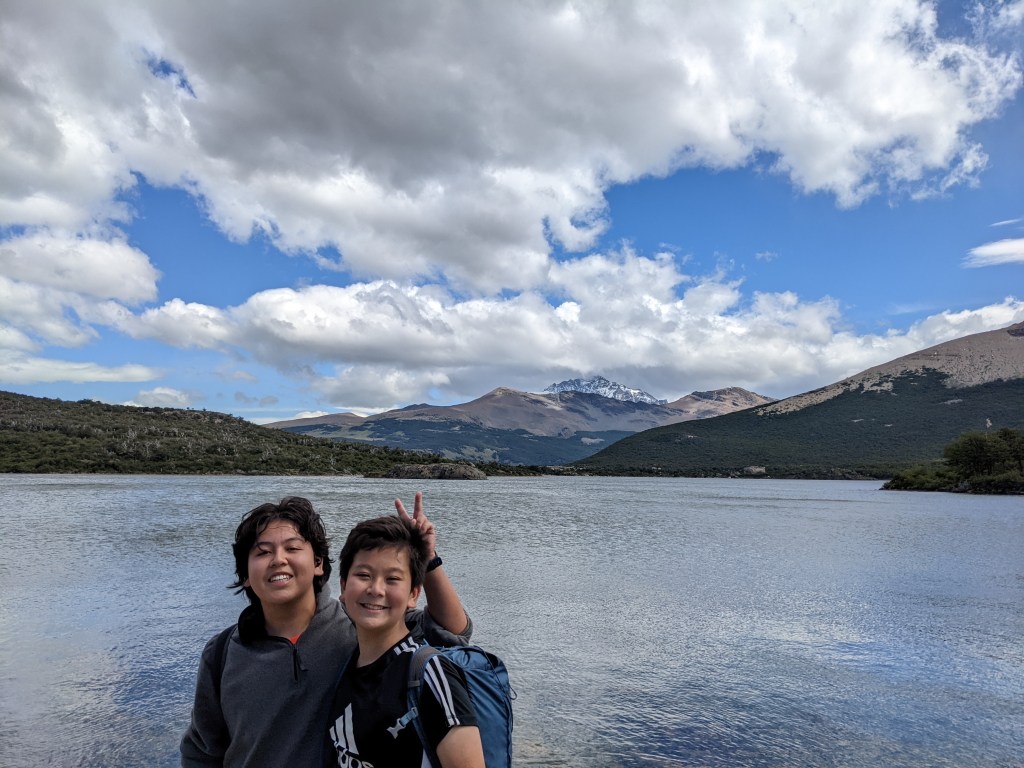
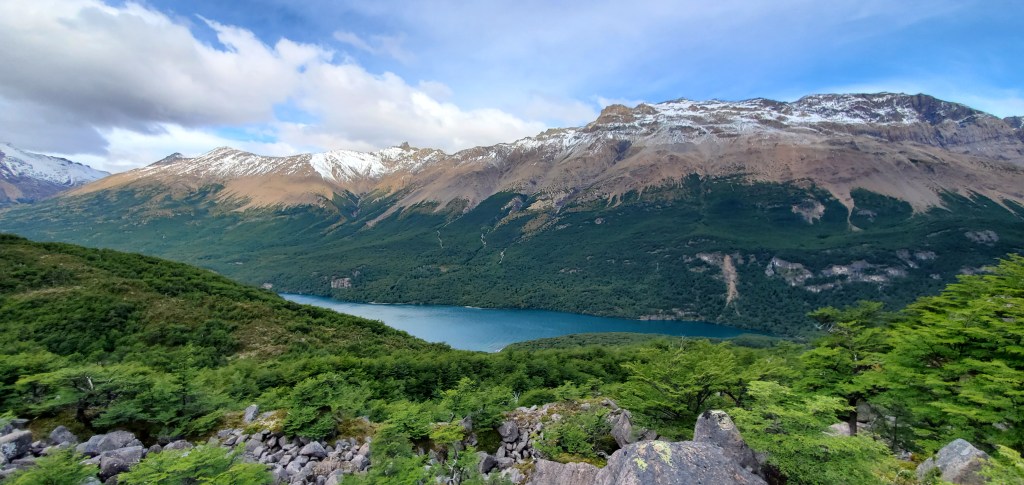
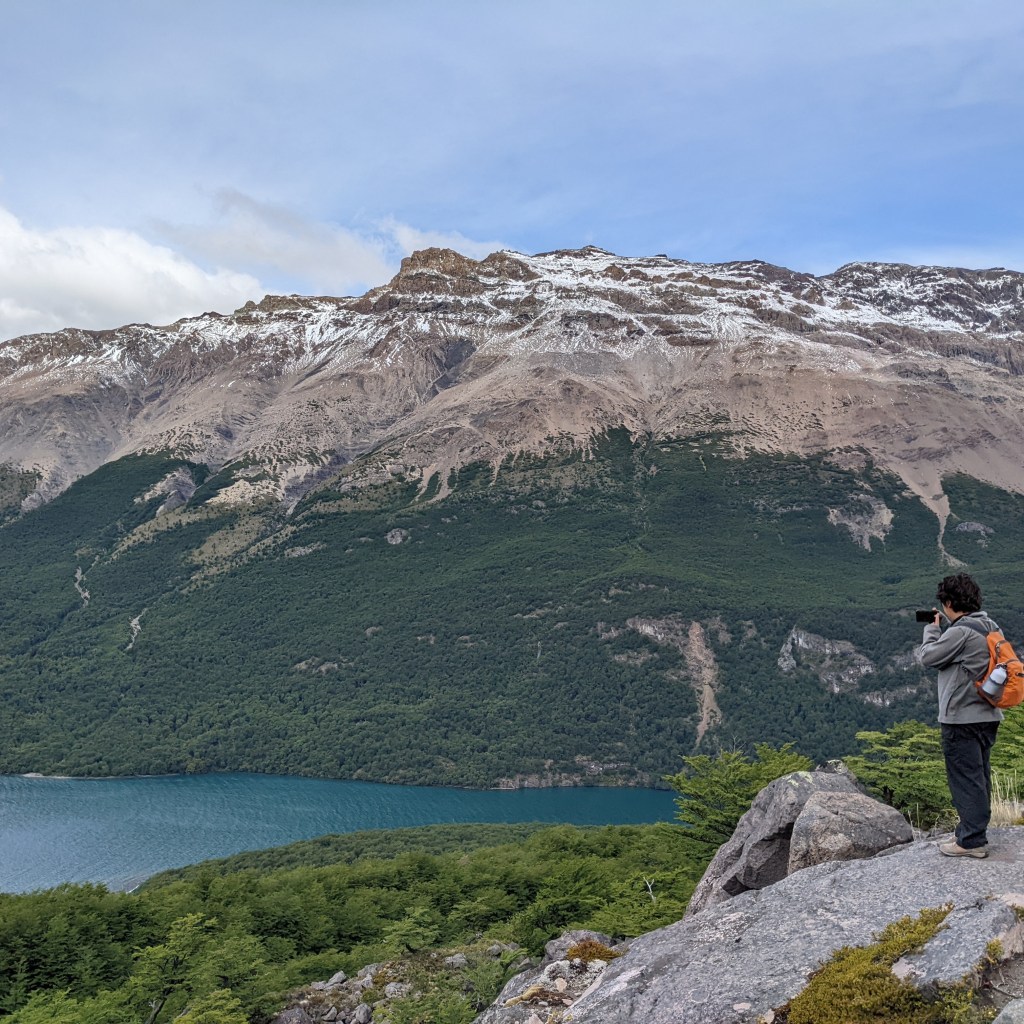
After climbing one more ridge, we were rewarded with a view of the Lago Desierto (near the parking lot). 

View of Lago Desierto
Picture of me taking the previous picture

All four of us agreed that it was one of the best beauty-to-effort hikes we’ve done. It was super easy, relatively quick, and most definitely gorgeous. On the other hand, the next day’s hike was beautiful, but certainly NOT low-effort. 

Guide to Building a South American Metropolis

Did you just liberate people from decades of colonial oppression and want to make a good first impression? Here’s my guide to help you build the next great South American destination! During Phase 2 of our travels, we spent a significant portion of our time in large South American cities. We stayed in Quito (the capital of Ecuador), Bogotá (the capital of Colombia), Lima (the capital of Perú), and Buenos Aires (the capital of Argentina). The city centers are big and dense, while the larger metropolitan areas have populations up to 13 million (Buenos Aires)! Other major cities we visited include Riobamba and Guayaquil in Ecuador, and Cuzco in Perú. Given that these countries all share common history, being colonized then liberated from the Spanish Empire by Simón Bolívar and/or José de San Martín, it is no surprise that all these cities have similar design features. 

Plazas and the Old Town

To build a South American Metropolis, one must start with a colonial city. Nowadays, the cities are much bigger and have been built around the old colonial town. The centers of the old town tend to be a large plaza or park, surrounded by a massive cathedral and government buildings. In Lima, the central Plaza de Armas has the Catedral de Lima on one side, the Presidential Palace on another, and the Municipal Palace on a third. In the center of Quito’s old town, the Presidential Palace, old Archbishop’s Palace, Quito Metropolitan Municipality, and Catedral Metropolitana de Quito surround the central plaza which has a massive monument to independence in the center. Be sure to put a giant monument dedicated to independence in the middle of your plaza. A statue of Simón Bolívar on a horse is a classic.  

Pigeon covered statue of José de San Martín in Central Lima

Street Names 

Now you have a city with housing and historical significance, you need streets. In South America, the street names tend to fall under 5 categories. The first option for naming your streets is to choose another country. You could have Canada Avenue or Paraguay Street. In Quito, we saw Calle Haiti, Calle Guatemala, and Calle Venezuela. 

United States Street

Your second option is to use another country ‘s city. For example, in Buenos Aires, we saw Riobamba street (Riobamba, Ecuador) and Avenida Córdoba (Córdoba, Spain). Quito has Calle New York, Calle Buenos Aires, and Calle Asunción. 

Montevideo Street named after the capital of Uruguay

Your third option is important historical dates. The massive 16-lane thoroughfare in Buenos Aires was named Avenida 9 de Julio after their independence day which is celebrated every year on July 9th. In Quito, we stayed near Calle 9 de Octubre which is the date that the Ecuadorian city of Guayaquil gained independence.

A fourth choice is historically significant people. Almost every South American city has a street named after General Simón Bolivar. A majority of the streets in Lima are named after people such as generals, presidents, politicians, journalists, actors, and other people of note. Another common appearance is saints. San Diego, San Felipe, Santa Anita, San Miguel, San Martín, etc. 

Street in Buenos Aires named after Carlos Pelligrini, a former Argentine president

A final option is a concept. Lima has Calle Independencia, Quito has Calle Progreso, and Buenos Aires has Avenida Libertad. The concepts tend to be positive, reflecting the country’s aspirations and values. 

Public bus in Lima

Public Transportation

Congratulations on building and naming your city’s streets! Now, how are your citizens going to get from place to place? Cars are expensive, and your city is now far too big for everyone to walk everywhere. Why not install some public transportation? 

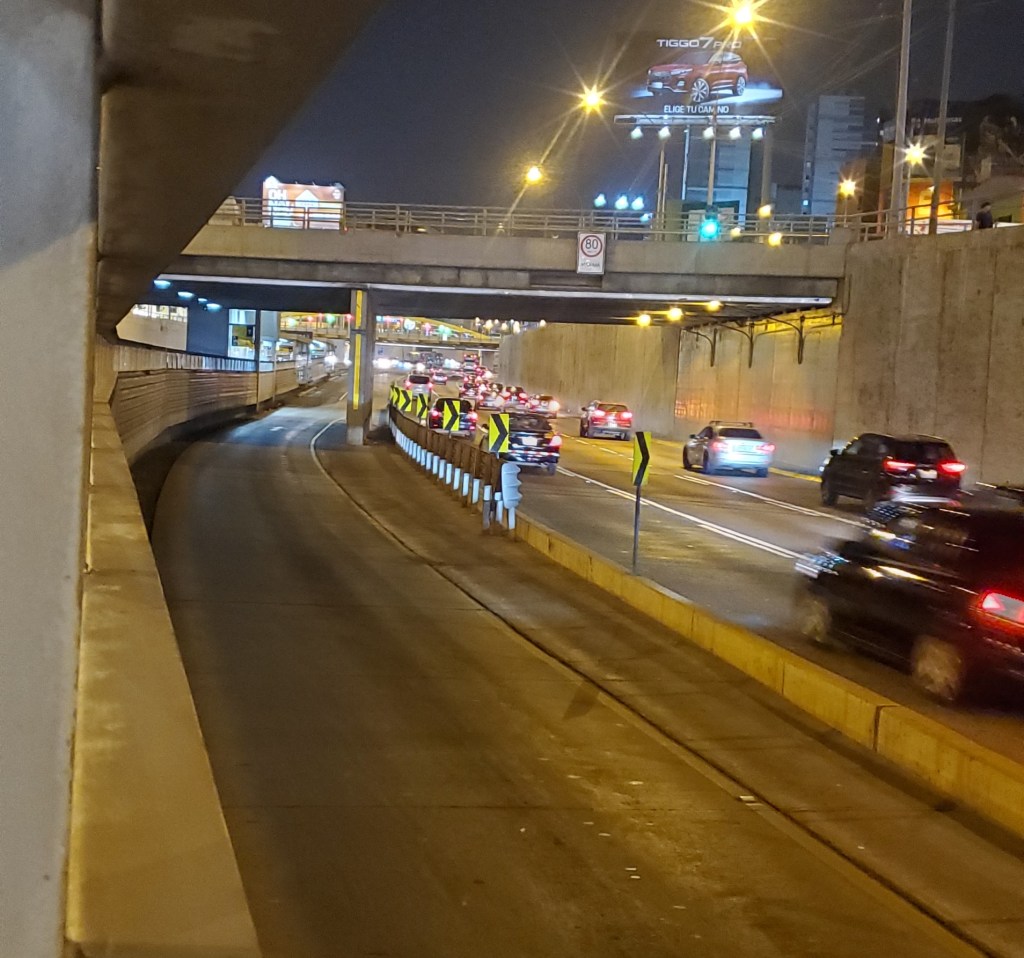
First, you’ll want a metro system. Unlike in the US, where “metro” often means subway, “metro” in South America means an extensive bus system. Buses are a very important means of transportation throughout South America. They are fast, reliable, and the infrastructure is well-maintained. Bogotá, Lima, and Buenos Aires all had extremely strong bus systems. On the highways and throughout the cities, buses had a dedicated lane, meaning they are not slowed down when there is traffic. The lane is also available to government vehicles and emergency vehicles like ambulances. In Lima, we took a food tour and used the metro. It was cheap, easy to use, stations were well-labeled, and the stations even had attendants helping direct traffic and answer questions like “which line do I take to get to the old town?”. The buses get pretty crowded at times, as with any public transportation system. 

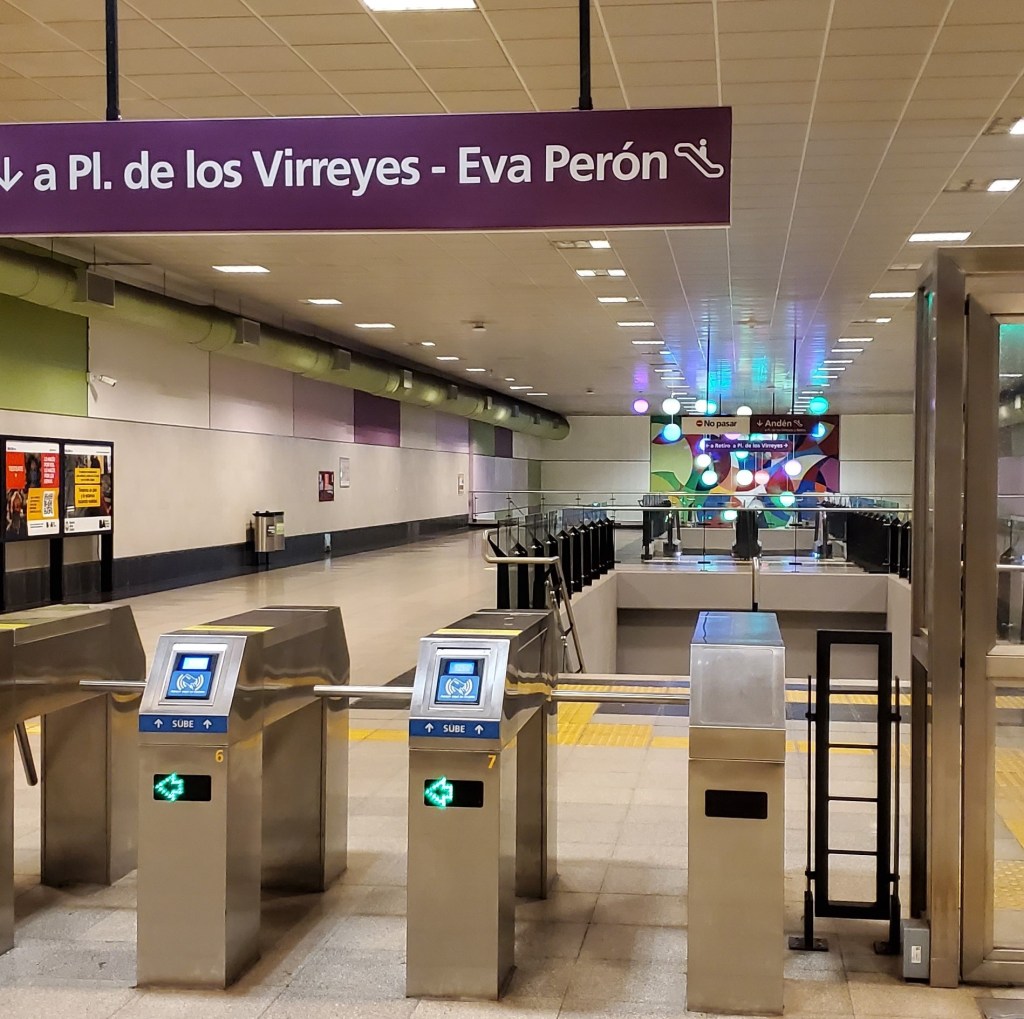
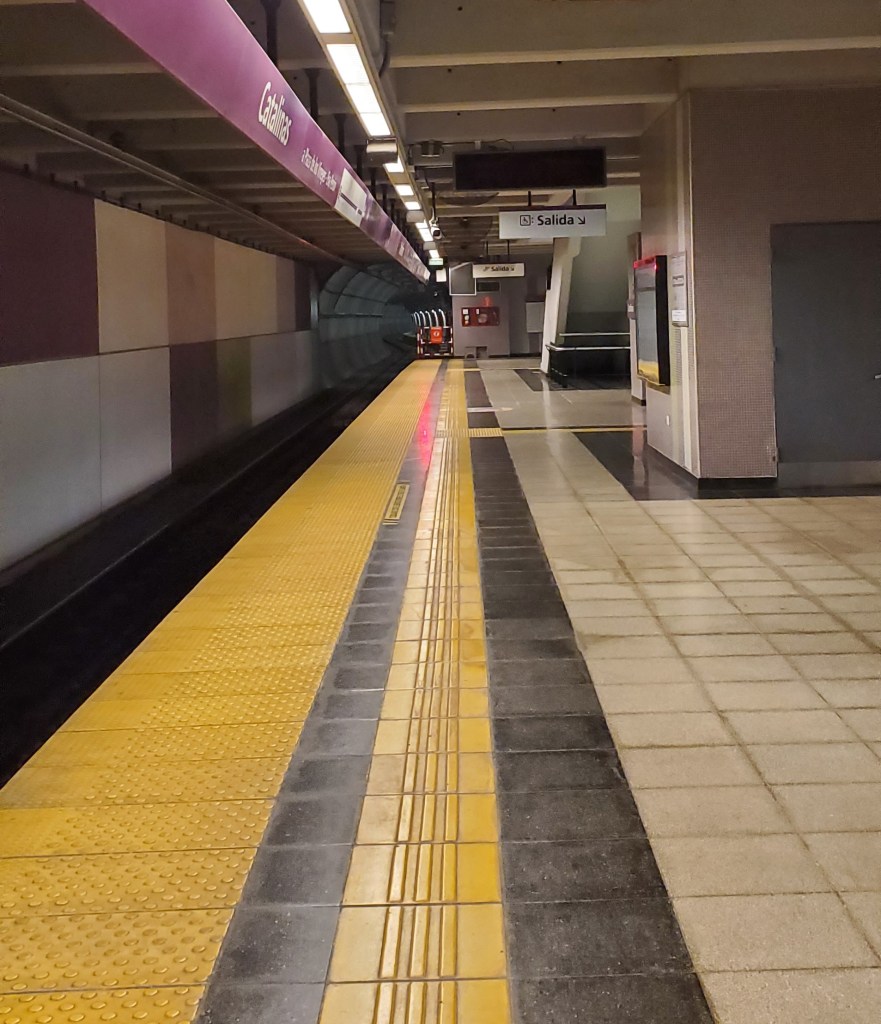
You might not want to bother with a subway. The only city we visited that had an underground train system was Buenos Aires. When we took it, it was virtually empty. When trying to pay, we realized that you needed to register on the government website to get a subway card, and there wasn’t an option to get a single-use ticket. Luckily, the guy manning the turnstiles was nice enough to just let us through. We walked through the empty hallways, down the empty stairs, and onto the empty platform. The stops on the subway were just named after the streets they stopped at, so we had to google which stop to get off at. The cars were typical subway cars but were almost completely empty. Only a couple of people got on and off in the six or so stops we passed. Given that the bus system is cheap, intuitive, reliable, and fast, a subway system is completely optional in your metropolis. 

Ending with taxis, those are easy. Just make sure to add space in the airport for taxis. Every South American city we visited had plenty of taxis. They tended to be the stereotypical bright yellow and were reasonably priced. There are Ubers in most of the major cities, but the taxi drivers are more numerous and have more of a voice, making Uber illegal in cities like Bogotá and Lima. 

These are just some of the similarities I observed when we visited the large cities of South America. Be sure to take these into account if you want your beautiful metropolis to fit in. Happy Building!

My Drawings 2

Drawings: Rice bowl, pirate ship, cat girl’s room, the equator, sea lion, penguin, bruh flamingo, brush horse, pillow fight, brain explosion, pooping llama, floating island, epic fail Chile moment.

Drawing 1. Rice bowl:

I drew this rice bowl because we ate sushi that night. This was in Sámara, Costa Rica on the 9th of October 2021.

Drawing 2. Pirate ship:

I drew this pirate ship Cuz why not? This was also in Sámara, Costa Rica on the 22nd of October 2021.

Drawing 3. Cat girl’s room:

I drew this because I wanted to practice drawing people and also because why not. This was in Arenal, Costa Rica on the 3rd and 4th of November 2021

Drawing 4. The equator:

I drew this because that day we went to the equator museum in Quito Ecuador on the 18th of November 2021.

Drawing 5. Sea lion:

I drew this because we saw sea lions in the Galapagos Islands, Ecuador on the 19th of November 2021.

Drawing 6. Penguin o speed:

I drew this because when we were snorkeling in the Galapagos Islands, we saw a zoomy penguin swimming around us. The Galapagos Islands, Ecuador on the 22nd of November 2021.

Drawing 7. Bruh flamingo:

I drew this because also in the Galapagos we saw some flamingos and I drew it poorly, so it is a Bruh flamingo now. This was drawn on the 24th of November in the Galapagos Islands, Ecuador. 

Drawing 8. Bruh horse:

I drew this because we rode on horses in Quilotoa, Ecuador on the 29th of November 2021. 

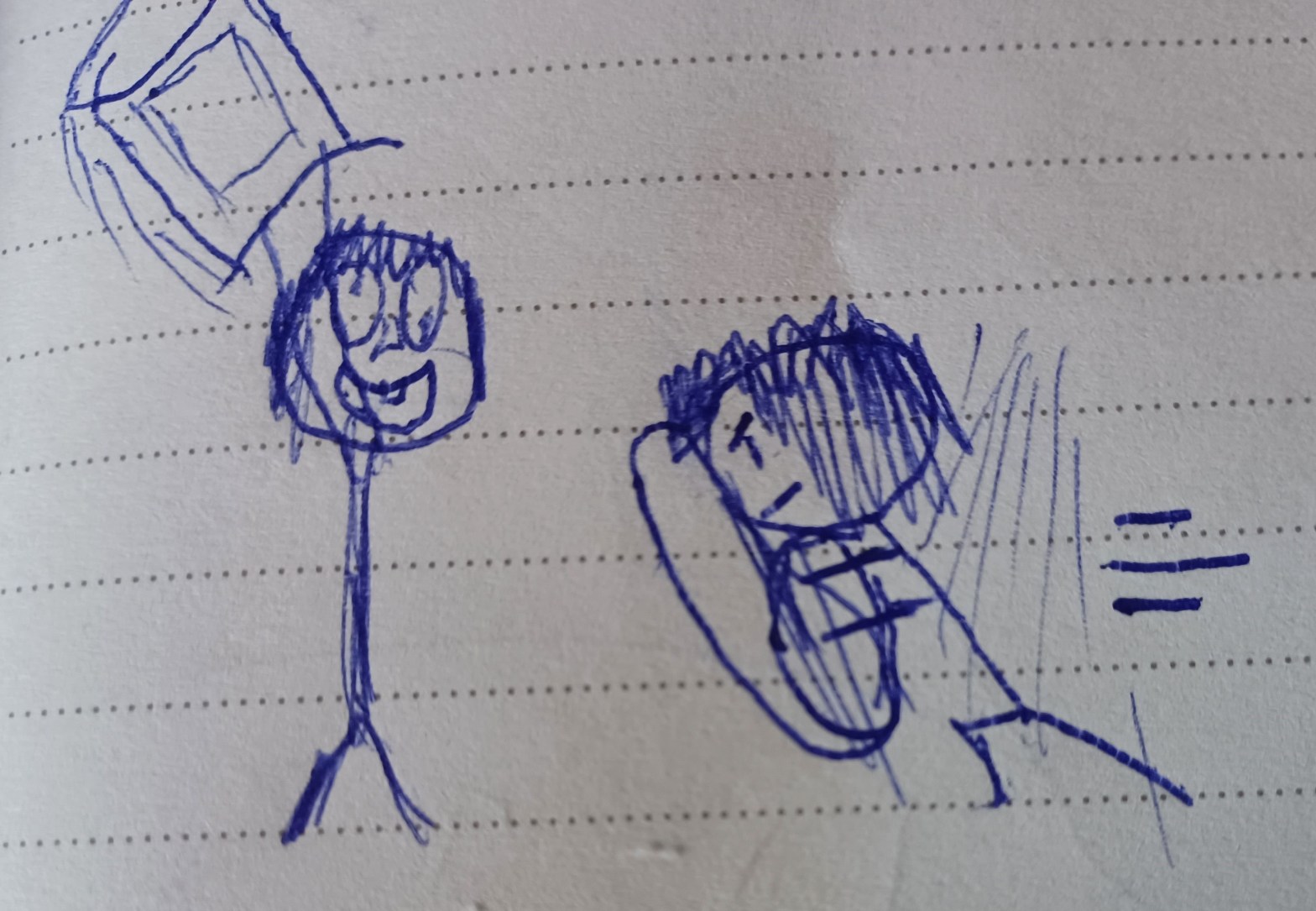
Drawing 9. Pillow Fight:

I drew this because Corbin and I had an epic pillow fight in our hotel in Lima, Peru on the 8th of December 2021. Where I rammed him with a pillow into the wall and won.

Drawing 10. Moms Brain explosion over a wall:

I drew this because while we were on a tour my mom kept taking pictures of walls, so we made it a joke. This was in Cusco, Peru on the 11th of December 2021.

Drawing 11. Pooping llama:

I drew this because on the morning of the 4th day of our 5-day Machu Picchu trek my dad was sitting in a tent and a llama walked up to him and looked my dad in the eye while he created “natural fertilizer” in front of the tent. This was on the15th of December 2021 on the Inca Trail, Peru.

Drawing 12. Floating island:

I drew this because in one of our tours we went to a lake where an indigenous tribe lives on islands made of reed. However, my drawing is an island floating in the sky because I was too lazy to draw a complex reed island and make it a decent drawing. This was drawn on the 18th of December 2021 in Puno, Peru. 
Drawing 13. Epic fail Chile moment:

My 12th drawing takes place at the Lima airport. My family tried to go to Chile and failed because the government didn’t approve our mevacuno which allows us to go into the country. So that’s why I drew it. This was in Lima, Peru on the 20th of December 2021.

Salsa de Aji Amarillo or Peruvian Yellow Pepper Sauce by Martin at Chifa La Familia Feliz in La Fortuna, Costa Rica

One of the best dinners we had in Costa Rica was at a Chinese-Peruvian restaurant in the mountain town of LaFortuna. Chinese-Peruvian food (aka “chifa”) was fusion cuisine way before “fusion cuisine” was even a phrase, and was enthusiastically described by many folks we met across South America as a culinary highlight. The Peruvian Yellow Pepper is a beautiful yellow-orange chili pepper with a nice kick and a fresh and fruity flavor, and Peruvian cooks use it in almost everything. (I might try to grow it when we’re back in CA.)

Ingredients:

  • 2 yellow Peruvian peppers (ají amarillos)* or 2 tbsp aji amarillo paste
  • 2 tbsp oil
  • 1 cup water
  • 1 tsp turmeric
  • 2 cloves garlic, peeled and crushed
  • ½ white or yellow onion, minced
  • 1 tsp grated fresh ginger
  • 2 tbsp unsalted roasted peanuts
  • Salt and pepper to taste

Instructions:

  • Prepare peppers: blanch in boiling water for 1 minute. Shock in ice water. When cool, peel. Cut open and separate seeds from flesh. Set aside both. 
  • Saute onions, garlic, ginger, peanuts, and turmeric in oil until onions are golden 
  • Add water and, if you like the sauce spicier, add some of the the pepper seeds (if using fresh peppers)
  • Bring to a boil, and simmer to reduce, and cool. 
  • Puree onion mixture with pepper. Add a little more water if the sauce is too thick. Add salt and pepper to taste.  
  • Drizzle sauce in stir-fry or use as a dipping sauce for grilled chicken, roasted potatoes, and/or hard boiled eggs. 

*Note on preparing the aji amarillo: As with all spicy chili peppers, handle with care! Consider wearing gloves, and be sure not to touch your eyes after cutting the peppers. Spicy peppers have a component called capsaicin which can irritate. If you can’t find aji amarillo (fresh or paste) or you could substitute jalapeño or serrano peppers, but obviously the sauce will be a different color with a slightly different flavor. 

Chef/Owner Martin and son – part of the happy family that the restaurant is named for
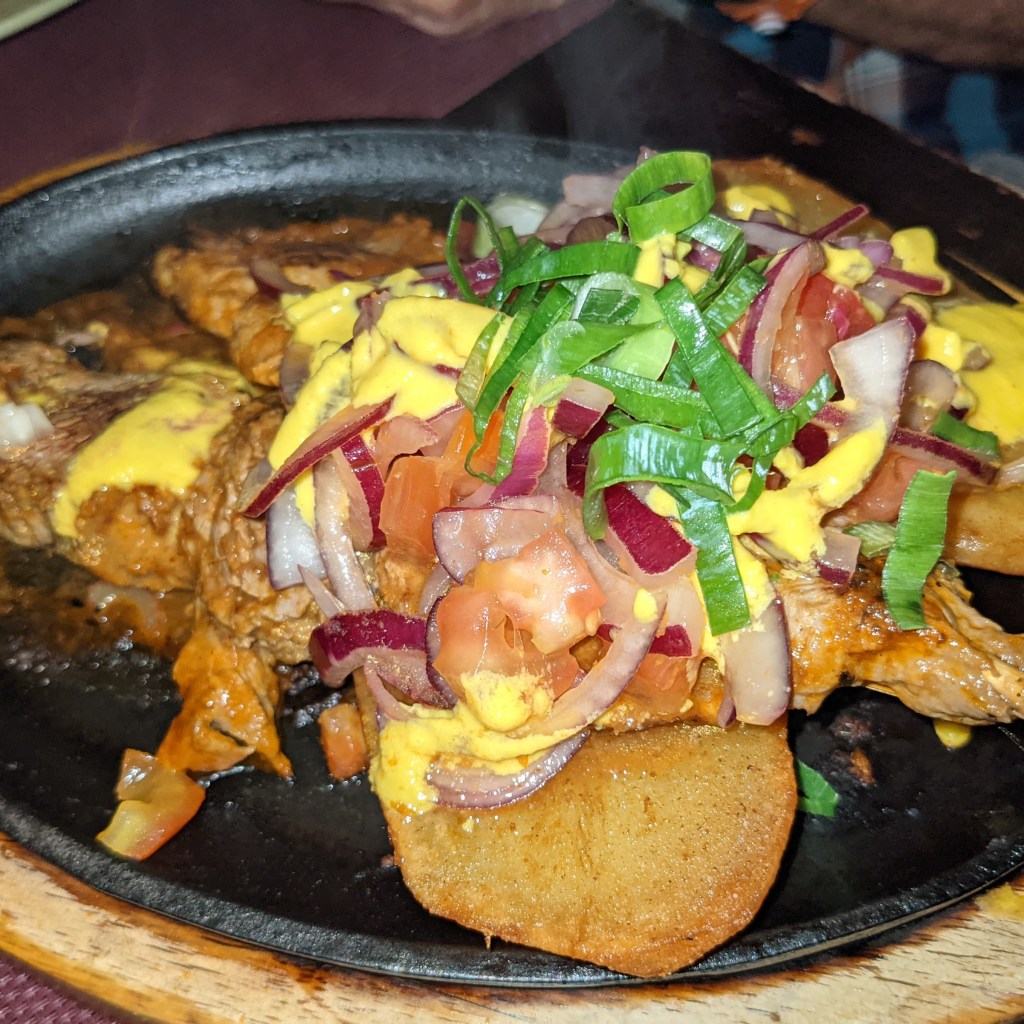
One of many delicious dishes with the aji amarillo sauce
If you go to see Arenal Volcano in Costa Rica, go here for dinner! Address: 702, Provincia de Alajuela, La Fortuna, Costa Rica

Ice Sculptures in Perito Moreno

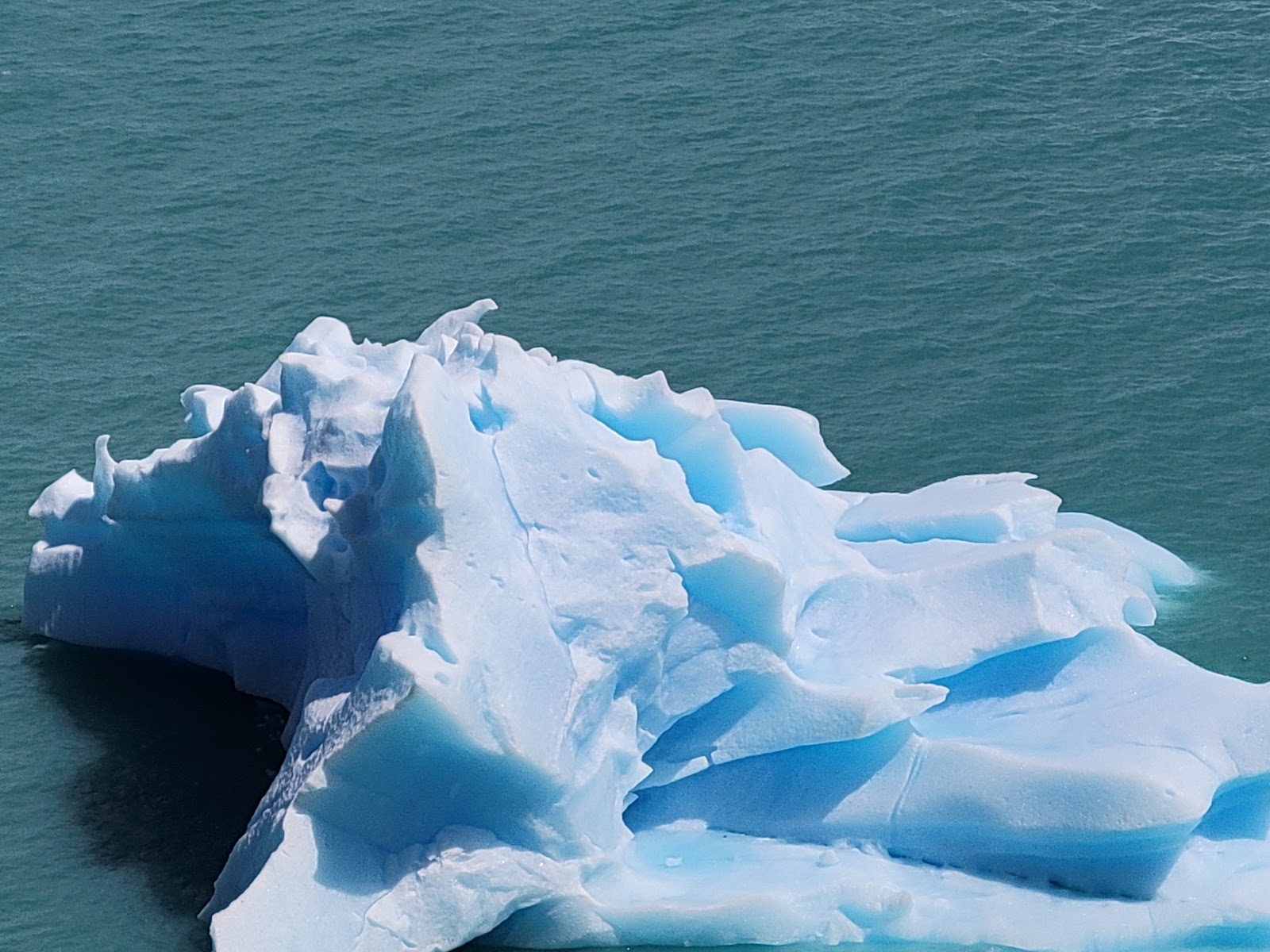
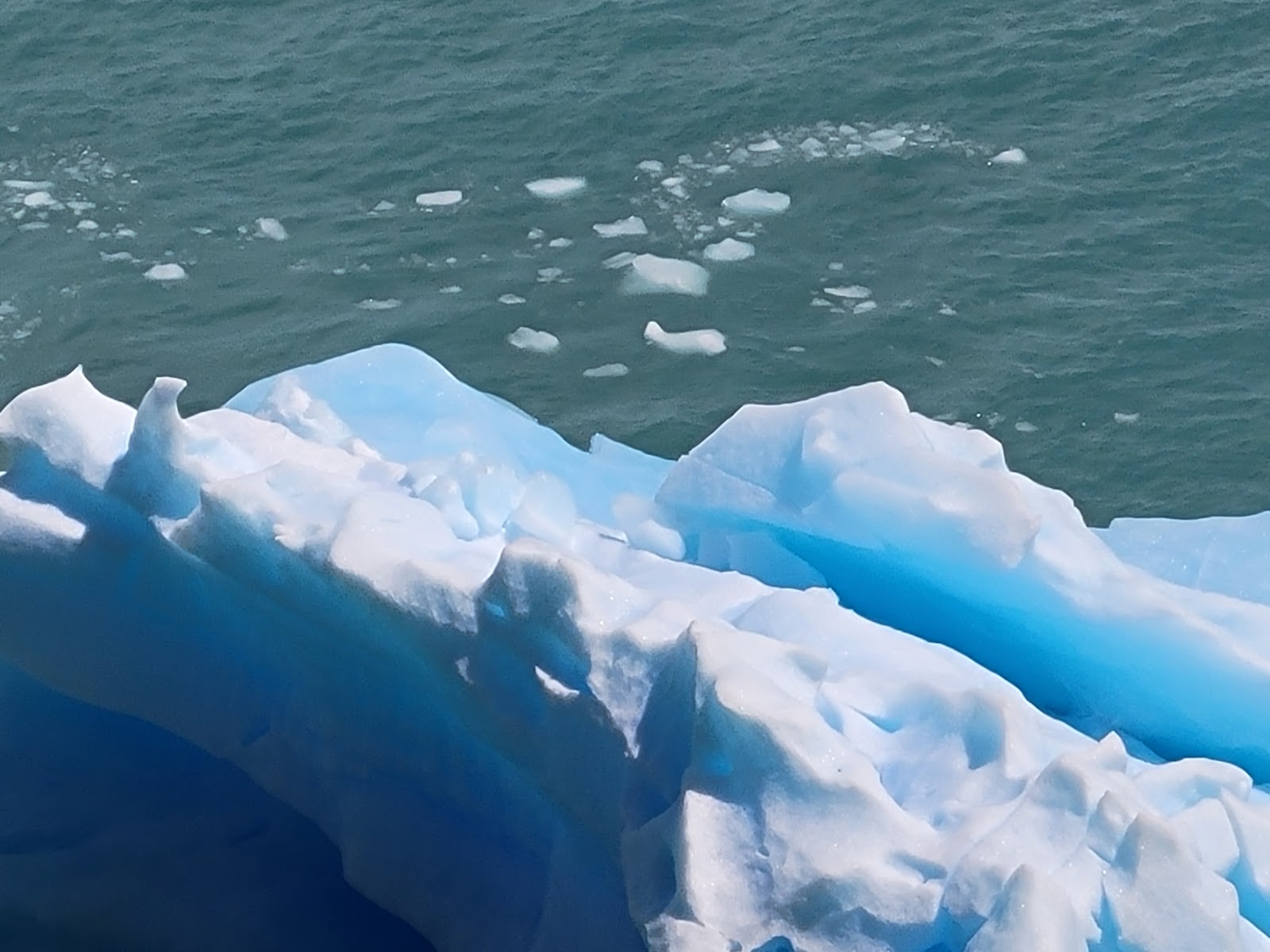
When we went to Perito Moreno glacier near El Calafate, Argentina my dad and I pointed out what different hunks of ice looked like. Here are some along with a picture.

1.

In this picture we saw 2 penguins. But can you find the penguins? 

2.

Now it’s broken in two, one of our penguins went swimming with a polar bear. And the other penguin is chatting with a polar bear hiding in the ice. Can you spot both penguins and both polar bears?

3.

We spotted a dolphin and a sea serpent head. Where are they?

My frog obsession part 1

I’ve had an obsession over frogs for a little while now. (Starting in 2019ish maybe, I honestly don’t know.) I’ve spent some time thinking about why I have this really really stupid obsession. I think it’s because frogs are such weird and cool animals. But more likely it’s because my older cousin Dante has a frog stuffed animal and he’s kind of cute. And my final reason is… just CUZ!  Alright, let’s be honest, I still don’t have a reason for this strange obsession. Welp… hoped you enjoyed my most recent blog post. Also, I’m going to do Part 2 of this on frogs we’ve seen on our trip.

P.S. Here are some free fun facts I learned: 

Did you know that a group of frogs is called an army?

Did you know some frogs calls can be heard from up to a mile away?

Did you know that frogs have very similar muscular systems to humans despite having very different body shapes?

Did you know that frogs drink water through their skin?

Did you know some frogs can jump up to 20 times their body length?

Did you know that frogs spelled backwards is gorf?

Also here’s a really funny picture of a frog:

Asher’s Gratitudes

Note: I wrote this 6 weeks ago right after we left Costa Rica but my parents didn’t review it until now so I’m only posting it now!

In my journal, I write about what I’m grateful for. Here are some examples from the drawings that I made a while ago.

My gratitude on my favorite drawing days: Pineapple drawing day: no severe allergies, Adventures, Art. PIG IN AN ICE CREAM drawing day: creativity, mom’s cooking, towels. Corb on the cob drawing day: Corb on the cob, cake, showers. The great turtle race drawing day: baby turtles, home, light. Potted plant drawing day: Pasta, Video games, Ominous weather.

Pineapple drawing day: I was grateful for no severe allergies because while in Costa Rica we met several people with severe allergies. For example, our host mom, while we were in Garza Costa Rica, said she had an allergic reaction to mosquitos and when she was bitten she would get rashes all over her body. I was also grateful for adventures because they are fun (most of the time) and exciting. I was also grateful for art because I find it almost always interesting and unique, also it lets loose your imagination. 

PIG IN AN ICE CREAM CONE drawing day: I was grateful for creativity because it sparks many new ideas like my PIG IN AN ICE CREAM CONE drawing. I am additionally grateful for mom’s cooking because DELICIOUS. I’m also grateful for towels because it’s so nice to be able to dry off fast! 

Corb on the cob drawing day: I wrote I was grateful for “Corb on a Cob” because I like mocking my brother, also because it sounds really really really stupid. I am also grateful for cake because who doesn’t like a good cake? I was grateful for showers that day because cleanliness is an amazing thing, and because I don’t really want to travel with a family who reeks. 

The great turtle race drawing day: I wrote I was grateful for baby turtles because they’re cute. I wrote I was grateful for light because light is essential for our survival. I also miss home a lot, (like a lot a lot) so that’s why I’m grateful for it.

Potted plant drawing day: I’m grateful for pasta because yummy, also cuz it’s pasta. I’m grateful for video games because they provide me with entertainment. I am also grateful for ominous weather because there was ominous weather that day.

Desayuno de Quinoa by Marta in Urcos, Peru

We tried to cram too many activities into too few days in Peru, and so we didn’t always have time to buy breakfast or eat breakfast before some of our tours. Thankfully, our drivers always knew the best places to stop. Our favorite go-to to-go breakfast was a drinkable quinoa porridge – warm, filling and lightly sweet. Marta was a vendor in the main plaza in Urcos, a small town on the way between Cuzco and the Palccoyo Rainbow Mountain. She told us that she had done well being a food vendor, and was now helping other women get started with their own food carts – in keeping with the Quechua norm of reciprocity and contributing to the community. Marta makes this in a pressure cooker, but when I’m back in California, I’ll be using my InstantPot. 

Ingredients

  • 250g quinoa*, rinsed well**
  • 1 green apple***, peeled and diced
  • 2 sticks of cinnamon
  • 8 cups of water

Instructions:

  • Mix all ingredients together. 
  • In a pressure cooker, bring to pressure and cook for 15 minutes. Let cool until you can safely open the pot. (Alternative: bring to a boil, reduce and let simmer on the stovetop 20-30.    
  • Remove whole spices and serve warm.

* Note on quinoa: In the U.S., quinoa has become a trendy superfood recently, and deservedly so. It’s a seed (not a grain) with all nine of the essential amino acids that our bodies can’t make on their own, so it’s great for vegan or vegetarian diets. It’s also got B-vitamins, minerals, lots of fiber and is naturally gluten-free. The Incas cultivated the plant in the Andes mountains thousands of years ago, and present-day Quechuans continue to do so. 

** Note on preparing quinoa: Raw quinoa seeds are coated with saponin, a bitter-tasting substance that acts as plant defense against birds and insects. Rinse the seeds in tap water, swish it around until the water runs clear, and drain through a mesh strainer. 

*** Note on apples: Marta uses locally-grown green apples that are each the size of a large plum – about the same volume as the large Granny Smith apples I usually see in American grocery stores. 

**** Variations: Each Peruvian family has their own recipe. Common variations include chunks of pineapple and cloves. Some also add hot milk right before serving. 

Red quinoa
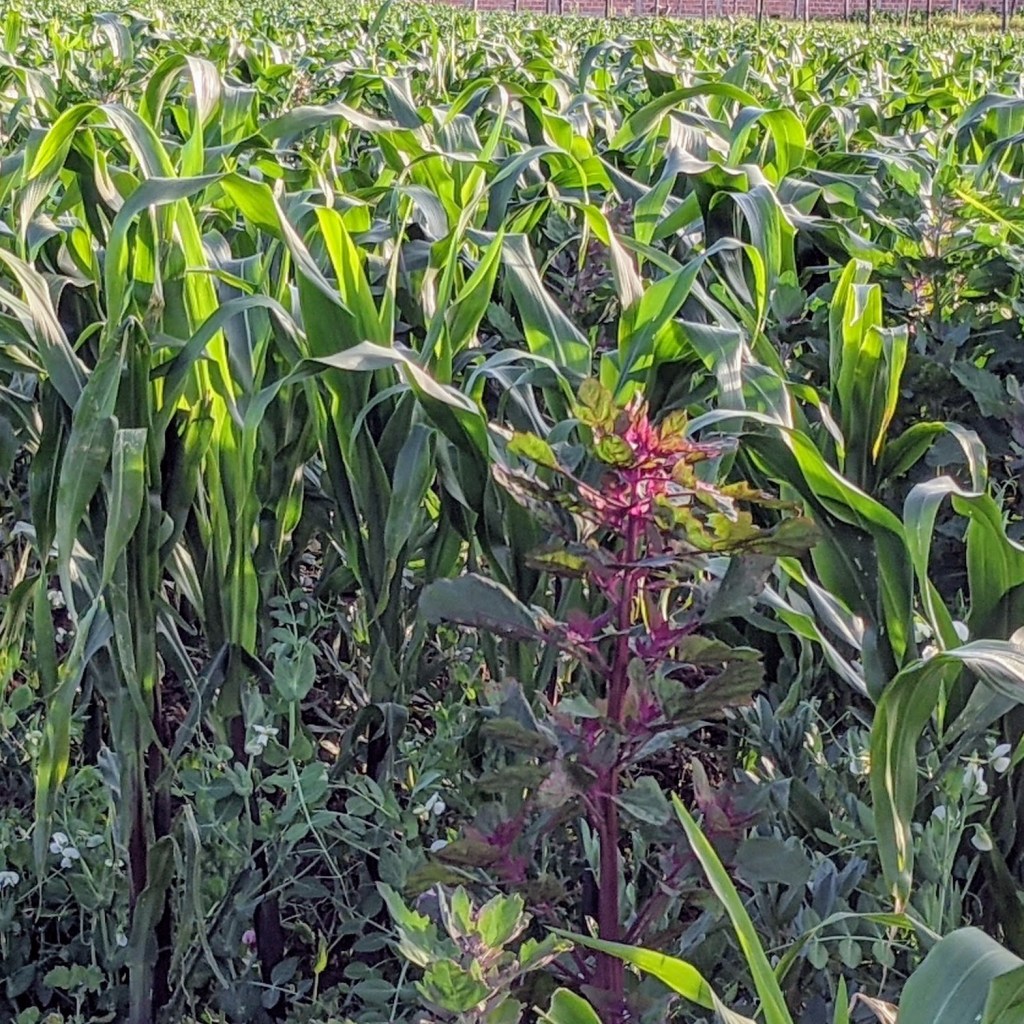
Quinoa plant, grown amongst the corn: an agricultural habit that originated when Spanish colonialists imposed their crop preferences and drove the Quechua people to hide their traditional foods and indigenous practices.

Mixed seafood ceviche by Bismarck at Black Marlin, Barco Quebrado, Costa Rica

One of our favorite memories from Costa Rica involved beer, dancing and ceviche at Black Marlin, a little open-air restaurant halfway between Playa Garza (where we spent our first 3 weeks with our host family) and Samara (where we spent the subsequent 3 months in a rental apartment). Bismarck, the chef/owner, is known locally for his mixed seafood ceviche. 

Ingredients:

  • ¼ lb octopus (cooked*, cooled and diced)
  • ¼ lb clams (cooked**, cooled and removed from shells in advanced)
  • ¼ raw firm white fish, diced 
  • ¼ raw shrimp, peeled and deveined 
  • ⅓ cup lime juice***
  • 1 small red onion, thinly sliced
  • 1 small sweet red pepper, finely minced
  • 1 jalapeño, finely minced
  • ¼ cup ginger ale**  – the secret ingredient!
  • Cilantro
  • Salt & pepper to taste

Instructions:

  • Combine fish with most of the lime juice, plus salt, onion, sweet pepper and jalapeno
  • Separately combine shrimp with the rest of the lime juice; marinate for for no more than 15 minutes
  • Combine all ingredients. Add the ginger ale. 
  • Season with more salt and pepper to taste and garnish with chopped fresh cilantro. Serve immediately. 

*Note on cooking octopus: Bismarck simply simmers the octopus in salt water until tender, about an hour. 

**Note on clams: Bismarck uses a variety of local clam called piangua. Some consider it an aphrodisiac, which of course led to endless ribald jokes between James and our host dad Alexis. The piangua is harvested from mangrove swamps, is about the size of a cherry, and when cooked tastes like most other clams. However, it also has a kind of ink or “blood” with a mineral-y marine flavor. Bismarck prys open the raw pianguas (like an oyster) to collect the blood, and adds a splash to the ceviche at the end (although we preferred the ceviche without it). Since the piangua is not widely available in the U.S., I’d just use littleneck clams and steam them just until they open.  

*** Note on lime juice: As I mentioned in my post on fish ceviche, Costa Rican limes are less acidic than limes available in most American supermarkets. If you are able to get less-acidic Costa Rican limones, you might use ½ cup of juice.  

Ceviche by Alice (Playa Garza, Costa Rica)

Alice was our “Mama Tica” when we first arrived in Costa Rica. She took great care of us, cooking us a hearty breakfast every morning and then a delicious dinner. (She also did our laundry!) Playa Garza is the base for the local fisherman, and Alice’s husband of 30+ years, Alexis, is the local fishmonger who buys the fish right off the boats and then sells it directly to families. With all that ultra-fresh fish on hand, it’s no surprise that Alice has mastered the art of making delicious ceviche! 

Ingredients:

  • ~0.5 kg / ~ 1 lb very fresh salt-water fish*
  • ⅓ cup lime juice**
  • 1 small red onion, finely minced
  • ½ sweet red pepper, finely minced
  • Cilantro
  • Salt & pepper to taste

Instructions:

  • Dice fish into 1-2 cm cubes.*** 
  • Combine onion and pepper with diced fish with lime juice and a few pinches of salt. Let sit for 5 minutes for the acid from the lime juice to “cook” the fish. 
  • Season with black pepper. Stir in chopped cilantro before serving. 
  • Ideally eat within 30 minutes of mixing the fish and lime juice. 
  • Serve with tortilla chips, and fresh spicy peppers alongside for anyone who wants a bit more zip.****  

*Note on fish: Use any saltwater fish with flesh that is lean, firm, and white/translucent. Alice’s favorite type of fish for ceviche is sea bass but she also often uses mahi mahi and snapper. If you want the resulting juice in the ceviche to be clear rather than opaque, you can pre-brine the fish with a bit of salt for 15 minutes and then rinse it.  

**Note on lime juice: Costa Rica (and other Latin American countries) have many different varieties of sour citrus fruits. Their limes (“limones”) are, in general, less acidic than the limes widely available in American supermarkets. In ceviche, the more acidic lime juice will “cook” the fish faster, and it will continue cooking  

*** Note on prepping fish: Giselle (see post on tortillas) likes to first brine the fish for 15 min with a little salt, and then rinse it before adding it to the rest of the ingredients. This results in a ceviche juice that is clear rather than milky-looking. 

****Note on spiciness: In general, Costa Rica food isn’t prepared to be spicy; however, a spicy condiment is often available on the table.