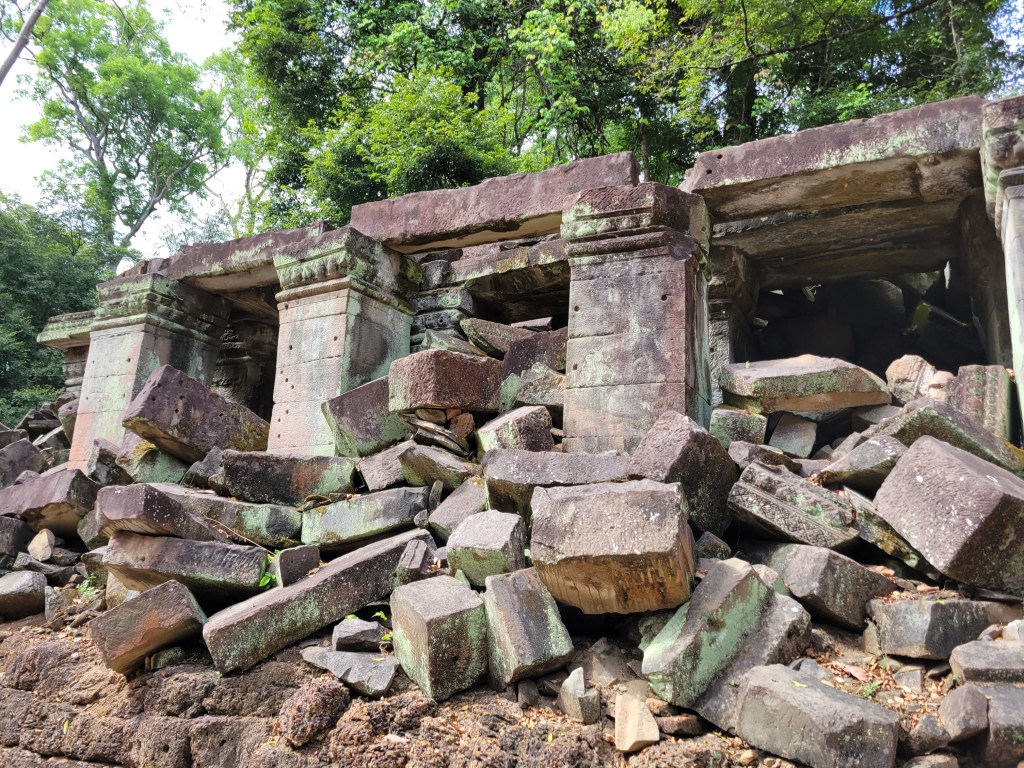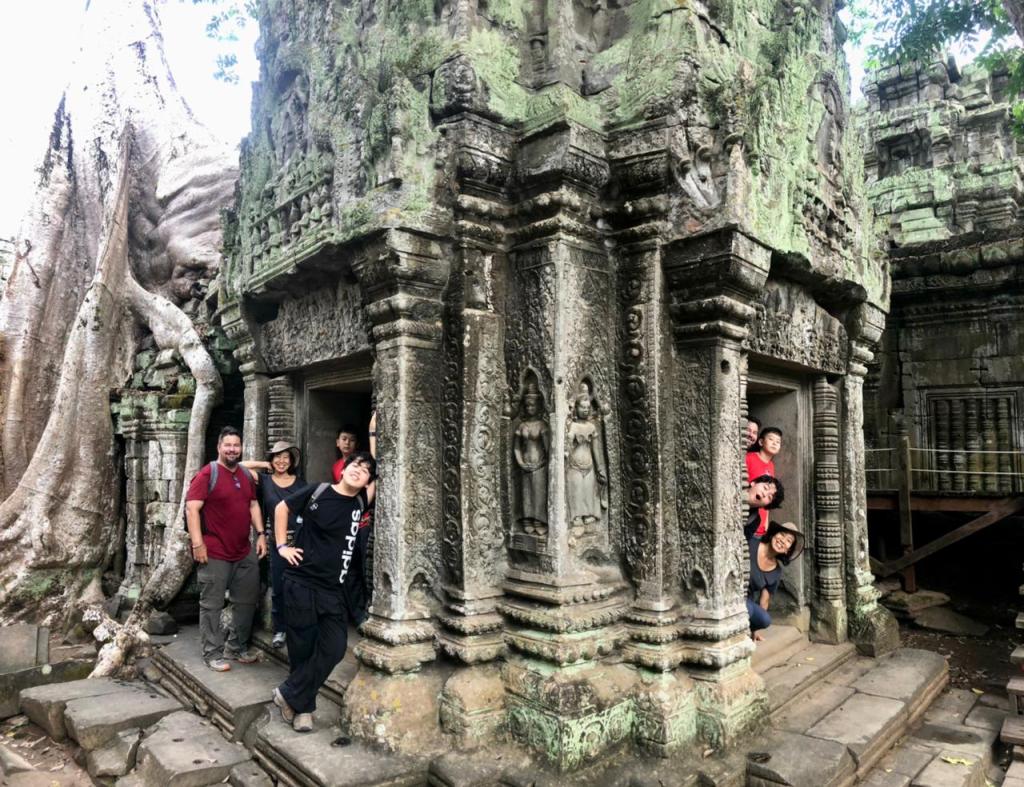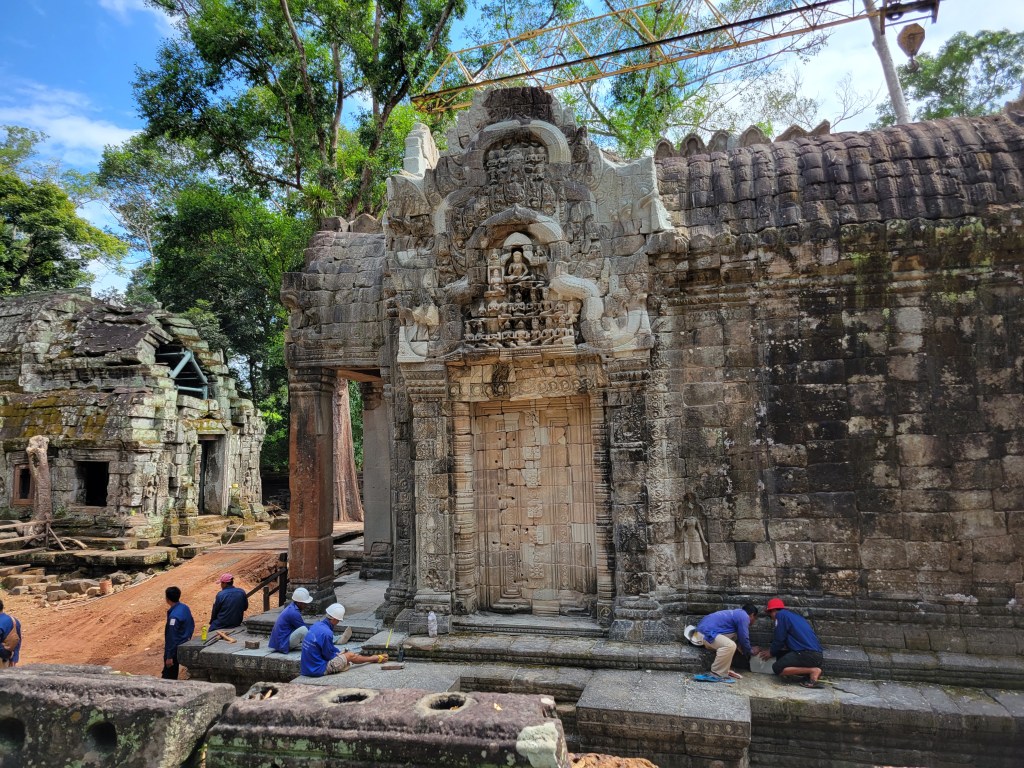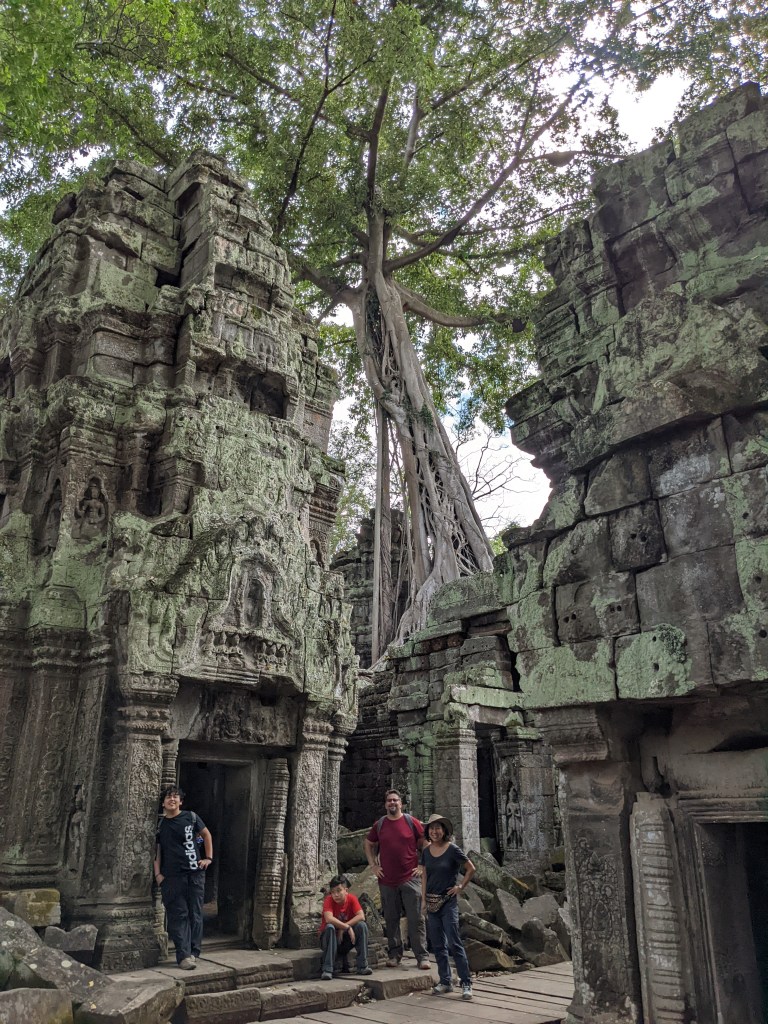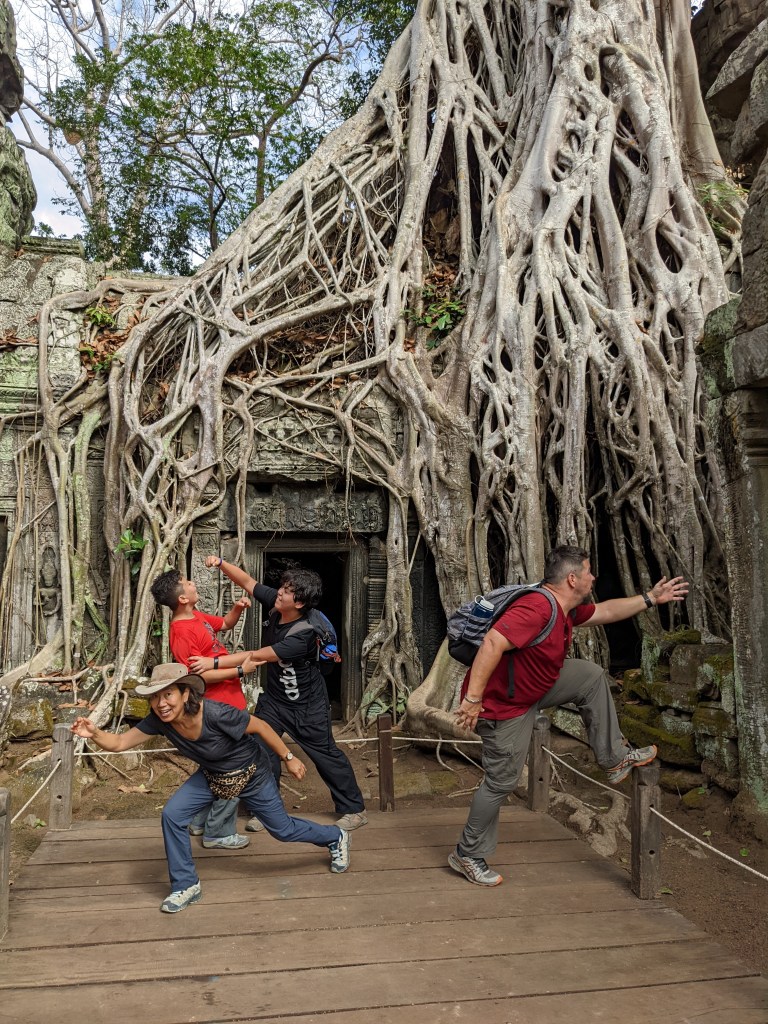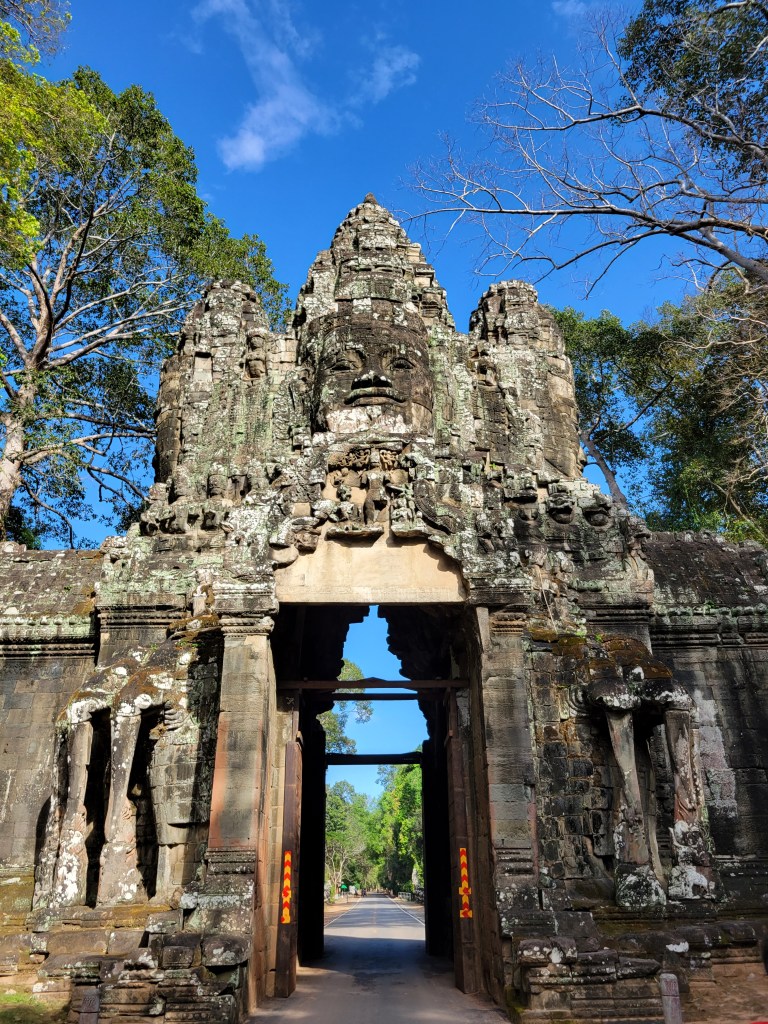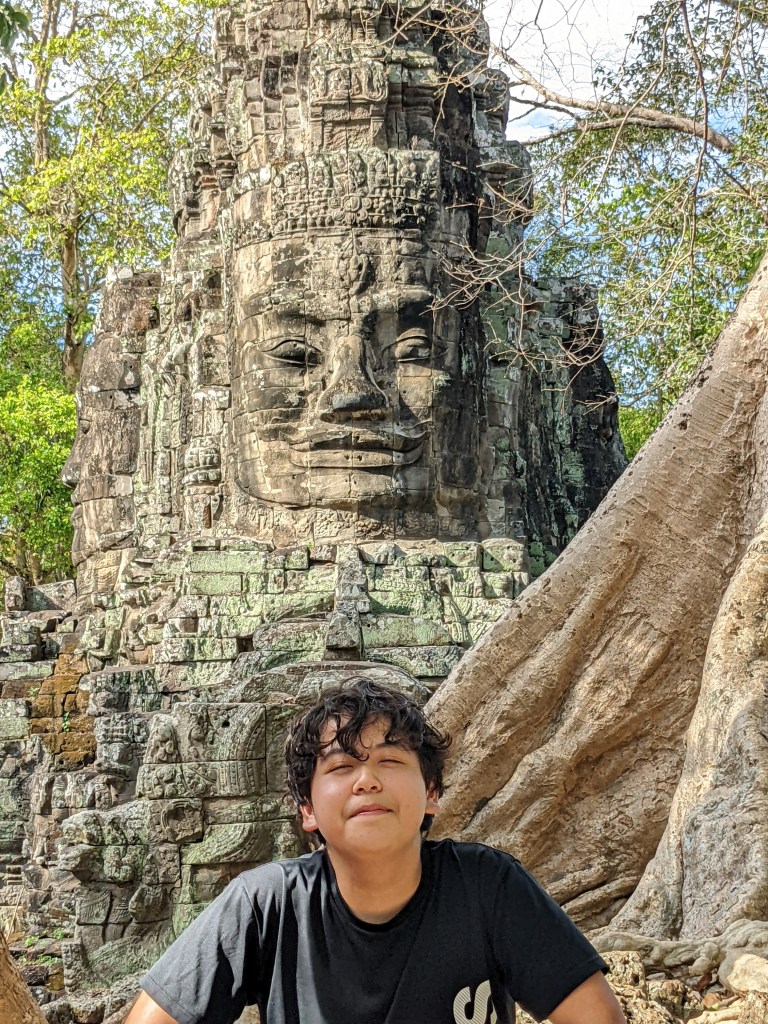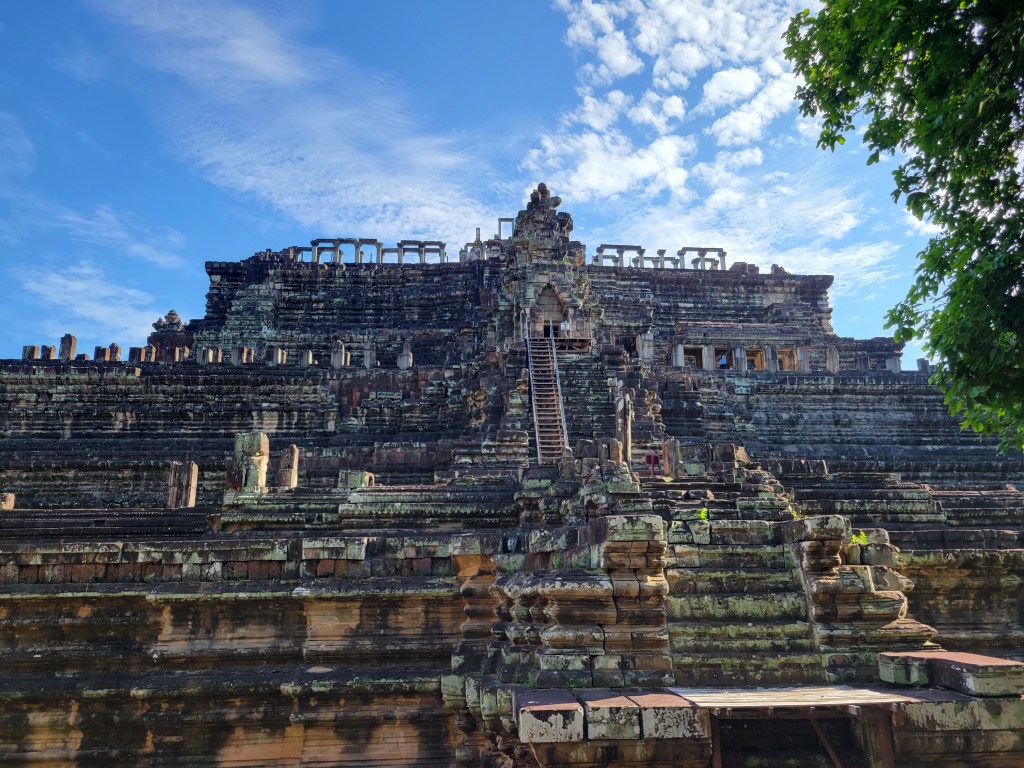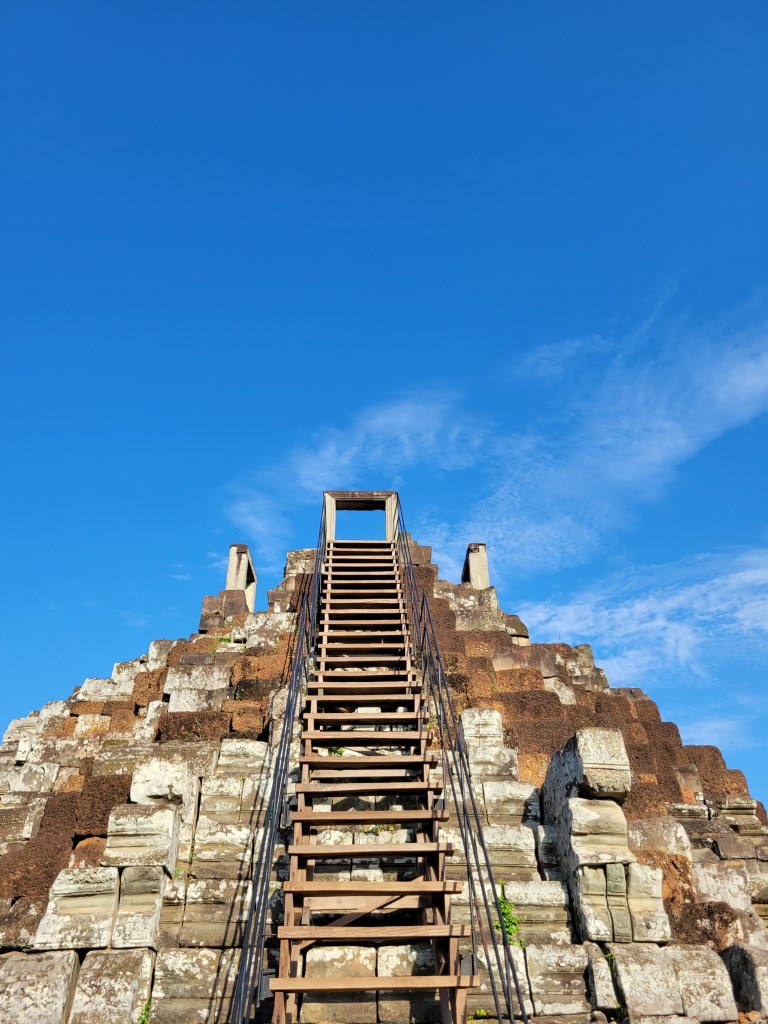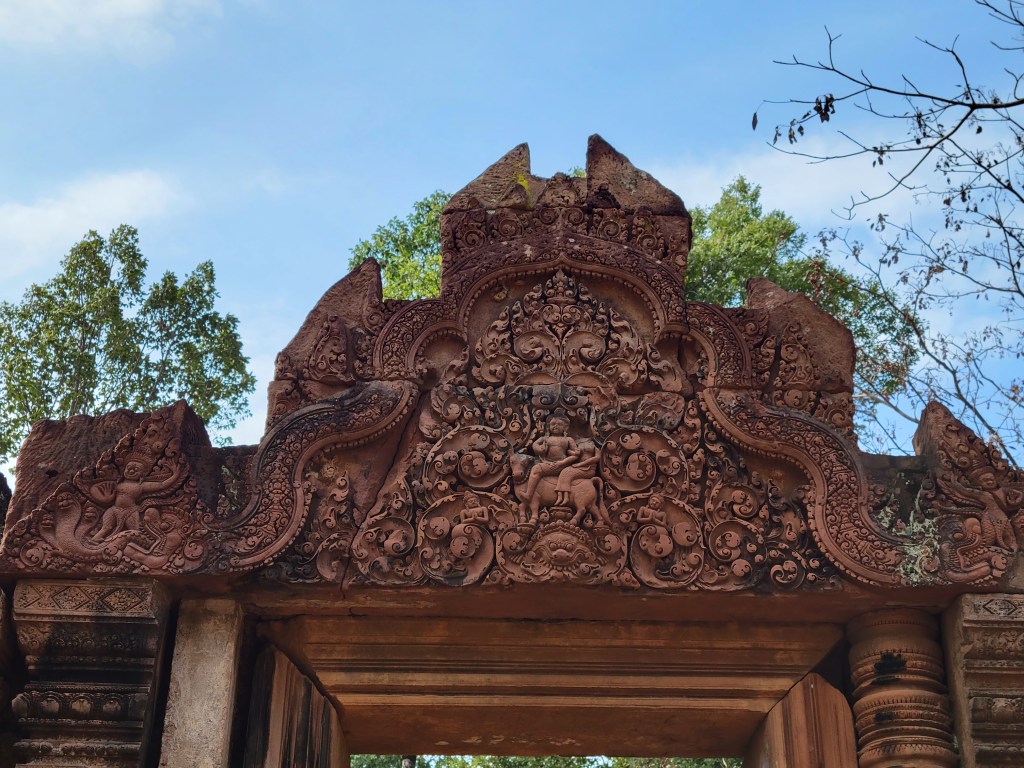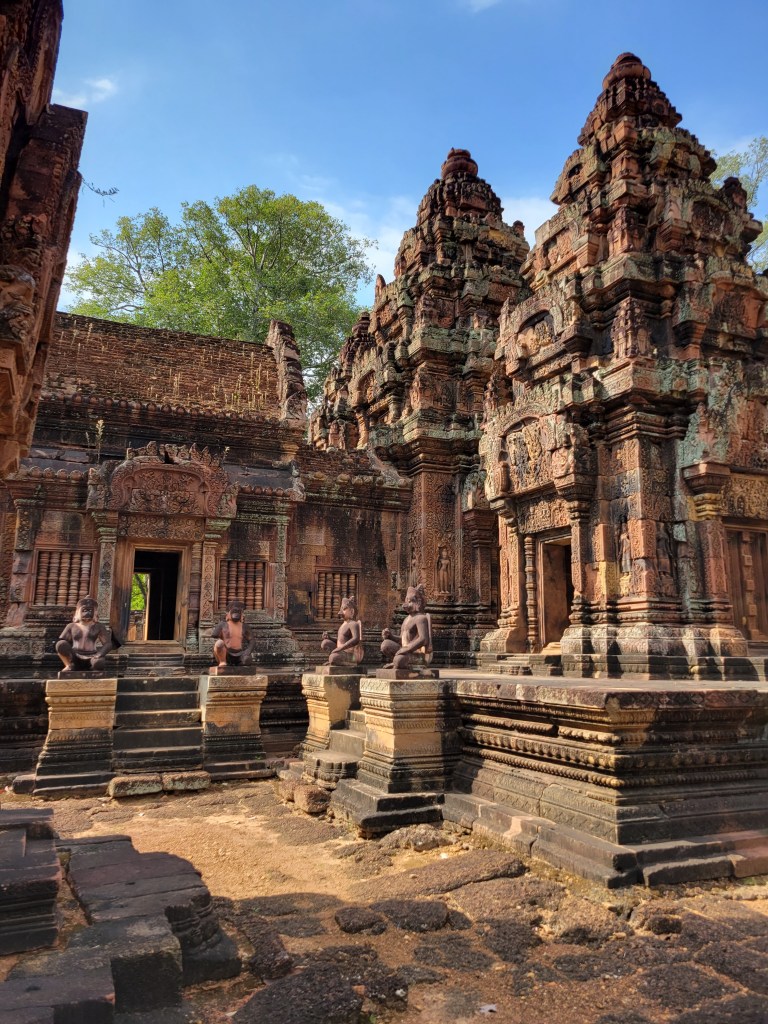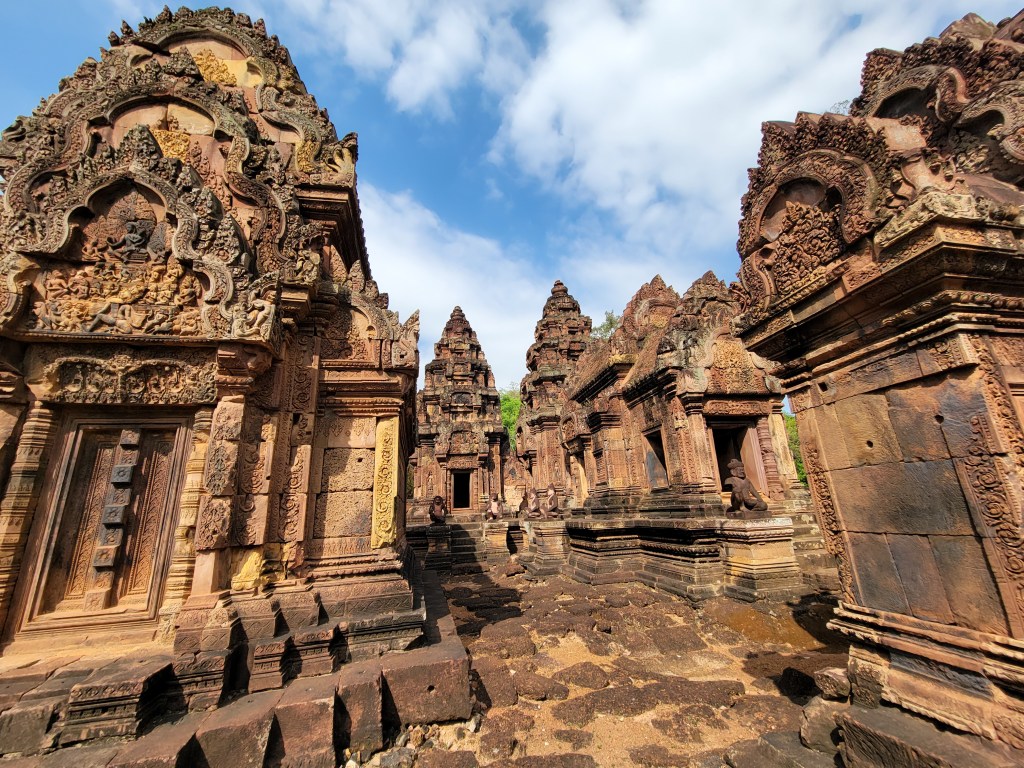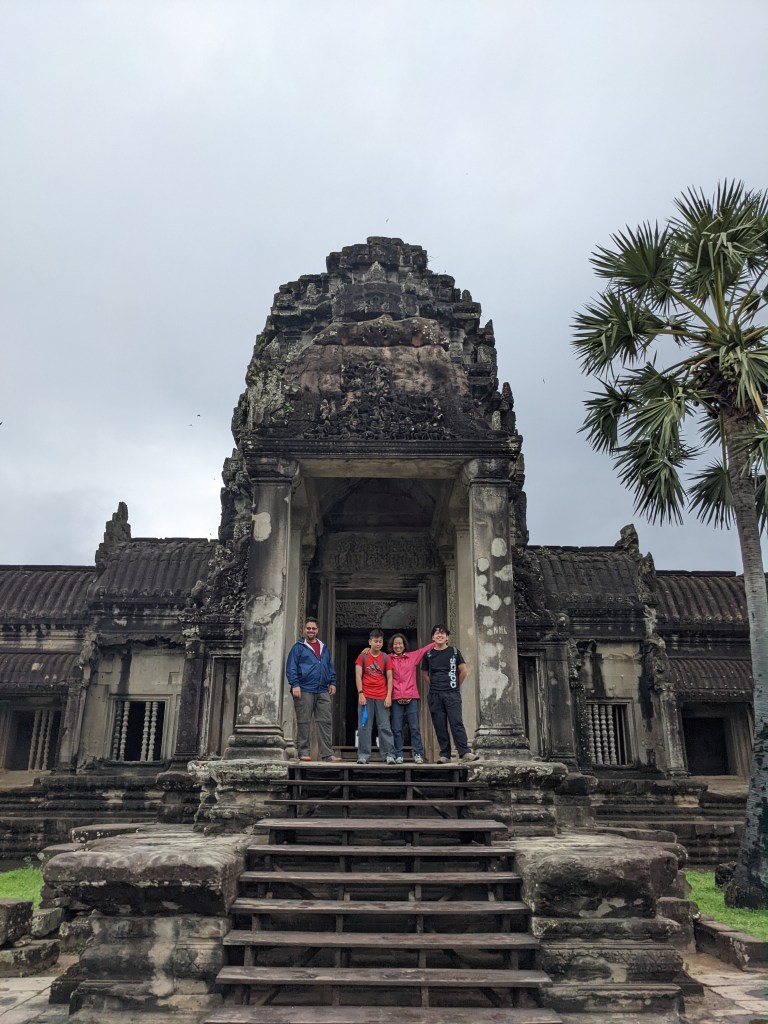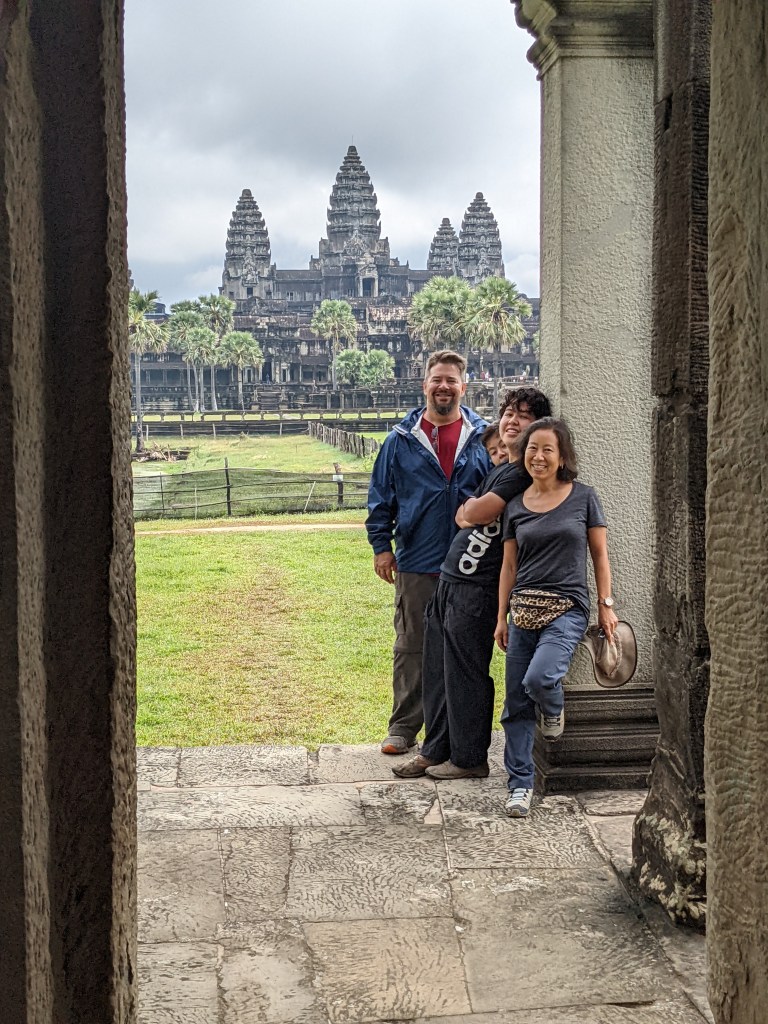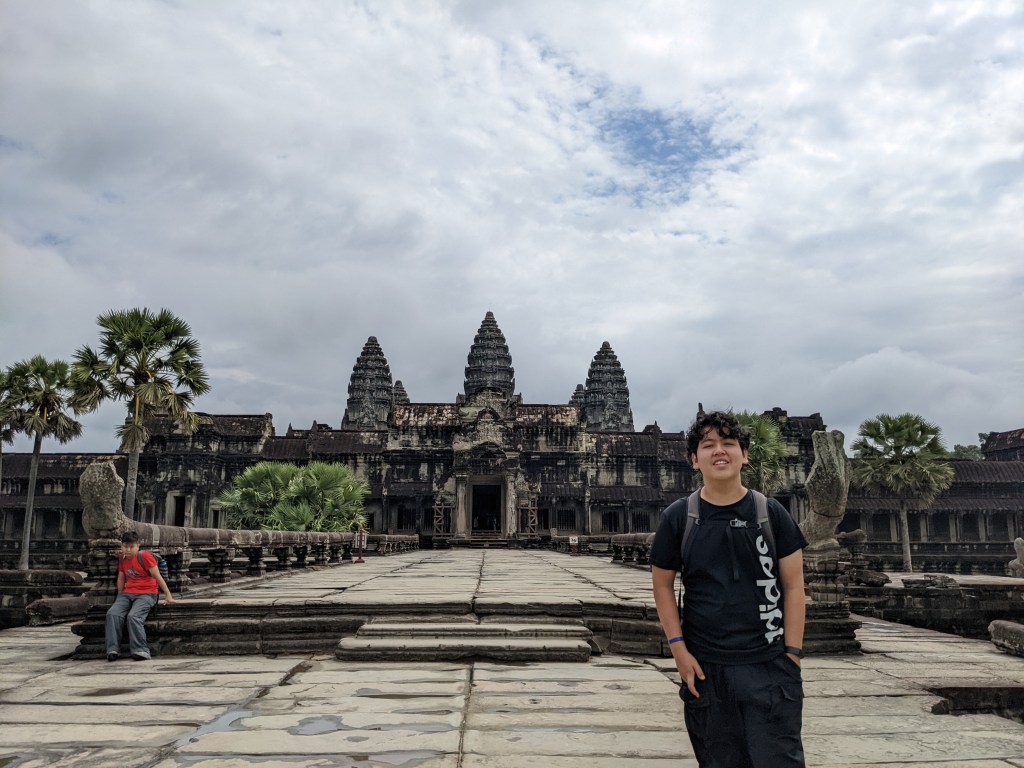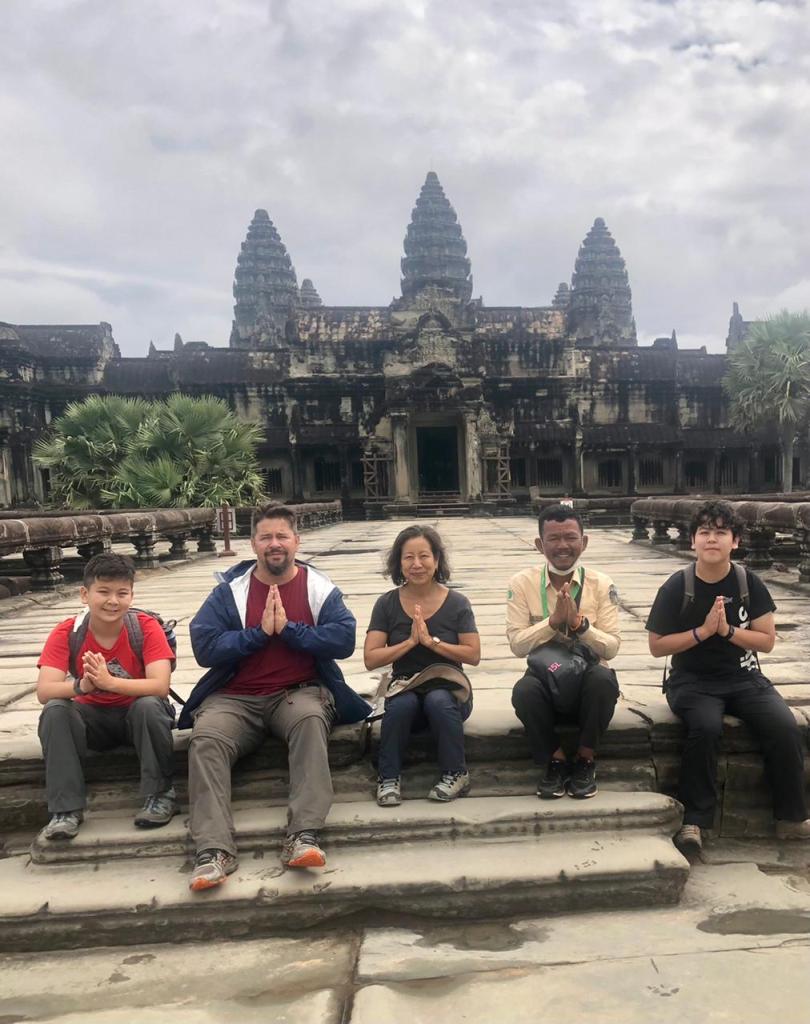
Empty Angkor Wat

When visiting Cambodia, one location is on everybody’s list: Angkor Wat. If you are in Cambodia, you must visit Angkor Wat. Often, people catch a quick flight to Siem Reap to see Angkor Wat, even if they are just in other parts of South-East Asia. So, given that we were visiting Cambodia, Angkor Wat was on the top of our list. 

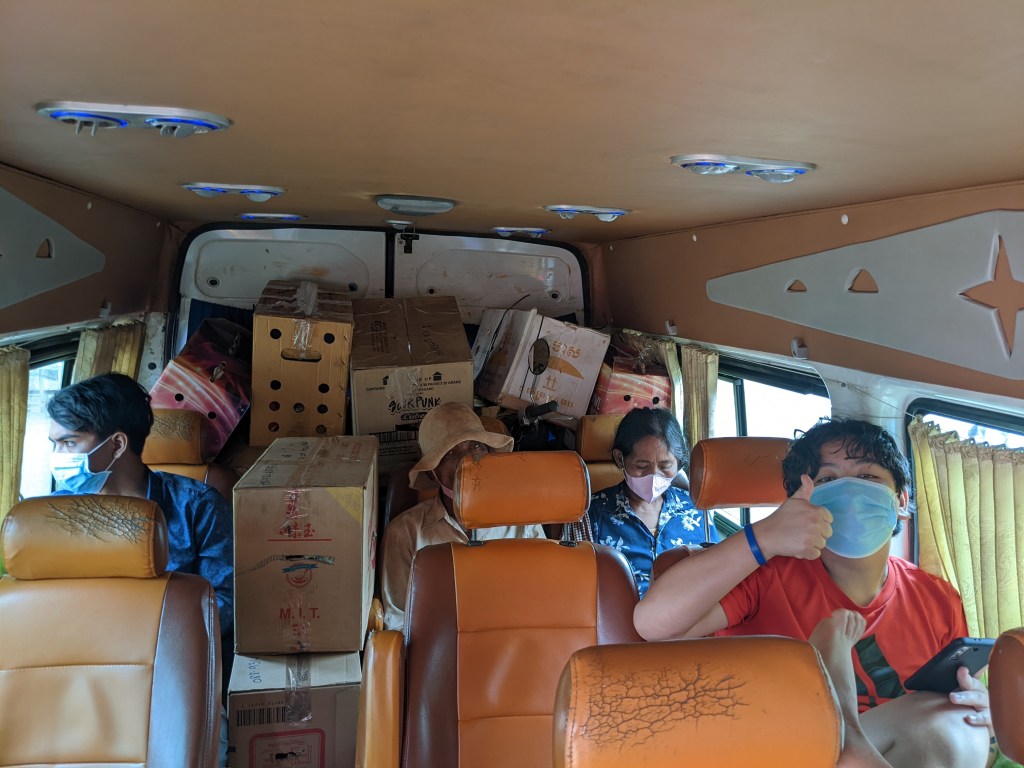
After visiting other less well-known parts of Cambodia like Phnom Penh, Mondulkiri, Ratanakiri, and Kratie, we took a ~6 hour bus from Kratie to Siem Reap. We were the only tourists on the bus/van, and it quickly filled up with locals (and chickens).

Bus filled with boxes of chickens (who clucked the whole ride)

Arriving in Siem Reap, we took a day to relax in our lovely Airbnb with a fancy shower and air conditioning (luxuries we have come to cherish greatly)! The husband of our Airbnb host was a tuk-tuk driver, so we arranged with him to get us a guide and drive us around the Angkor Wat complex. 

After a good night’s rest without the worry of mosquitos and malaria, we walked 5 minutes to a delicious breakfast restaurant. We had a filling breakfast and met our Angkor Wat guide, Sok. We tuk-tuked to the Angkor Wat ticket office. 42 fancy ticket booths, only 2 were open.

40 empty ticket booths

We got our pictures taken, paid our fees, and tuk-tuked to the entrance of the main Angkor Wat temple. We sat and got a little history lesson, and crossed the massive moat on a Canadian-sponsored temporary bridge (the main stone bridge was being restored by a Japanese construction company). 

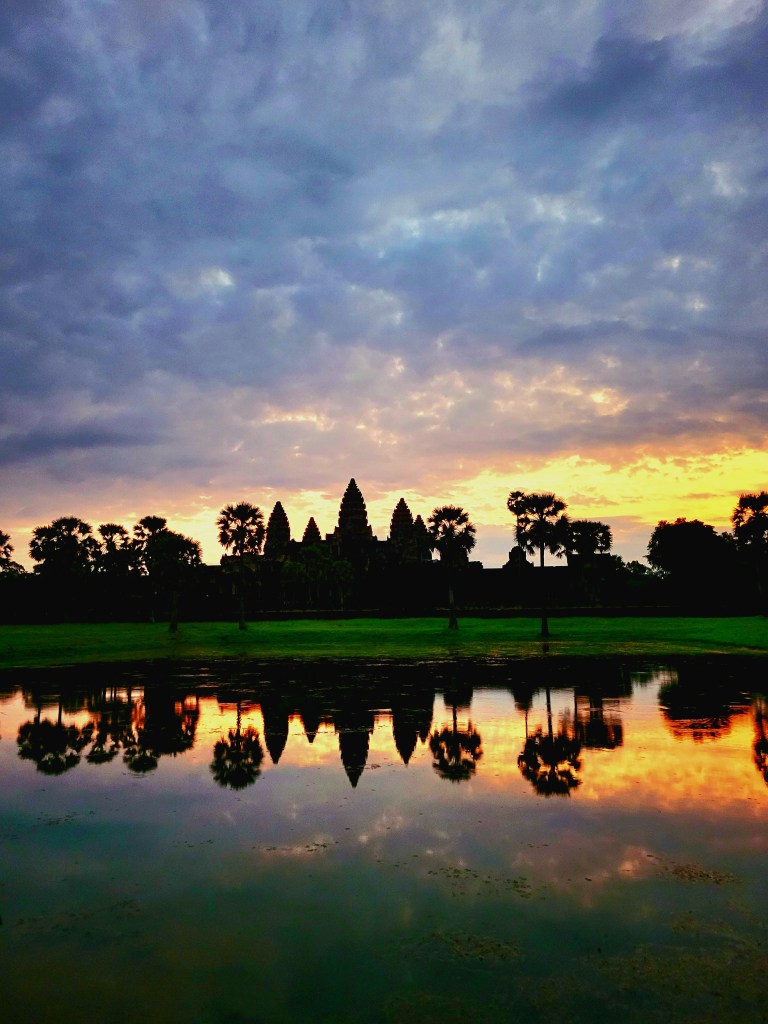
Massive moat with the iconic Angkor Wat in the background

Walking up, we were in front of the western gate, which itself was quite impressive. There was a tall wall with 5 entrances, 2 on the ends for goods and common people, 2 closer to the middle for noble families, and 1 in the center for the king. Even though it was just a wall, it was covered in intricate carvings and had stone-carved nagas guarding each entrance.

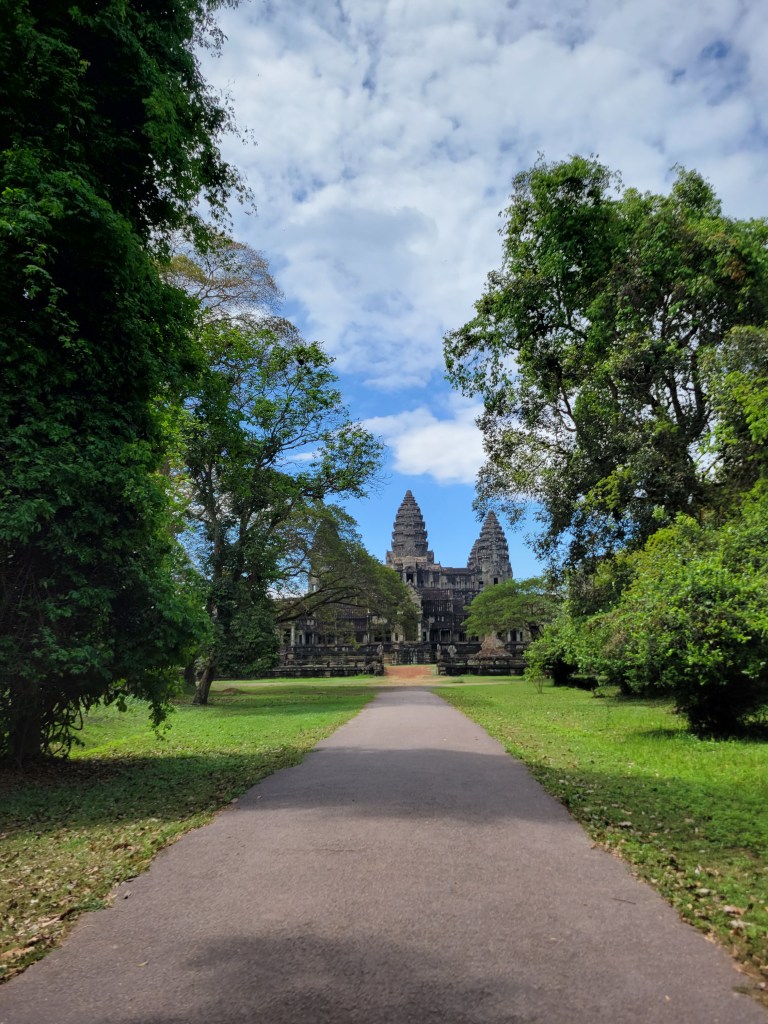
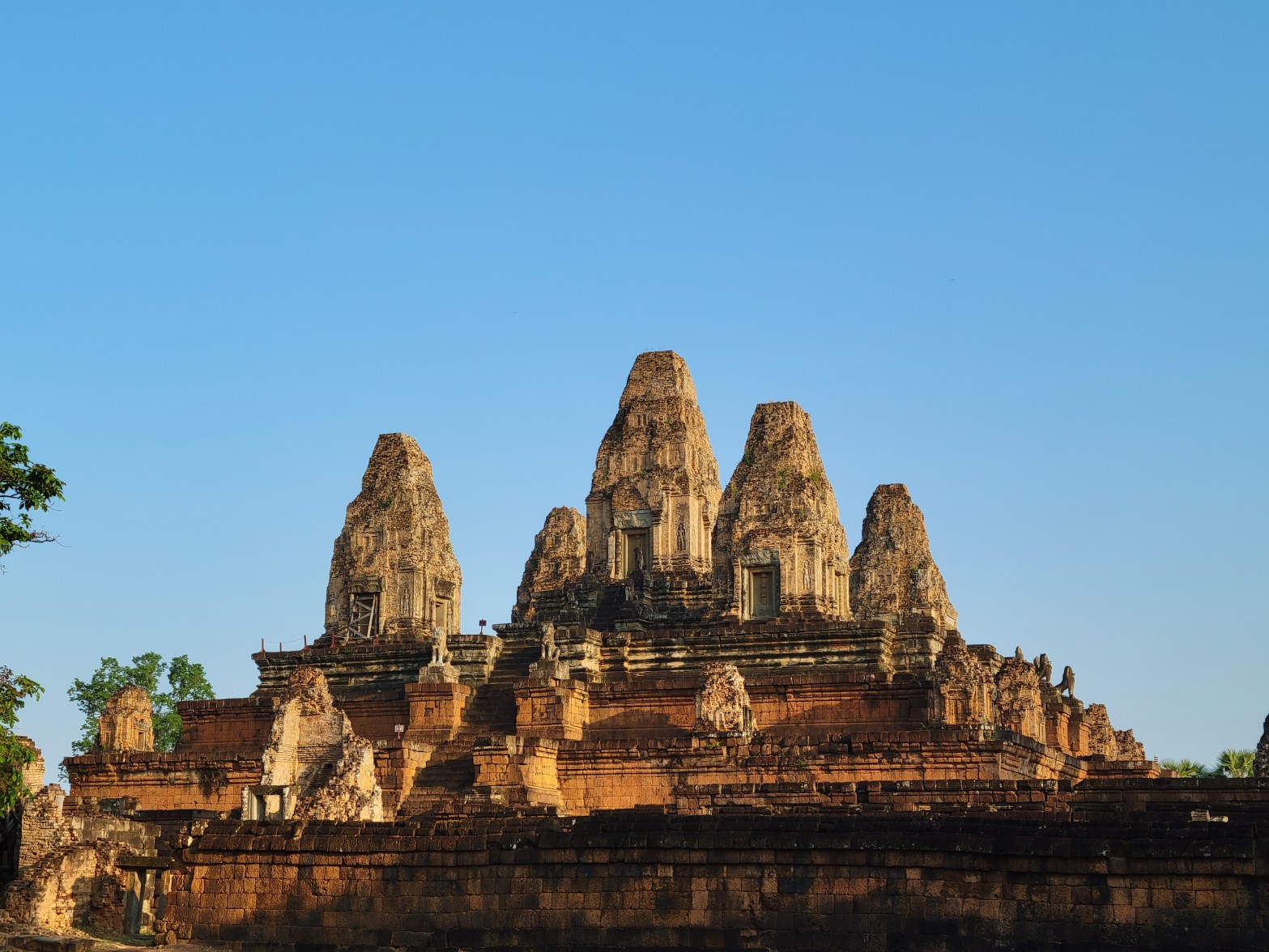
Passing through the central entrance (like the kings and queen we are), we were greeted with the postcard view of Angkor Wat. 1 large central tower surrounded by 4 slightly smaller but still giant towers, with a long walkway in the front. 

We stopped briefly at one of the ancient libraries to take some pictures.

Then we headed up the stairs to visit the inside of Angkor Wat.

No random people ruined our pictures
Posing with our guide Sok in front of Angkor Wat (not a single person behind us)

Taking plenty of pictures along the way, we stopped in what was thought to be the center of the universe and took more pictures.

We climbed some steps to get to the second innermost courtyard where there was lots of restoration and construction going on, sponsored by various countries.

Restoration shenanigans

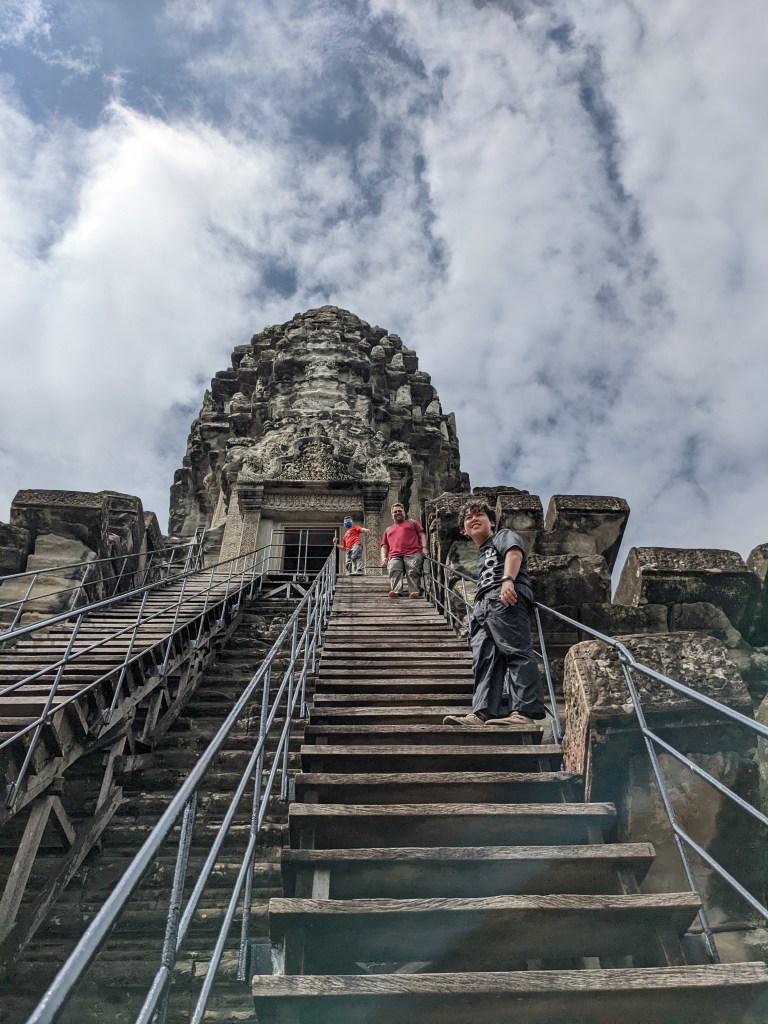
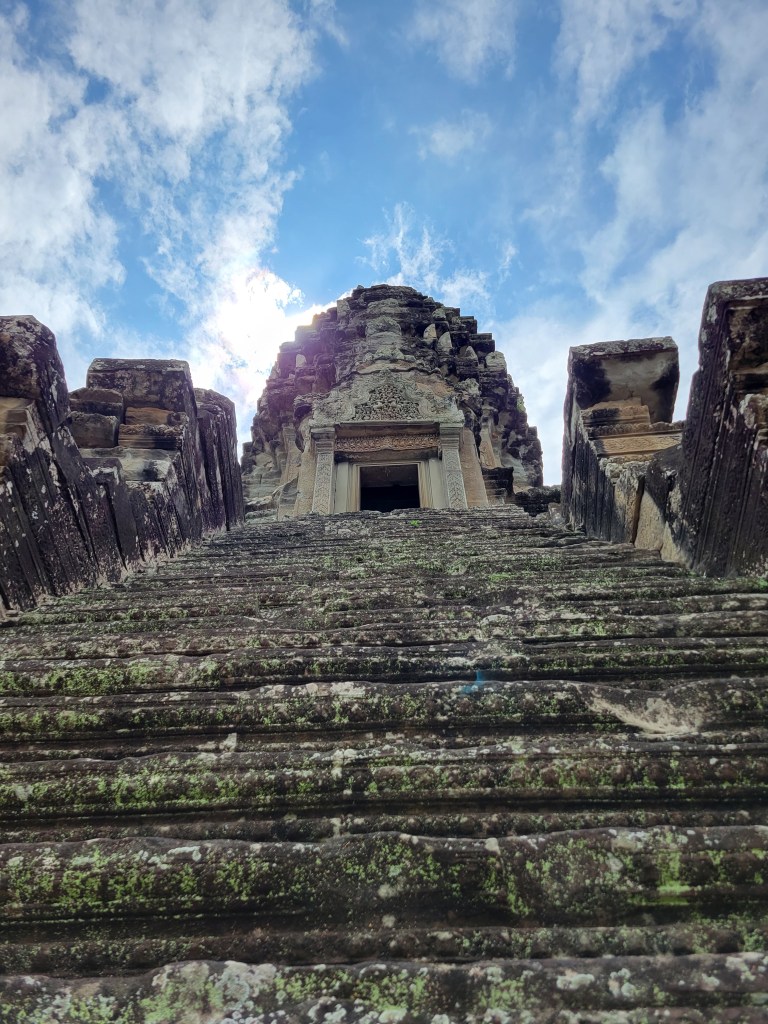
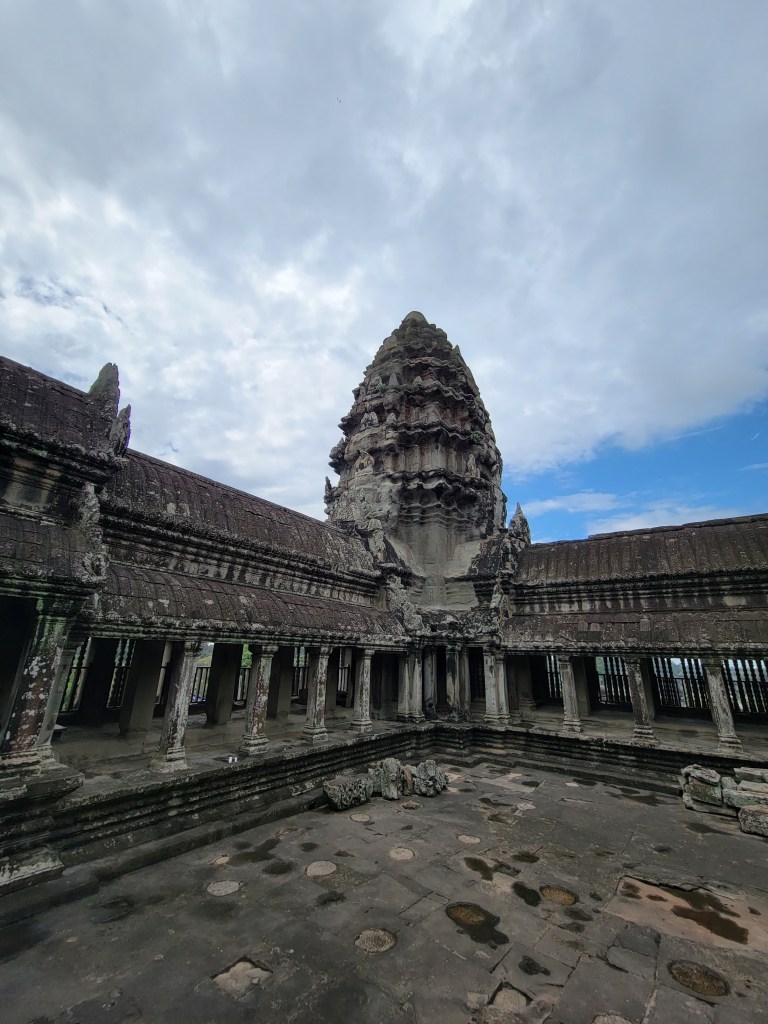
We climbed the last bunch of steps to the top courtyard with the big central tower and big towers on the corners.

Signs said capacity of 100, we saw maybe 10 total people in the 30 minutes we spent exploring the highest courtyard.

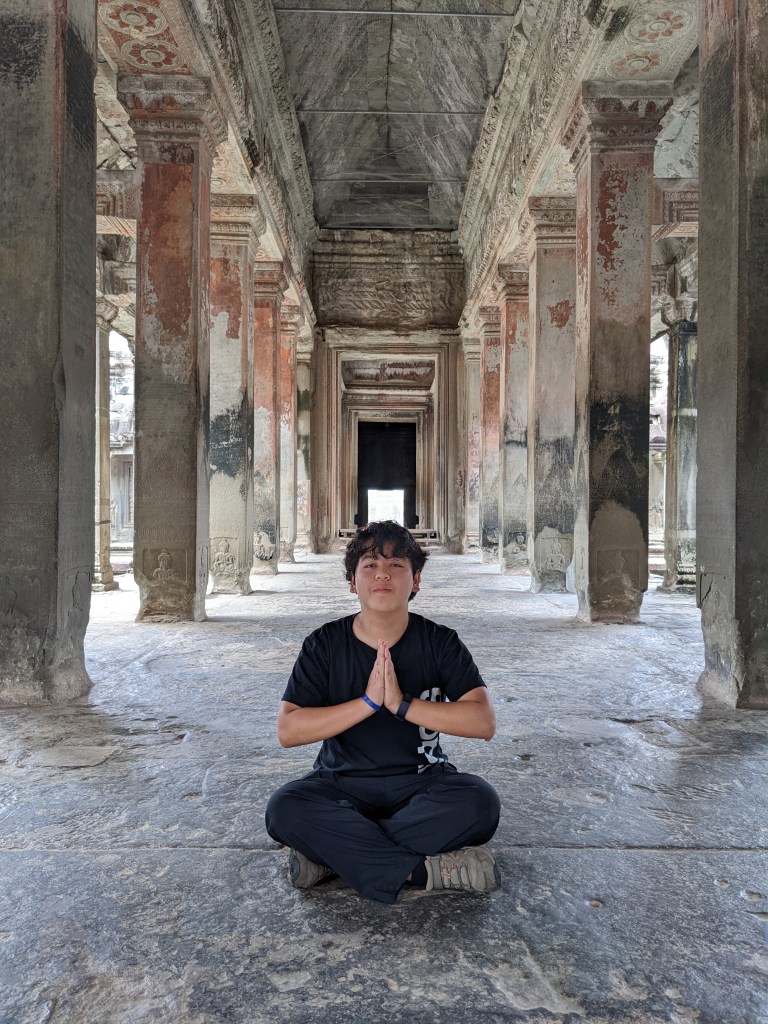
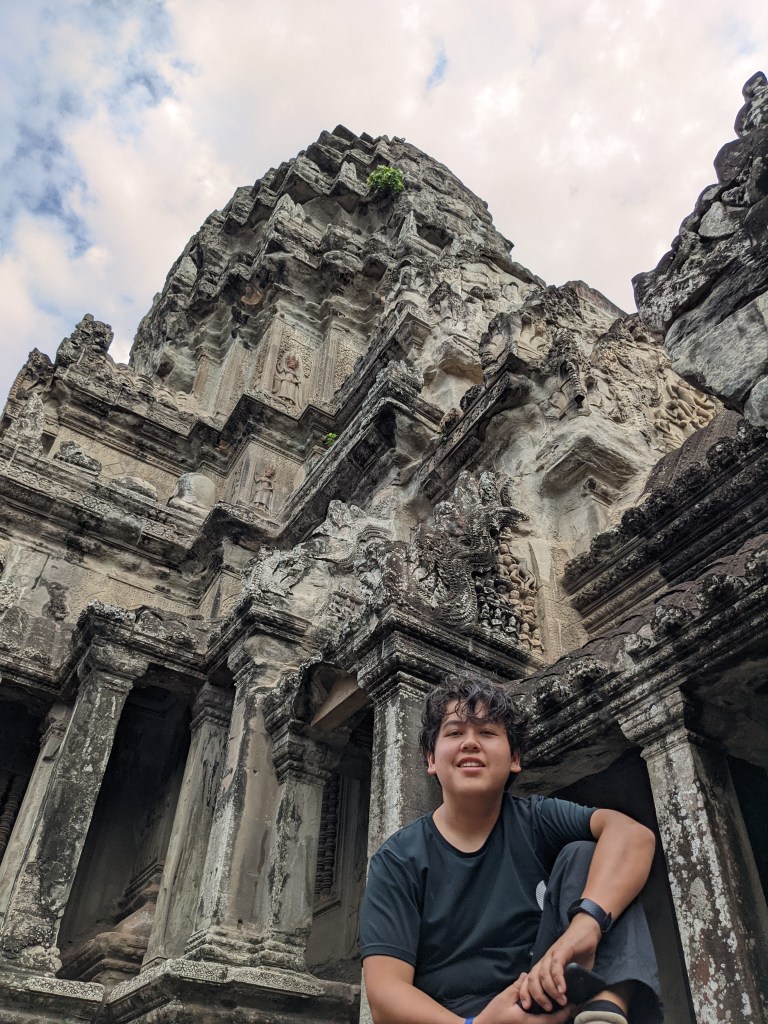
Given that there were virtually no people, we were able to pose and take countless pictures without random people ruining the picture. 

We climbed down the stairs from the top courtyard, and down another set to get to the third-highest courtyard which was a wide grassy field wrapping around the center of Angkor Wat. 

Grassy courtyard
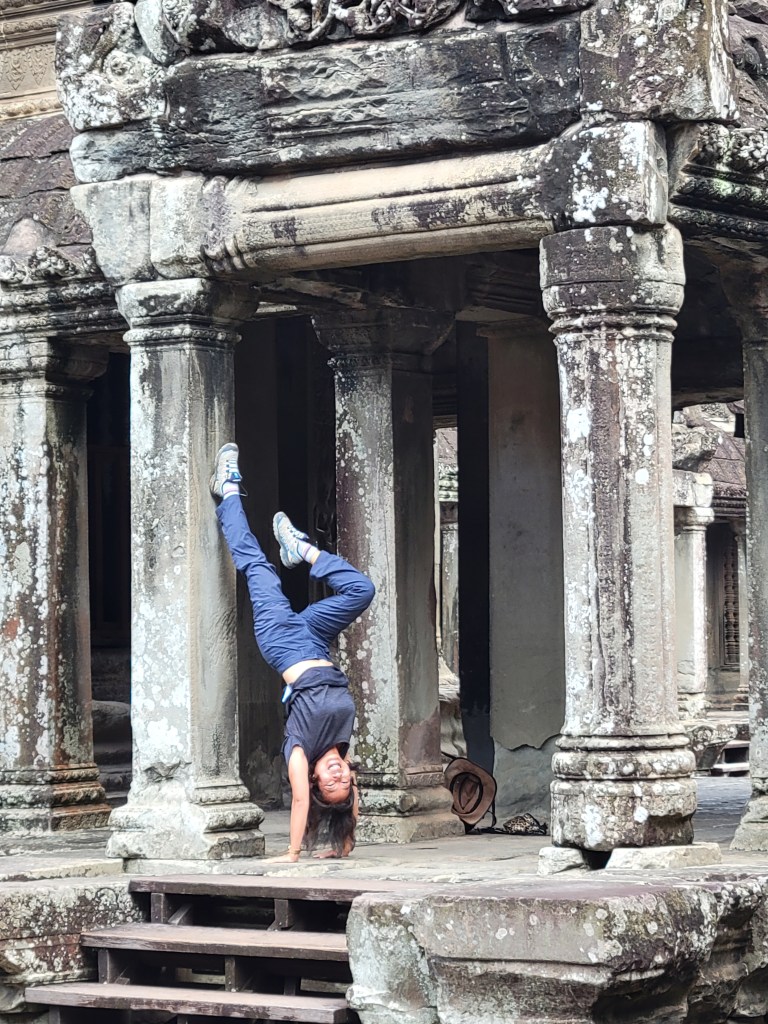
My epic crane pose and Asher’s lame nothing pose

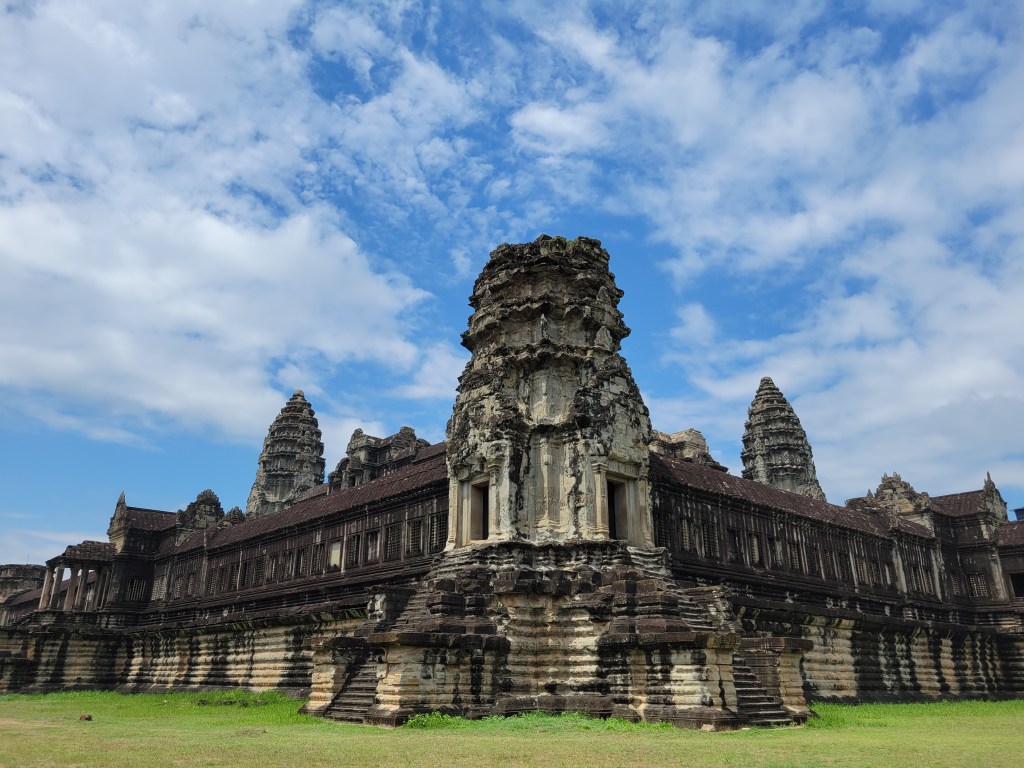
We headed to a corner to take even more pictures, all with absolutely no one anywhere in sight. 

View from the corner
Jump in the corner (with Asher’s lame non-jump)

We left the grassy courtyard to get to the eastern entrance. Still no one. Our guide said that before Covid, the walkway between Angkor Wat and the east entrance was jam-packed. Post-covid, it was silent and empty. 

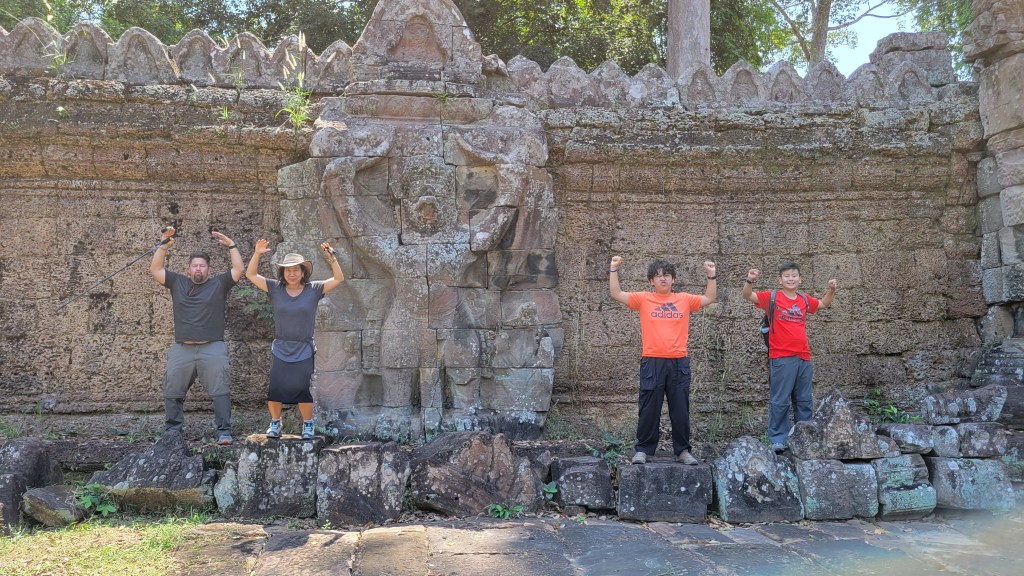
Family picture with no one in the way

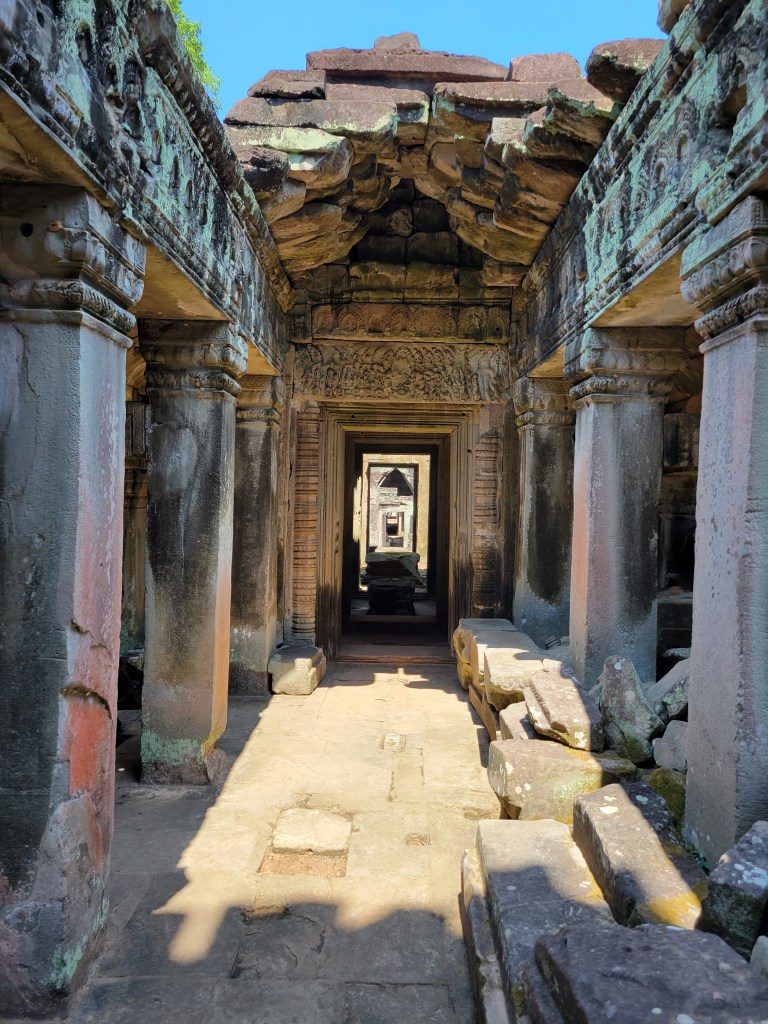
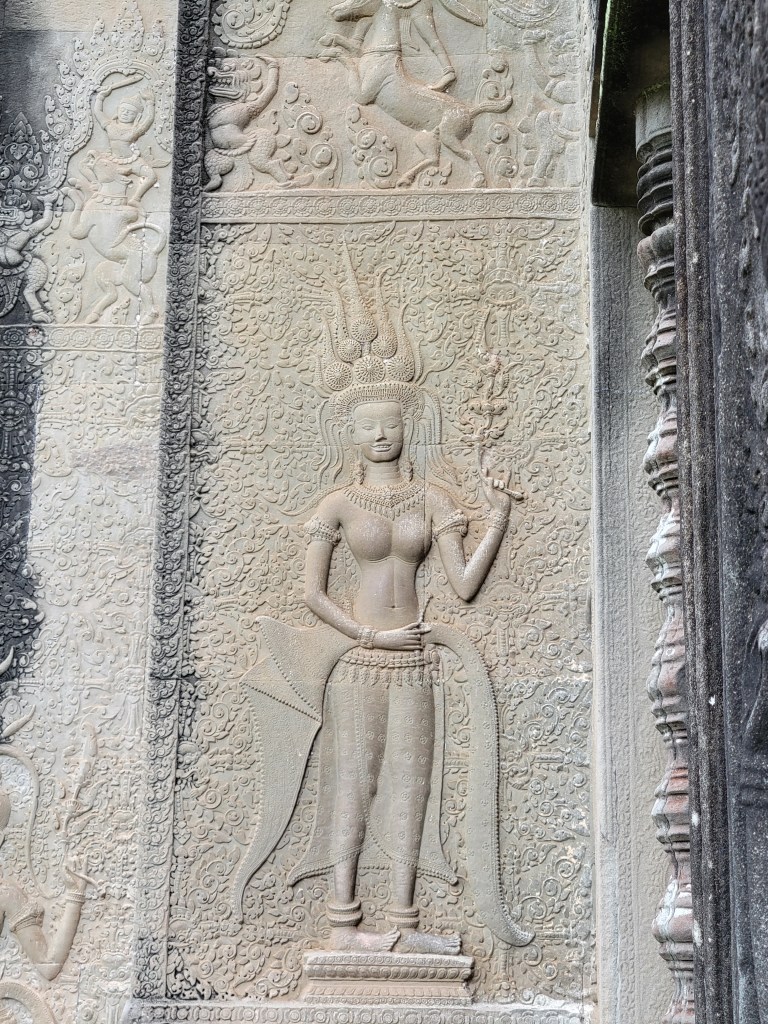
After Angkor Wat, we saw more temples in the Angkor archaeological area. 

The next morning we woke up at 5am and hopped back in the tuk-tuk to watch the sunrise over Angkor Wat. We walked over to the sunrise viewpoint which had the most people we had seen so far, 50. Pre-covid pictures show thousands of people, tens of layers deep, all trying to get pictures of the sunrise. We had 50. Everyone was able to be in the front row, set up their cameras for timelapse, or just sit and enjoy the sunrise. 

Front row picture-taking seat

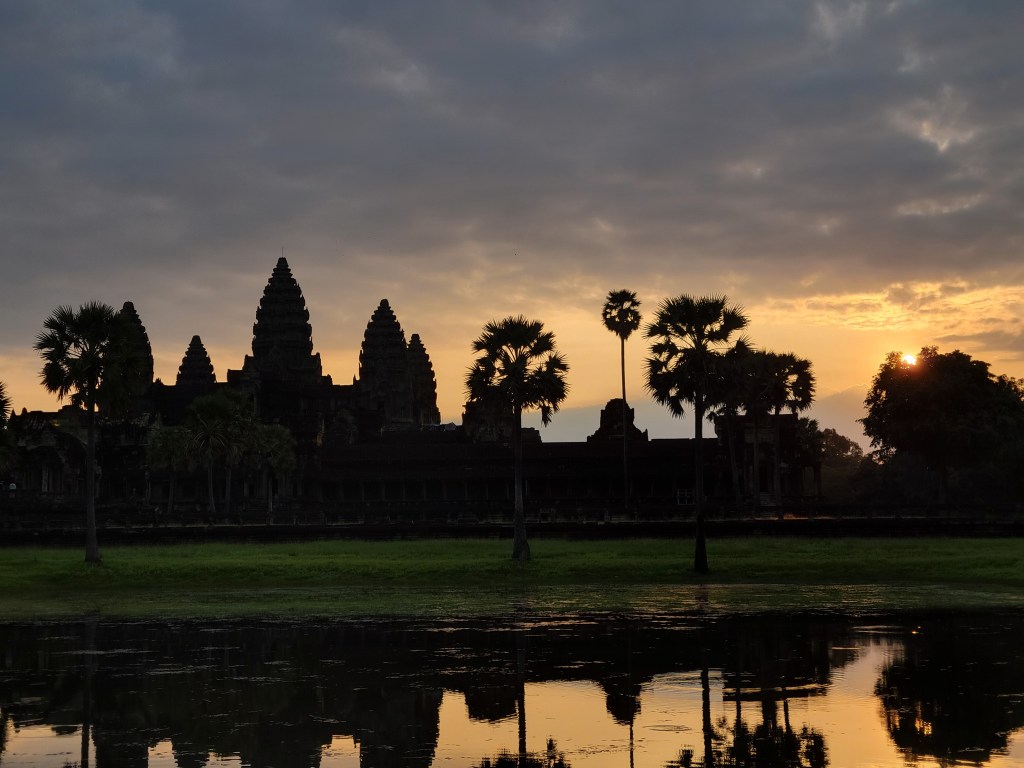
The sunrise was gorgeous and we took plenty of pictures. 

Sun peeking through the trees
Family sunrise picture

We were certainly grateful to have Angkor Wat almost all to ourselves, and although the emptiness of all these amazing tourist sites is a blessing to us, it greatly hurts the locals who depend on tourism for a living.

Happy little moments

From the Hammock of James – It’s Hammock Time

Wow, my blogging is inconsistent.  We are halfway through our gap year and I’m on my second blog.  I just want to take a moment to note one of my favorite small memories from each country.

We Spent four months in Costa Rica and there were so many awesome moments.  One day we were at the beach in Playa Samara and a huge flock of birds were diving into the ocean over and over again.  Gloria and I waded out into the dive area and there were thousands of anchovies pinging out of the water.  One flew into Glo’s rashguard and got stuck in her sleeve – safe from tuna and birds – until she tossed it back into the circle of life.  

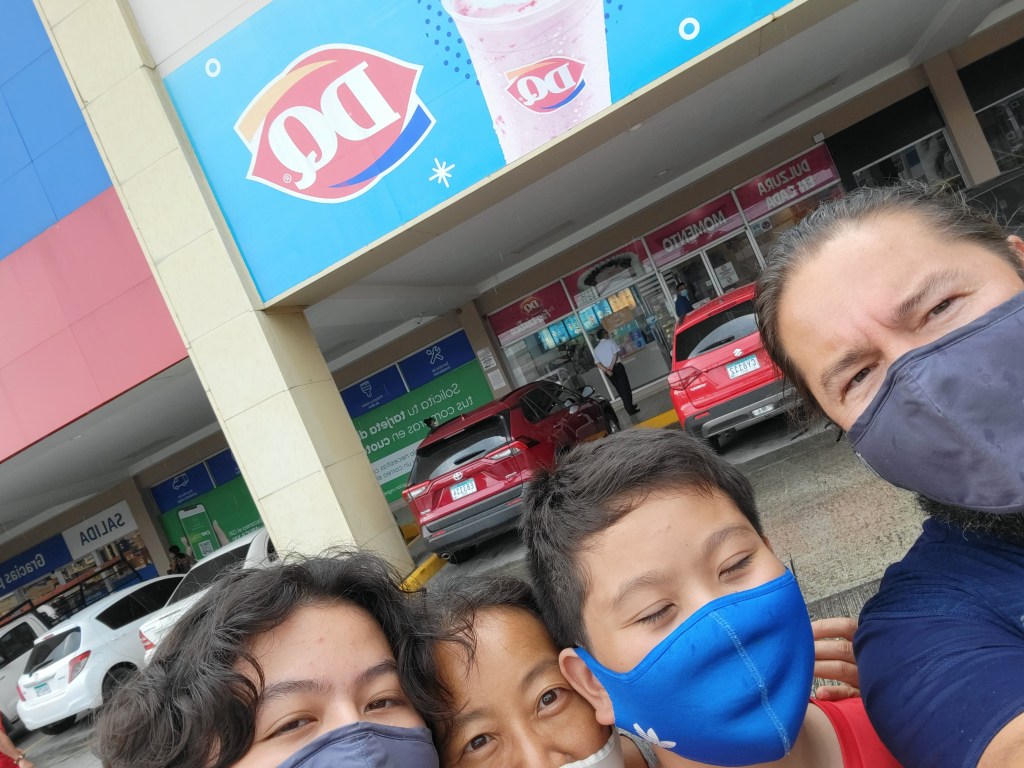
We jumped to Panama after our first 3 months in Costa Rica.  The canal and our overnight stay with the Emberá were great but when our guide took us to get lunch we saw a Dairy Queen.  We tried to get DQ in honor of my mother but it wasn’t open yet so we just took a selfie to send to her.   

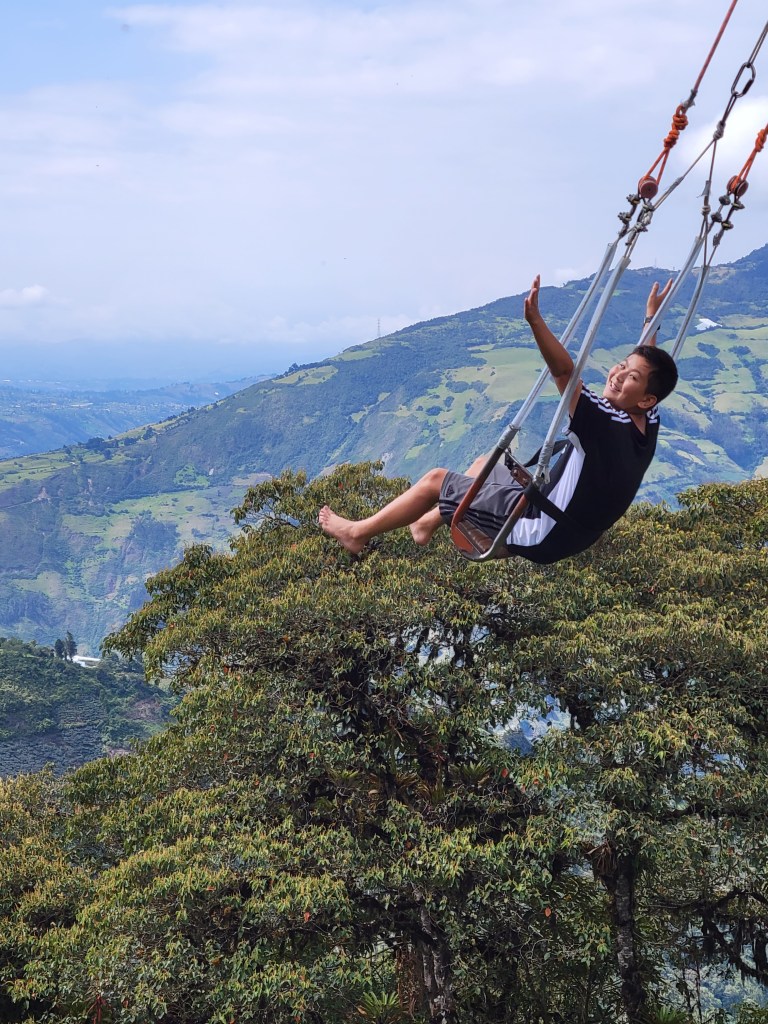
In Ecuador, they have giant swing sets on the edge of a cliff so you swing out over the abyss.  Some of them were great.  The original End of the World swing is outside Banos.  The swing was great, but even more fun was watching the kids try to outdo each other on the parallel zip lines – racing, crazy poses, etc. 

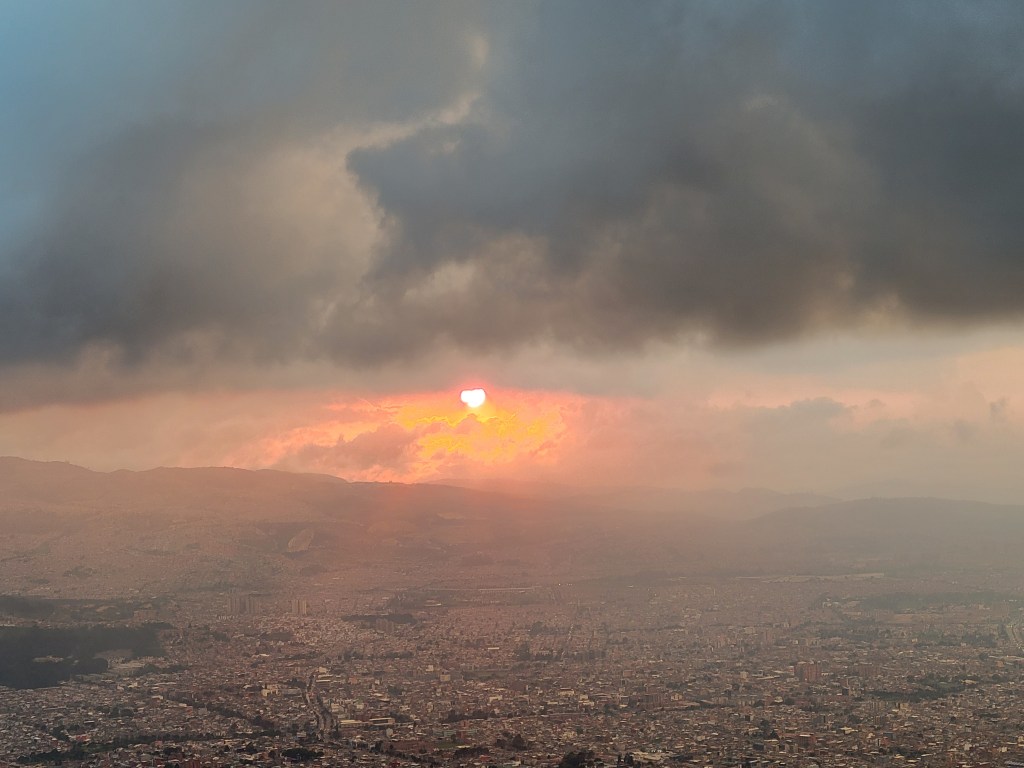
In Columbia, we took the funicular to the top of Monserrate overlooking Bogota.  I wasn’t expecting much.  The view was nice but then the sun turned rose red and the view became sublime.  After being mesmerized by the sunset, we noticed they had turned on the Christmas lights and there were light arches, angels, Koi, etc.  As we came down the funicular, we went through a tunnel of Christmas lights with the night sky of Bogota in the background.  

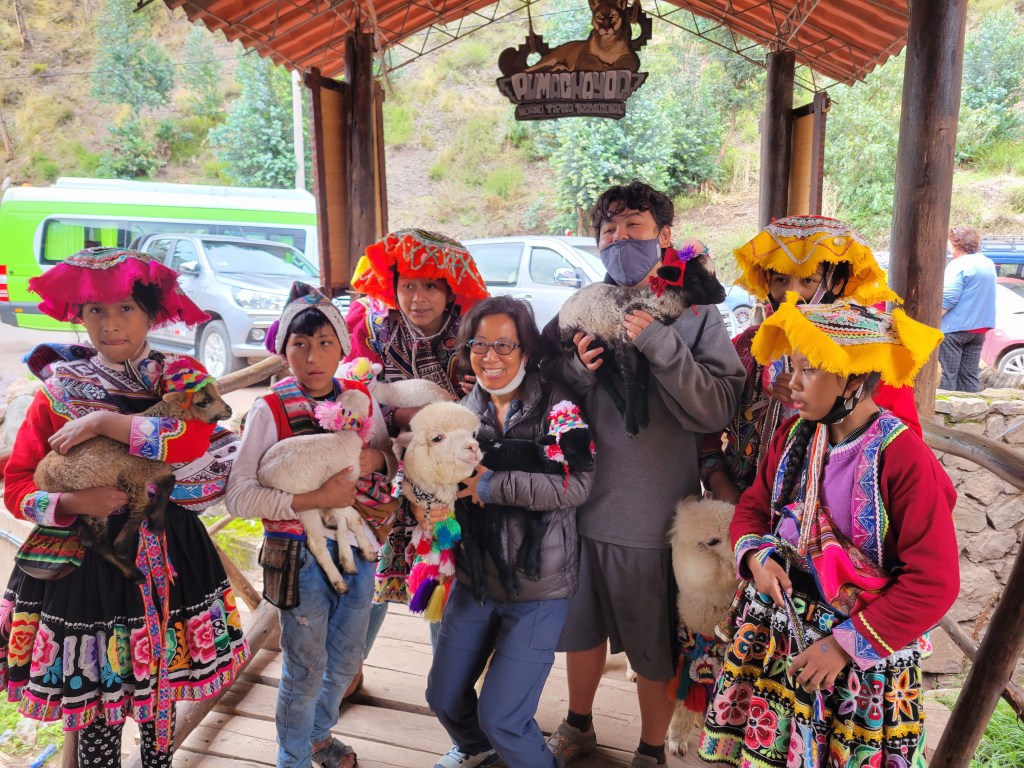
In Peru, we stopped to get some empanadas for breakfast. Within seconds of exiting the restaurant an enterprising gaggle of girls had heaved baby alpacas into Corbin’s and Gloria’s arms and posed around them for pictures. The picture was cute but the speed and efficiency of their ambush was most impressive.   

We arrived in Ciudad Del Este, Paraguay on Sunday, December 26th.  We checked into our $15 room and went to find lunch.  We walked and walked in the 95 degree heat, but everything in town was closed – no corner stores, restaurants, grocery stores.  The city is known for giant malls which Brazilians and Argentinians cross the border to shop in.  However, only one mall was open: Shopping Paris.  Four story mega mall with a mediocre food court.  We stocked up.  

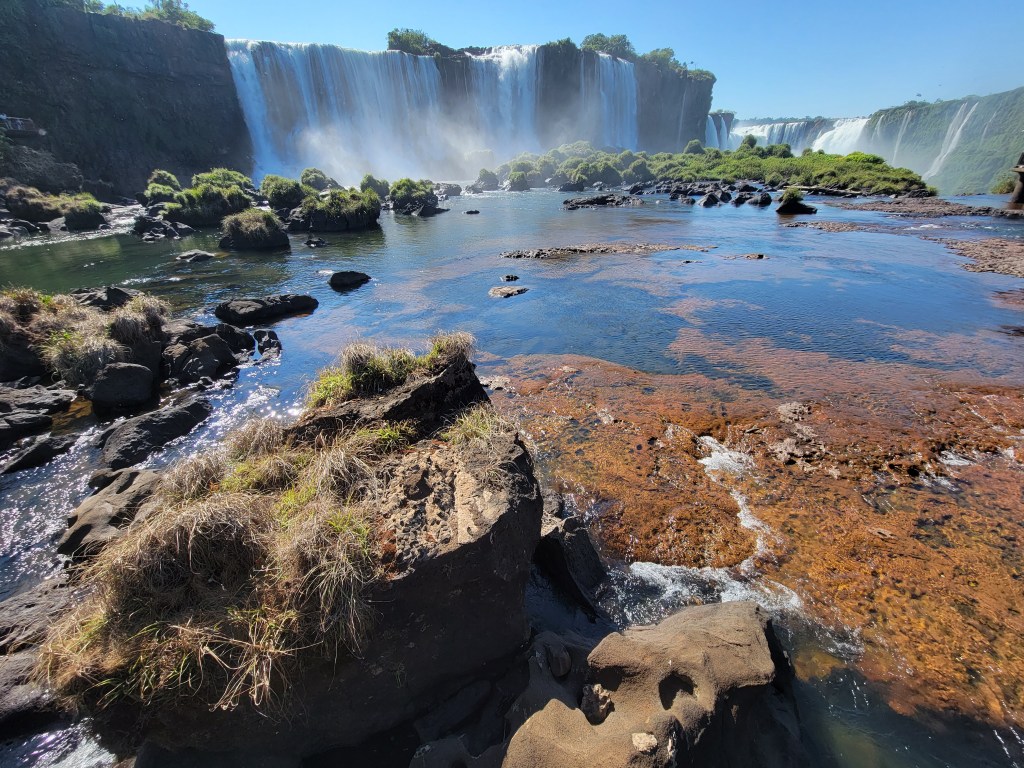
We spared a whole 6 hours to explore Brazil which is roughly the size of the contiguous US.  Crossed over the border from Paraguay to see Iguazu Falls.  The Brazilian side of Iguazu was great, at first mildly impressive, but crescendoing with every new viewpoint in our 2 kilometer hike.  

Near Chalten, Argentina in Patagonia we hiked to the Laguna De Los Tres at the base of Fitz Roy. About 8 miles in and up a set of steep hills we ended at a gorgeous glacier lake and an amazing view.  We ate the yummy food Glo had packed for us and watched as a red fox wandered up and eyed us.

We’ve had an amazing first six months with an incredible list of greatest hits. We wont forget Machu Picchu or the Galapagos. But I do worry that, without attention, all those little moments will fade – moments we shared which lightened our souls, expanded our hearts, opened our minds, or bound our family together. I know that even as we forget the specifics, we are still changed individually and as a family.

ccc

Foods that I think are YUMMY that we’ve had while traveling in Cambodia. “

  1. Boba
  2. Mango leather thingy
  3. Rice and Pork
  4. Soy milk
  5. Fried noodles
  6. Baos
  7. Sugar cane juice

Boba! 

Contents: Black tea, condensed milk, and tapioca pearls.

Mango leather!

Contents: Mango, Mango, mangos!

Rice & Pork! It’s a commonly eaten breakfast dish. We’ve had it many times.

Contents: Pork, steamed rice, fried egg (sometimes), little pickled veggies.

Soy milk!

Contents: water, soybean, sugar and a bunch of other things for boxed soy milk.

Fried noodles!

Contents: Instant Ramen noodles, onions, garlic,  bean sprouts, meat, vegetable, soy sauce, and sweet chili sauce.

Baos!

Contents: Steamed bread, meat, and vegetables.

Sugar cane juice!

Contents: Squished sugar cane, lime, and ice.

MVP of Phase 2: the Sawyer water filter

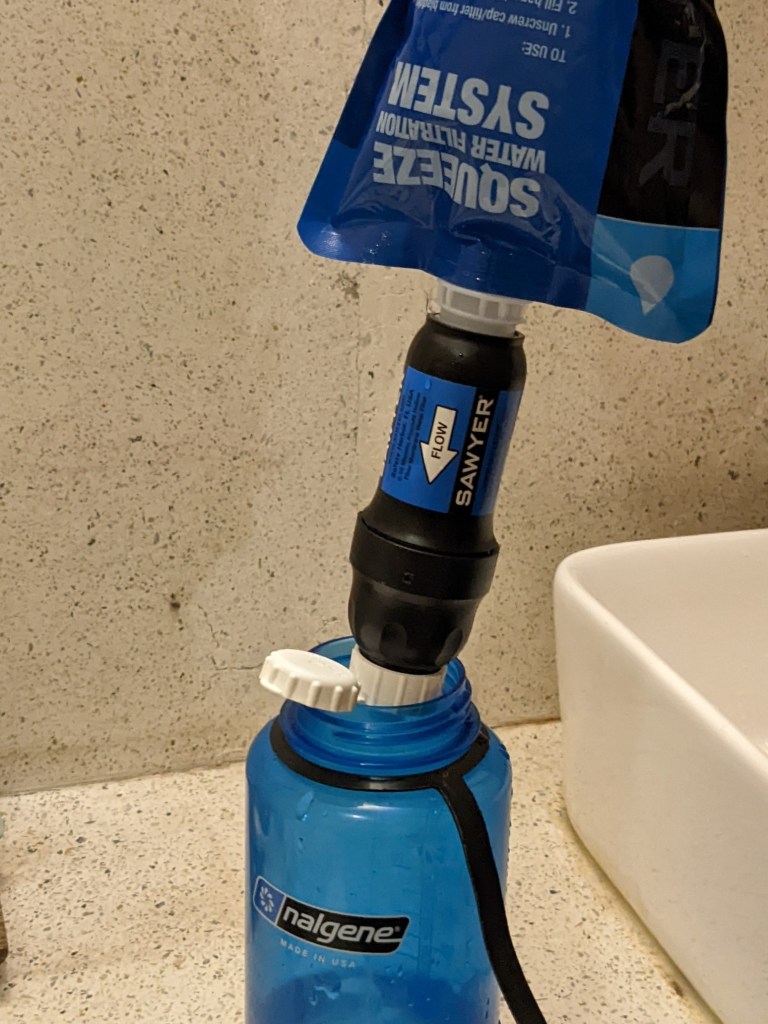
The new purchase* with the most stars in the Lee-Breeden family rating system is our new Sawyer water filtration system. Nearly all the countries we have visited so far have lacked tap water sufficiently filtered for the delicate GI systems of us coddled Americans. The Sawyer system is lightweight, easy to use, works fast, and the filtered water tastes great. As soon as we arrive at each hotel, hostel, or Airbnb, or before every outing, we take out the Sawyer and refill our water bottles, which we then carry on all our day trips. This does befuddle some service-oriented hosts and tour guides who generously and thoughtfully provide refreshing ice-cold bottled water, only to be politely and repeatedly declined in favor of lukewarm water from our water bottles. Payback period from not buying bottled water: about 3 days. Good feelings from knowing that we did not contribute to the glut of used plastic bottles: priceless. Win! 

Grateful every time we can drink water straight from the tap

*Note: We really tried not to buy too many new things for this trip. As we edited our packing lists, we often asked ourselves whether to upgrade with something new or use something we already had. In our basement, we still had perfectly functional stuff we had used the last time James and I had done low-budget international travel (25 years ago, before we’d met). We were especially reluctant to buy new stuff since we were still purging 20+ years of accumulated household stuff and realizing how much unnecessary stuff we owned. We were trying to save our money for the actual trip. We were trying to reduce our carbon footprint. Although our stuff was in good condition, technology in travel gear has really advanced in the last 2 decades.  

GIBBONS

We woke up at 7:00am under mosquito nets in our homestay on the top floor of a pretty rustic wooden home. Then we ate a Cambodian traditional breakfast of rice and pork with vegetables. Then we finished getting ready, got into a truck at about 8:00am, drove to the river, and got onto a long one-person-wide canoe-like boat. When we sat in the boat we could touch the water just by sticking our fingertips over the edge of our boat. Once we were in the boat, we drove 45 minutes upstream to a village and explored it. Then we drove back for around an hour to get to their “headquarters” where we ate lunch and had more pork and rice. Afterward, we got onto the back of a motorcycle and drove for an hour on a painfully sandy road to get to our campsite and to the jungle (was really fun). We had some time to rest and then we went on a short hike in a loop to see resin trees. When we got back to camp at around 6:00pm, we ate dinner and went to bed early. 

The next morning we got up at 3:45am and after plenty of complaints (by me) we were ready to go see gibbons. We went on a long walk for around an hour and a half to a couple of tables and benches. We heard a strange sandy shuffling sound and it was termites communicating and walking around! There were around probably thousands (to be honest I have no idea how many there were but I think it’s safe to say there were a lot) in a long line going somewhere. We waited there for about an hour when we heard the gibbons and ran into the jungle looking for them. We chased the sound for around another hour. Then we finally found the gibbons and watched them for a while. And in the meantime, we ate really dry boring bread with a little bit of scrambled eggs and low-quality pork. After that, we went back to camp and on the way saw a pitcher plant. Mom and the guide also saw a tarantula nest and held up the group for a while. In the meantime, dad really had to poo so he went off the path and did unspoken things (wonder what that could’ve been). When mom finally got there she brought dad some weird soft paper-like thing (toilet paper). Then we made it back to camp where we had lunch and got on a motorcycle for our ride back to the river where we got on a fair and crossed the river. After that, we drove back to BanLung. The End

Covid Disaster

It happened. The one thing that we always knew could happen, that was always nagging in the back of our minds before any new country, it happened. A positive Covid test. 

We had just returned back to the US for a week to visit family before starting Phase 3 and traveling to Southeast Asia. Our plan was to rest, hang out with family, and debrief Phase 2 before heading to Singapore. All went to plan until the day before our flight. Singapore required a negative antigen test to board the flight, so all four of us got in the car and took our quick antigen tests. After a delicious “final” (or so we thought) breakfast with Grandma and Grandpa, we got our test results. Asher, negative. Gloria, negative. James, negative. Me, POSITIVE! 

We were very shocked as I had no symptoms whatsoever. Hoping it was a false positive, I took an at-home antigen (also positive) and the official antigen again (positive x3!). Knowing that it was definitely positive, I was forced into my room to quarantine. Luckily, we had good wifi, and I had all my technology so I wouldn’t get bored. One upside of being quarantined was that I got delicious, homemade meals delivered straight to my bedroom door. Our neighborhood in Carson City was not crowded, so I was able to go on short, masked walks or bike rides without bumping into anyone.  

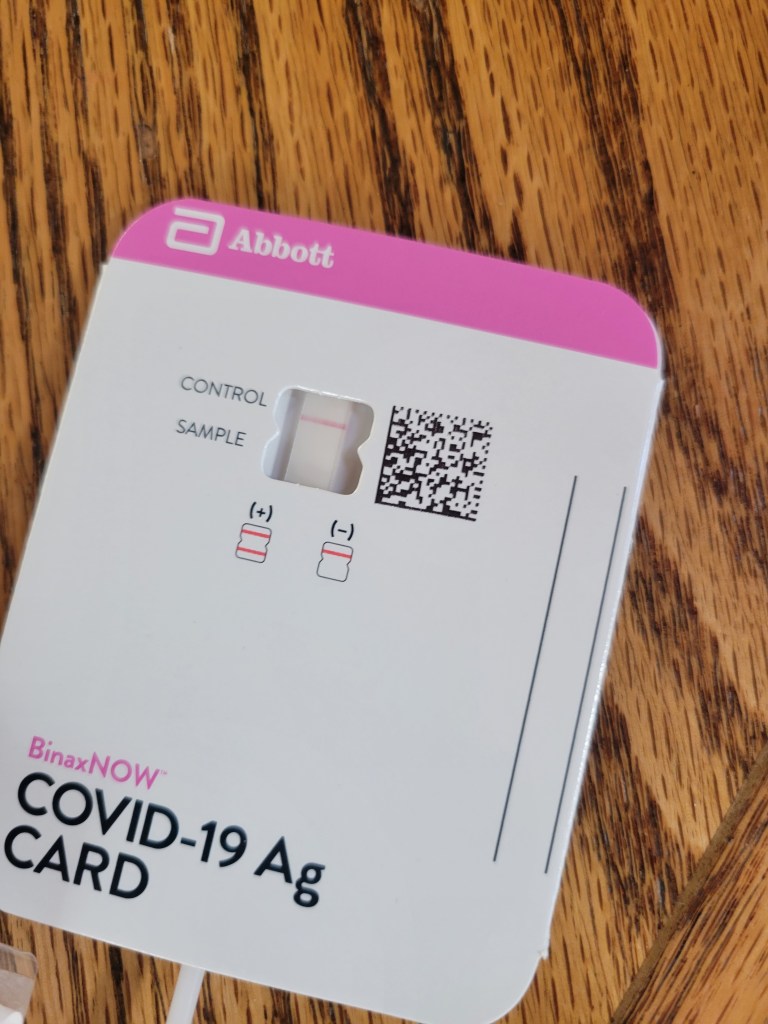
After four days of quarantining, I took an at-home antigen test which came back negative!

Negative antigen test!

We were all very excited and having decided to skip Singapore, we booked our tickets for Cambodia (the only Southeast Asian country with no long quarantine period on entry). I was able to wander around the house, just masked, as CDC recommendations said I should remain masked around others for an additional 5 days. A couple days before our flight, we drove over to CVS to get our pre-flight PCR test. Much to our surprise, it came back positive!

Mom looking so sad after learning I was positive and we couldn’t travel

We canceled flights again and learned that Covid particles can remain in your body for months after antigen tests come back negative. This is because PCR tests can detect even the tiniest particles in your system, even dead virus, while antigen tests are designed to work more quickly and detect the higher viral loads of someone who is definitely infectious. Even though my PCR was positive, my antigen was negative, meaning that I couldn’t spread Covid to my family.

We had booked another set of tickets to Cambodia, hoping that my next PCR test would come back negative. But, worried that I might test positive on PCRs for months to come, we started looking into countries that did not require PCR tests to enter. The time came for the PCR test and we returned to CVS where the pharmacist recognized us from a few days ago. Unfortunately, it came back positive again. We decided we would try one more time. If it was negative, we would fly to Cambodia on our re-re-rebooked flight. If it was positive, we would fly to Egypt, which just required a negative antigen. 

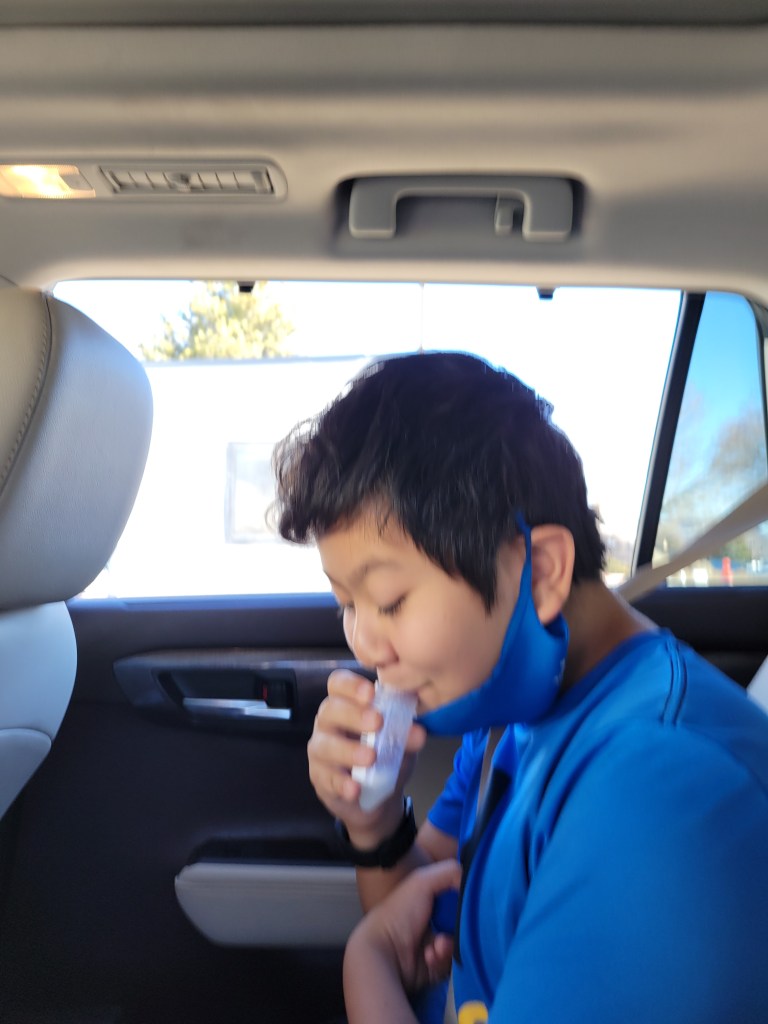
We took our third PCR of the week, which was a spit PCR rather than swab-up-the-nostrils PCR. We spat 5 ml of spit into a tube which is much more difficult than one would imagine.

That night, we all huddled around the screen when our results came in. Asher, negative. Gloria, negative. James, negative. Me, NEGATIVE! We could fly to Cambodia!

The next evening, we drove 30 minutes to the Reno airport, took a 45 minute flight to San Francisco, waited 8 hours in an empty SFO, flew 17 hours on United’s longest flight (UA1, SFO – SIN), waited 10 hours in an empty Singapore Changi Airport, flew 2 hours to Phnom Penh, had issues at customs (since we didn’t have printed copies of our PCR tests), took our on-arrival antigen tests (all negative!), drove 20 minutes to our hotel, and promptly collapsed after our 40+ hour travel “day”!

Duk morech aka Cambodian Lime-Pepper Dipping Sauce by Vireak, Kaoh Trong, Kracheh Province, Cambodia

Pomelo Homestay is located on a small island in the Mekong, a short boat ride across the river from Kratie (sometimes spelled Kracheh), 3 hours northeast of Phnom Penh. We traveled to this small town hoping to catch glimpses of the near-extinct sub-population of Irrawaddy River Dolphins that swim here. We chose this homestay because the Airbnb reviews gushed about what a wonderful host Vireak was, and they were right. When we arrived, both kids were hungry, sweaty and super-grumpy. Vireak immediately sprang into action, providing fresh cold watermelon and then proceeding to whip up a 3-course lunch, which included Oyster Mushroom Tempura served with this simple but absolutely delicious dipping sauce. We mowed through it quickly and had to make a second batch. At home, I will plan to double or even triple the recipe! 

Ingredients:

  • 2 tbsp lime* juice 
  • 1 tsp ground black pepper**
  • 1 tsp sugar
  • 1 tsp fish sauce (more traditional) or salt
  • 1 clove garlic, finely minced

Instructions:

  • Mix everything together!

*The limes that are widely available in Cambodia are tiny – the size of a large grape or maybe small walnut, and have a bit of a stronger taste than the variety sold in American grocery stores. A bit of grated lime zest would kick this sauce up a notch. 

** For an authentic Cambodian taste, use Kampot peppercorns, which are grown in southern Cambodia and have a floral hint and deeper flavor than other varieties. Using freshly ground black pepper – of any variety – will provide a better and stronger flavor.  

Vireak in action! He was arranging our dolphin-watching expedition while simultaneously cooking us lunch at this traditional rural Cambodian stove.

On the merits of spontaneity, especially while traveling during COVID. 

As of just 48 hours prior to landing here in Phnom Penh, we were still unsure whether we would be going to Cambodia or Egypt next. Today we need to figure out how we will get to Sen Mororum tomorrow for our 4 days of volunteering with the Elephant Valley Project. We haven’t yet booked lodging and tours for next week. And we don’t know what country we will go to after Cambodia. For anyone who knows my strong penchant for a thorough plan, this might come as a surprise. 

Lots of countries on our original itinerary, like Australia and New Zealand, are still closed to tourists right now. That is why we were even able to spend so much time in South America. Then during Phase 2, we lost money because we had booked cheap non-refundable air tickets and then couldn’t get into Chile (twice). We tried to “plan” Phase 3 during the still on-going and migrating Omicron spike, and every week, different countries announced changes to travel restrictions and entry requirements. And we learned the hard way that for any given flight or border crossing, we can’t be sure that we’ll all test negative on pre-travel COVID tests. 

So we’ve realized that extreme flexibility is a necessity for traveling right now. 

This is definitely a stretch outside my comfort zone! Fortunately, James is the spontaneous sort and this type of travel is just fine for him!

In Search Of: Cash in Argentina

Argentina has stunning natural beauty, stylish people, excellent Malbec and delicious ice cream in abundance. What they lack is smart monetary policy, at least from a tourist’s perspective.1

Before leaving for Southeast Asia this morning, James and I decided to visit the ATM for more U.S. dollars cash, just in case, because we are now paranoid of running out of cash. 

This is what happened: We didn’t know about the differential between the Blue Dollar and the official exchange rate until we got to Argentina.2 This differential meant that we would essentially pay double if we didn’t pay in U.S. cash or Argentine Pesos exchanged at the Blue Dollar rate. We are cheap, and hate wasting money by paying more than necessary. So instead, we wasted many frustrating hours trying to get cash. 

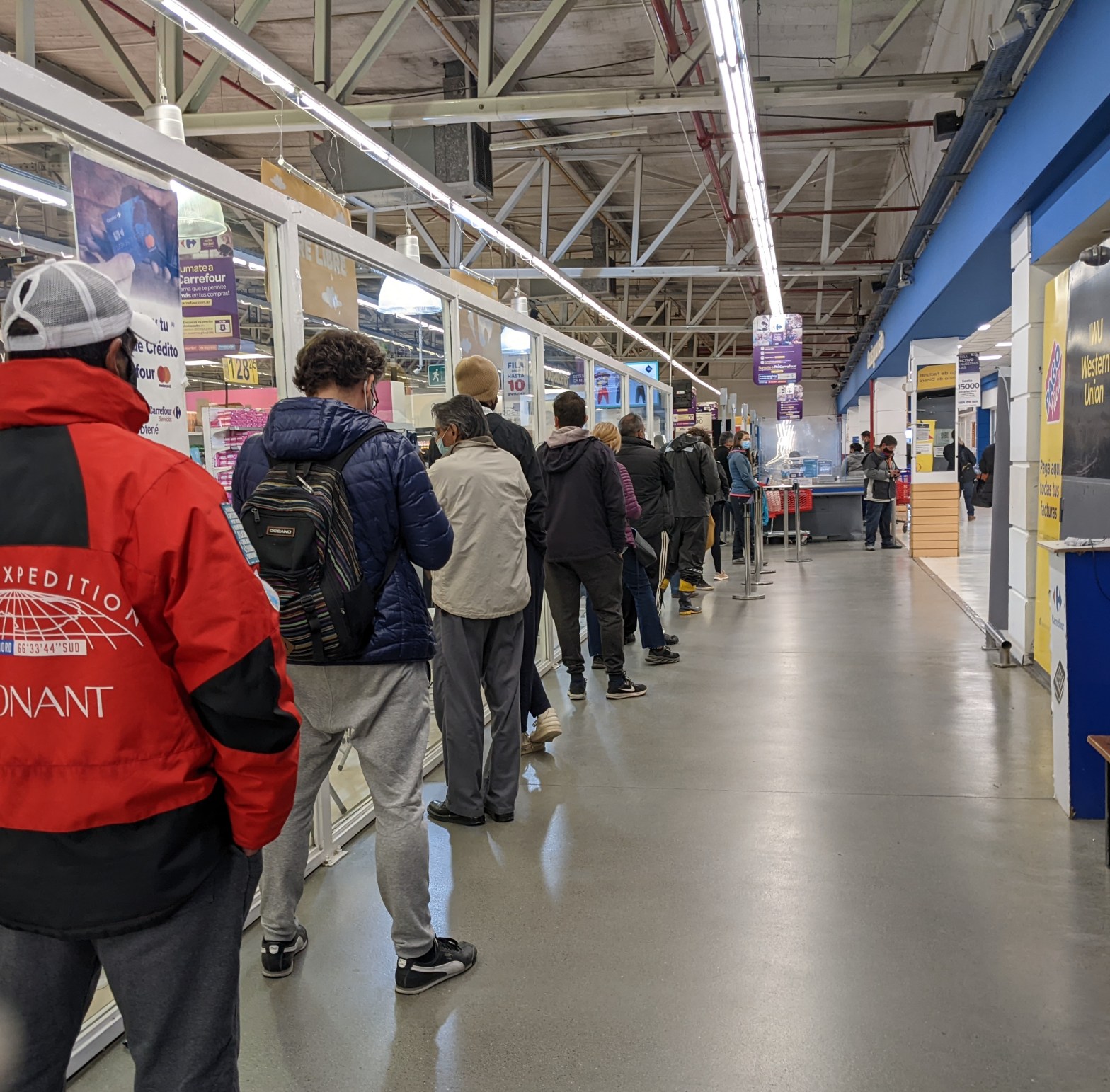
Instead of using ATMs and credit cards, we sent ourselves money using Remitly (which is designed for overseas remittances) and Western Union.3 But first we had to convince our bank that these were not fraudulent transactions. Then we had to find Western Union outlets that were 1) actually open; 2) had a system that was functioning; 3) had cash on hand. We traversed entire towns in search of places that met all three criteria. Then, we had to wait in long lines, along with Argentinians who were trying to pay their electric bills. And then the cash limits meant we sometimes still couldn’t get enough cash (glaciers hikes and penguin-watching are both activities run by monopoly providers and thus quite expensive). Luckily, Argentinians try to save in U.S. dollars, so our taxi driver, a tour company clerk, a baker and an airbnb host all were willing to exchange U.S. dollar bills for AR$ at almost the Blue Dollar rate. Unfortunately, we were not traveling with very many U.S. dollar bills. 

So sometimes, we just paid with a credit card through gritted teeth, knowing we were then paying 50% more. When all else failed, we went to an ATM, which eked out tiny sums of Argentine pesos at the official rate minus exorbitant transaction fees.

Thankfully, the pain of the entire experience was eased by decent Malbec that was only $3 per bottle!

1Although I think economists also agree; just google: Argentina AND IMF.)

2 Are you wondering why? I was too, and have now spent way too much time reading up on Argentinian economics. Long story short: history of hyperinflation + local mistrust of banks + currency restrictions = huge spread between official and black market exchange rates. The crazier thing is that this has been going on for years and is an open secret; newspapers and websites publish both the official and the unofficial “Blue Dollar” rates. As of January 2022, the official government-enforced exchange rate was about 100 Argentine pesos to 1 US dollar, whereas the supply-and-demand-based exchange rate is about 200 ARS to 1 USD. 

3For some odd reason, Western Union is not currently forced (like banks and credit card companies) to comply with the official government exchange rates. 

The 47,000 step Patagonia hike 

I had read that the Mount Fitz Roy hike in El Chalten was very difficult. I may have neglected to tell the rest of the family….

We woke up at around 8:45, had a quick breakfast, and took a taxi 30 minutes to the Hostería El Pilar. Normally, hikers start in El Chalten and go there and back. But, our host told us about the El Pilar path, which is “easier,” slightly shorter, and point-to-point rather than a back-and-forth (meaning more gorgeous and different views). The only downside is the 30-minute ride to get to the start, which isn’t much of a downside as the car ride scenery is stunning as well. 

Map of the path we took, starting from the green dot at the top, going to 1, 2, 3, 2, and down to the black dot

We thanked our taxi driver and started on the hike. Patagonia is known to be windy, and it certainly was. The first 30 minutes was relatively flat and we even crossed a couple of creeks.

In the distance, we spotted a rainbow.

The next couple of hours was a gradual uphill, with the occasional view of Mount Fitz Roy peeking through the forest. Luckily, it was mostly sunny.

After 2 kilometers, we stopped at the viewpoint for the Piedras Blancas Glacier and Lagoon. It was pretty but not as cool as the Huemul Glacier (which we got to see much closer).

Piedras Blancas Glacier and Lagoon in the distance
View of the namesake trio of the hike (Laguna de Los Tres)

We kept hiking until the crossroads, with one trail leading to El Chalten, and the other leading to Laguna de Los Tres and Fitz Roy. 

Asher and I quickly powered ahead of our parents, since they are a *little* bit slow. After the crossroads, there was around 1 kilometer of flat, and we crossed a nice bridge over the Rio Blanco. It was at the bridge where the popularity of the trail hit us. Signs instructed one person at a time to cross the bridge, and crowds quickly piled up on either side as people crossed (some pausing to take pictures, slowing everything down even more).

Even before the bridge, there was a campsite that was filled with a minimum of 50 tents. 

Small view of the massive campsite filled with tents

The last kilometer+ (labeled as a kilometer, felt like much more) to the lagoon was very, very, very steep. It was close to straight uphill and to make it worse, there were plenty of loose rocks, gravel/sand, random crevices from erosion, and lots of switchbacks with high, narrow, and irregular stone steps. To add to the difficulty, there were many people heading back down, people stopped to rest, and people who wanted to go faster and pass. There were numerous signs urging people to stick to the official trail, but with so many people, the official trail was usually the most eroded and hardest to walk on. Not to mention, half the people ignored the signs and just went whatever way they thought was the best. 

We started the climb at the bottom right, after crossing the grey streak

It was definitely a real slog. We needed to pay attention to the ground so we didn’t fall, the sun was beating straight down (no tree cover), the beautiful view was to our backs, we were low on water, and we were trying to go relatively fast so we could make it back in time to meet our taxi driver. 

View behind us as we climbed

Even though there were no clouds in sight, it randomly sprinkled a little bit, though not enough to warrant taking out the ponchos. On the way up, Asher and I spotted what we think were a few Andean condors.

Black speck of a condor in the sky?

Hoping we would be greeted with the lagoon at the top of the uphill, Asher and I scrambled up the last section, only to be severely disappointed. Just when you think you’ve finished climbing, there is one more small-ish, sandy hill to climb.

The final hidden bonus annoying sandy hill

After non-stop complaining, we reached the crest of the final hill and were presented with an amazing view of Fitz Roy and the brilliant blue lagoon in front of it.

Cresting the final hill and getting the gorgeous view of Laguna de Los Tres

We waited a while for our parents while soaking in the beauty and scenery. Once they got there, we had the lunch our mom brought and took plenty of pictures.

Family picture in front of Mount Fitzroy

Knowing he would have trouble on the downhill, my dad started back down. Asher, my mom, and I went down to the lagoon, took pictures, and even saw an adorable little Andean fox!

Asher and my mom, being slower than me, headed back while I explored the area a bit more. I walked about 5 minutes more along the edge of the lagoon to an additional vista that looked straight down to a different, much lower, but still bright blue lagoon. 

The river/waterfall from Laguna de Los Tres that empties into the lower lagoon
Brillant turquoise water of Laguna de Los Tres

The way back down wasn’t too bad, but there were some sections that were steep and sandy, which was a little scary. I caught up to Asher and my mom around two-thirds of the way back down. We filled up our water bottles at the river since all the glacier water is potable (and ice-cold!).

We got to the crossroads and headed towards El Chalten with views of Fitz Roy behind us the whole way back. It was pretty much flat and we passed through forest, marsh, and scrubland.

We set a pretty good pace, around 4km/hour. We made it to a junction with two paths, one to a viewpoint of Fitz Roy, the other Laguna Capri.

We went right to the lagoon, where we were rewarded with views of Fitz Roy behind the stunning lagoon.

Fitz Roy positioned behind Laguna Capri

We finally caught up with my dad at the lagoon, and I even spent some time “gazing into the distance” at Fitzroy.

“Gazing into the natural picture”
Panoramic view

We hiked around 2 km of flat and then we began a descent into El Chalten. We even passed a section where all the trees and bushes were covered in these cool-looking spiky caterpillars.

We had views of the blue-purple Rio Blanco to our left as we descended.

We finally made it to the bottom on time, grabbed dinner and our bags before heading back to El Calafate. 

Entrance sign at the bottom where we finished the hike

By the end, we had hiked around 10 hours, a total of about 16 miles, and according to Asher’s Fitbit – 47,000 steps. Asher, my mom, and my dad all say no more long, tough, poor beauty-to-effort hikes. As for me, I can’t wait for another awesome, long hike!