La Sagrada Familia Huge single room interior/common space for anyone who wants religious Weird blocky statues Public Huge on both the outside and inside. Not finished yet – 145 years and still going Built from scratch
Casa Batllò Multiple rooms Residential Multi-floored Private Completed by Gaudi in his lifetime Big in on the outside, Smallish rooms on the inside, but lots of them.
Similarities Weird colors/patterns Tall Interior and exterior Built to hold a lot of people Stained/colored glass/window panes Both Standout(next to other building or surrounding area) Intricate details lots of mosaics inspired by organic and natural shapes, not normal rectangles
My opinion Overall I prefer the Gaudi house over the church because the house is more functional than the church. In addition the house is functional and still so unique. While the church serves only one function, religion.
Most of our travels were in countries where tap water is considered unsuitable for sensitive American digestive tracts, so it took more effort to stay hydrated. We used our Sawyer water filter a lot (see my earlier MVP post). Many hotels and Airbnbs have electric kettles, so we also often boiled water to refill our Nalgenes. We bought bottled water only when desperate. (We have always avoided buying bottled water and seeing so many plastic water bottles discarded alongside roadways, in fields, and near waterways just reinforced our determination not to buy them.) When we arrived in Athens, we realized that we would be able to drink water from the tap for the rest of the trip, making all of us quite happy. And since we were in Athens, where the ode as a form of poetry originated, I was inspired to write one (or at least, a mini-ode). Thanks to James for his suggestions on this, despite his initial “Um, poetry is not really your strength, is it?” reaction.
ODE TO POTABLE WATER
At last! In Greece, I fill a glass with tap
Now well-rinsed, no more foam-crusted toothbrush
Washing my face in shower, sink? Sip! Splash!
Ask freely for “ice!” or cold fruity slush
No need to search “Can I drink water in…”
No morbid thoughts of germs and E-coli
We’re not in the Global South, nor in Flint
No plastic bottles in landfills sky high
We love engineers who invent and leaders who invest
To make, store, and deliver pure water: we are impressed!
Building pipes must be lead-free, too – for children to ingest
Such easy access to clean water: we know we’re so blessed!
The Segovia Aquaduct in Spain, constructed in 1 AD – an impressive example of early water management strategies.
While we were in Egypt we spent 3 days on a Nile cruise. Our tour group included a lovely Brazilian couple who got engaged right after our cruise, an American travel-blogger from Atlanta, a French couple, and 3 young men (late 20’s) from Lebanon. The three young men: Ali, Zaki, and Hassan invited us to visit Lebanon over drinks one night.
Recalling embassy and port bombings, we were a bit wary. To be fair, I was conflating Benghazi, Libya and Beirut, Lebanon. (Doh; typical American.) Also, Lebanon is in the midst of a huge economic crisis with incredible deflation and people’s bank savings frozen and probably never to be seen again. Finally, we would be going the week prior to the election which was expected to include some violence and rioting. However, given our desire for cultural experiences and home cooked meals, we decided we couldn’t pass up the chance. I always say that getting invited into someone’s home for dinner is the ultimate cultural win, but getting invited to someone’s country and home is even better. We carved 3 days out of our schedule to squeeze in Lebanon and it was awesome.
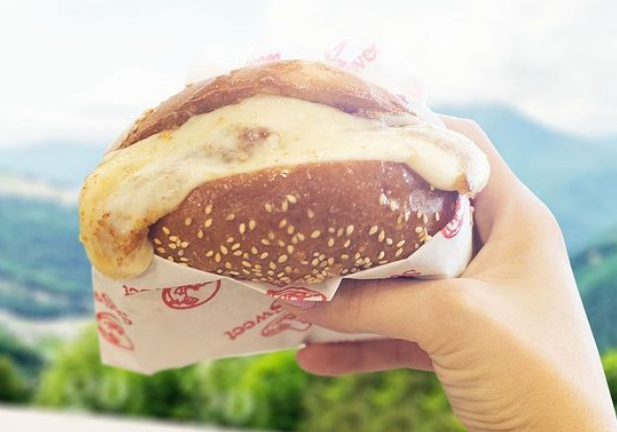
Instead of renting a car, Ali picked us up at the airport. He’s finished med school and is applying for residency programs in the states, but he was such a good chauffeur, host, and tour guide that medicine might be a waste of his skills. He borrowed his mom’s car so we’d have more space. On our way to our Airbnb in Zahle, he took us to Seasweet for Knefe which is at least a pound of sweet molten cheese on a soft bun.
Hours later we were able to move again and he drove us to a nearby hike in Falougha. It was a beautiful three hours of hiking but best was the conversations with Ali, Rabih, Aya, and Zaki about the upcoming election, Lebanon’s unique power sharing government (President must be Maronite Christian, Prime Minister a Sunni Muslim, and the Speaker of Parliament a Shiite), the economic crash, the flight of young educated Lebanese to other countries and more.
That night we got to see one of their apartments and they took us to Al Shams for dinner which was amazing food and where all the locals go to celebrate special occasions. I can see why Drew Binsky (some blogger) rated Lebanese cuisine number 2 after visiting 190+ countries. Al Shams reminded me of Andres Carne De Res in Columbia as it had hundreds of tables and multiple eating areas. We ate, drank and talked for hours.
The next day our chauffeur, Ali, drove us to Baalbek. Baalbek has been inhabited for at least 9000 years. It was named Baalbek in around 1000 BC when the Pheonicians built a temple to Baal there. Later, Baalbek was occupied by Alexander, then Rome, Muslims, Byzantium and then the Ottomans. During the Roman times around 30 BC, they quarried and moved the largest manmade stone blocks of the pre-modern world. The largest was 1240 tons. No one knows how these massive blocks were moved and placed. The Romans went on to build a massive temple complex with the largest known Roman Temple (the temple of Jupiter) and one of the most intact Roman temples in the world (Bacchus). Having been to Ephesus, Jerash, and other famous ruins, I was most impressed with Baalbek.
The next day, Ali was busy and had his cousin Abbas drive us around. Abbas was delightful and his English was decent. He drove us to the Jeita Caves which are stunning, Byblos – another ancient town, Harissa for a sunset, and into Beirut.
The next morning we ate fabulous Pastirma and Shawarma before Ali took us for a tour of the port area and then to the airport.
We had such an amazing time in Lebanon. The food and sites were incredible. But what really made it special was our conversations and the relationships. It’s made us rethink some of our travel strategies. How do you meet people and be invited into their lives? As a family of four, it’s often cheaper and/or easier to rent a car then join a tour, but that keeps us from meeting other tourists, bus drivers, etc. At the start of our trip we planned to do many homestays and volunteer projects. Covid made that much harder. Going forward we are trying to find ways to encourage moments of friendship and sharing in our travels as these are some our favorite moments.
Toum is a Lebanese garlic sauce and it’s one of our favorites. It’s garlicky with a lovely and surprisingly light texture, and goes great with everything. Several weeks before we left California,a young woman selling toum based on her family recipe showed up at our local farmers market. I’d never even heard of this sauce, and with COVID restrictions, she couldn’t offer samples. But I bought a jar to support her, a first-time female food entrepreneur.** Our first jar lasted about 2 days, since James and Corbin started putting it on everything – meat, pasta, veggies. From then on, we stocked up every Saturday. Then, at one of our first meals in Lebanon, at a table laden with different delicious mezze, I dipped a pita into some white stuff and – bam! – the memory of tasting toum for the first time came back. Needless to say, we ordered more for the table. Our gracious, welcoming and enthusiastic Airbnb hosts in Zahle, Georgie and Carolina, shared their recipe and toum-making tricks with us. I’ll still stock up every Saturday at the Anne’s Toum cart at the Grand Lake Farmers Market, but it’s nice to know that I can make a batch on my own if I run out!
Ingredients
1 cup very fresh garlic cloves, peeled (from 3-4 heads of garlic)
Put all ingredients, as well as the food processor bowl and blades, in the refrigerator until cold
In the food processor, blend the garlic cloves and salt, scraping down the sides regularly, until it’s a smooth paste. If you need to add a bit of liquid to make it paste-like, add a tablespoon of the lemon juice.
With the processor running, drizzle in oil in a very very thin stream, very very slowly*. After the first ½ cup of oil, add a tablespoon of the lemon juice. Continue to alternate ½ cup oil and tablespoon of lemon juice, and when you’re out of lemon juice, start alternating the oil with a bit of the crushed ice a little at a time until everything is incorporated.
Serve alongside grilled meat or veggies (or anything!)
*You are making an emulsion which requires drizzling the oil in super-slowly – don’t let any pools of oil form! This is what makes the texture light and fluffy, not goopy with separated oil.
**Anne’s Toum is doing pretty well now – I just looked up her website and was excited to see that her product is now sold through Williams-Sonoma!
The thing I think I miss the most is my own room because while traveling my family shares a room and to be honest there’s very little time to be alone. Yes, I can tell them I’m taking alone time. However, they have to plan and a lot of other things that require disturbing my peace. Personally I think that the essence of alone time is to have some space between you and humanity, and you can’t have that when your family is blabbing about trip planning.
The thing I miss the second most is definitely good wifi because while we are traveling we stay in a various combination between airbnbs and hotels. Though most of those have decent wifi there’s never any guarantee and even like the Doubletree by Hilton or aloft by Hilton don’t have great wifi because they have to make sure it reaches every room and floor so you may be in a room farther away from the wifi router therefore reducing its speed. There’s also the factor that more often than not the quality of the wifi is connected to the city or even the country, and not just the building where it has better or worse wifi/internet access.
The thing I miss the third most is having a lot of space and while this is connected to alone time, I also think it deserves its own explanation. So here’s why I think I miss having a lot of space. I like having a lot of space because I like having a sense of freedom and being stuffed in a small apartment or hotel room next to your family where you can hear basically every word they’re saying is rather unpleasant, and that’s only putting it lightly.
Number 4 on the list is Costco because of its ridiculously large selection of ingredients, furniture, and a variety of other items. Its sheer size of the building, quality, and quantity of the merchandise is at the very least astounding. I love Costco for all of it’s little features and aspects, from the free taste tests of products to it’s cheap high quality goods. We have not found any store as impressive as Costco in other countries.
The 5th thing I miss most is mom’s cooking because I don’t have to leave my house to eat it and also because it’s delicious.
The thing I probably miss the 6th most is Amazon Alexa because it is really convenient to be able to ask anything at any time without needing to look at a device. In addition to that I can hide in my room and play music with good sound quality and I can play basically any song.
The thing that I miss the seventh most is my computer because it has the games I want to play on it and it was the only device I could use to do any online stuff like playing video games, watching videos and streams, and more broad searches. I’m also very grateful that I had this since I didn’t have a phone at the time.
The 8th thing I miss most is the Cheesesteak Shop. To be honest there’s not very much about this place, but I like the food 🙂
The second to last thing I miss most is the perfect weather where we live in Oakland. The reason this is the last is because weather is easily adaptable to. However, I really like perfect weather and so I miss it.
The last thing I miss most is very very surprisingly vegetables because the vegetables on this trip have so far been pretty bad. This is due to the fact that basically every country serves a lot of the same vegetables: tomatoes, onions, potatoes, lettuce. It gets really really boring having those 4 vegetables for almost the entirety of the last like 3-5 months. (I honestly have no idea how long it’s been.
This spinach-cheese dish has always been one of my favorites in the pantheon of North Indian cuisine, and although I’ve tried to make it at home from various recipes found online from my favorite sources, it never looked or tasted quite right. Rajni, my Indian auntie / Indian cooking god mother, said that it’s because many recipes include tomatoes or tomato paste, which changes the flavor. Tomatoes also turn the dish a muddy swamp green. Rajni’s version tasted and looked perfect to me!
Ingredients
1 small bunch fresh spinach, washed thoroughly (about 250 grams)
1 – 1 1/2 cups paneer cubes (about 100 grams)*
1 tbsp heavy cream*
2 medium onions, 1 diced into ½ inch cubes and 1 pureed
1/2” knob of fresh ginger, grated**
2 cloves garlic, minced**
1 tsp green chili, minced**
2 tbsp ghee or oil, divided
1 tsp garam masala, divided
½ tsp curry powder
¼ tsp cumin seeds
2 bay leaves
1 cinnamon stick
Salt to taste
Instructions:
Blanch spinach; blend into a puree
Toss paneer cubes with ½ tsp garam masala. Shallow fry in 1 tbsp ghee, turning cubes so they are light brown on multiple sides. Remove paneer from pan.
Add remaining 1 tbsp ghee to pan; add cumin, bay leaves and cinnamon; let crackle for 30 seconds
Add chopped unions; cook for 1-2 minutes. Add onion puree. Cook until golden brown.
Add garlic, ginger, chili. Cook for 1 minute
Add ground spices and salt along with 1 tbsp water. Cook, stirring occasionally for 1-2 minutes.
Add spinach puree and cooking for 2 minutes, stirring occasionally.
Add paneer cubes. Lower heat and cook for 2 minutes.
Remove from heat. Stir in cream. Garnish with grated paneer and a pinch of garam masala. Serve hot.
* to make it vegan, substitute tofu cubes for the paneer, and cashew cream for the heavy cream. For the tofu cubes: soak 1” thick slabs of tofu in hot salt water for 20 minutes. Remove from water, wrap in clean kitchen towels, and place on a flat surface under a cutting board with a heavy pot on top. Press for 20 minutes, then unwrap and cut into cubes. For the cashew cream, soak ¼ cup chopped raw cashews in hot water for an hour, drain, and blend with ¼ cup water until smooth and creamy.
** Rajni suggested that if you’re making several Indian dishes – all of which tend to include ginger, garlic and green chiles, it is easier to make a big batch of ginger/garlic/chile paste using about equal parts of all three ingredients. In that case, use 3 tsp of this paste.
Rajni, my adopted Indian cooking godmother, with a ripe in-season mango she’d traveled 3 hours to get and then shared with us as a bonus dessert when she learned how much we love mangos!
Indian cuisine has so many different types of bread! During our 3 weeks in India, Asher (our family carbotarian) was thrilled to try every variety, but his all-time favorite was the Kerala Paratha that we had in the southern part of India. In fact, our entire family agreed it was the best. It is an unleavened flatbread that is crispy on the edges, chewy in the middle, with delicious layers to peel apart. It reminds me a lot of Taiwanese scallion pancakes, just without the scallions. The dough is the same as regular parathas; the difference is in the special construction technique.
Ingredients:
1 cup all-purpose flour
¼ tsp salt
½ cup water
4 tsp ghee
Instructions:
1. Mix flour and salt in a bowl. Add ½ tsp of ghee and rub it through the flour until no lumps remain.
2. Add water about 2 tbsp at a time, and mix with your hands. Knead the dough* for 2 minutes.
3. Cover the dough and leave to rest for at least 10 minutes (An hour is even better; the time gives the dough time to fully hydrate and become easier to work with.)
4. Shape the parathas: Break off a golf-ball sized piece of dough**, roll it in flour and make a small ball. On a surface dusted with flour, press the ball into a disc with your fingers, then roll it out with a rolling pin into a thin circle (the thinner the better, with more layers in the final product). Pour a few drops of ghee on top and spread it across the surface. Lightly dust with a bit of flour, and spread the flour across the surface too. Starting at one edge of the circle, roll up the pancake into a cylinder, then wrap the cylinder into a snail-shell-like spiral, tucking the end underneath. Flatten the spiral with your fingers and roll the spiral into a thin flat circle, about 0.5 cm thick.
5. Cook the paratha in a medium-hot, unoiled cast iron skillet or frying pan, flipping over once it starts to change color, in as short as 10 seconds. Sprinkle with 1 tsp of ghee and flip it over. Cook until light brown in spots. Sprinkle the other side with ghee and flip it over, again cooking until light brown in spots. Serve right away, while still hot.
*Experienced home cooks in many cultures seem to have developed an instinct for making dough of the perfect consistency without measuring any ingredients. The ratio of flour to water does depend a bit on the flour and ambient humidity, so you might need to add a bit more flour or water to get to the right texture. This dough shouldn’t be too sticky, and once rested and ready to roll out, the dough should be soft and smooth.
** Keep the rest of the dough covered while you work with each piece.
This Kerala paratha – perfectly crispy & chewy with so many thin layers! – was the best we had in India – from a tiny family restaurant near Vythiri called Mywo Restaurant, where we stopped for a night on our way from Kozhikode to Mysuru.
Corbin and I took a cooking class in the beautiful city of Udaipur. It was really more of an inspiring cooking show, as Rajni, a self-taught home cook, produced delicious masterpieces one after the other in her very compact home kitchen, with minimal assistance from either of us! I especially loved the little tips and tricks that Rajni shared with us, and started thinking of her as an Indian Auntie / Godmother of Indian Cooking. I was delighted when Rajni showed me how to make a proper lassi! I’d previously thought of the lassi as kind of a smoothie, but frozen mango chunks blended with yogurt, mango juice and ice (my previous shortcut version) isn’t quite the same. Rajni’s authentic version has a lovely subtle and sophisticated flavor thanks to the saffron and cardamom.
Ingredients:
1 ½ cups plain fresh yogurt
1 cup water
½ cup milk
2 tsp sugar or to taste
¼ tsp ground cardamom
1 pinch saffron
2 tsp finely chopped pistachios or cashews (optional)
A few raisins or other small pieces of dried fruit (optional)
Instructions:
Mix yogurt with water. Pour into a muslin or cheesecloth bag (or cheesecloth-lined colander) and leave to drain for 30 minutes*
Grind saffron with a teaspoon of warm milk in a mortar and pestle or the back of a spoon in a bowl.
Add sugar, milk, cardamom powder and saffron mixture to yogurt; mix well.
Pour into glasses and chill. Sprinkle with nuts and raisins to garnish, if desired.
*You might be tempted to skip this step, but don’t! It’s important to remove the sour taste. Save the whey for another use; I use it instead of water as a base for vegan soups.
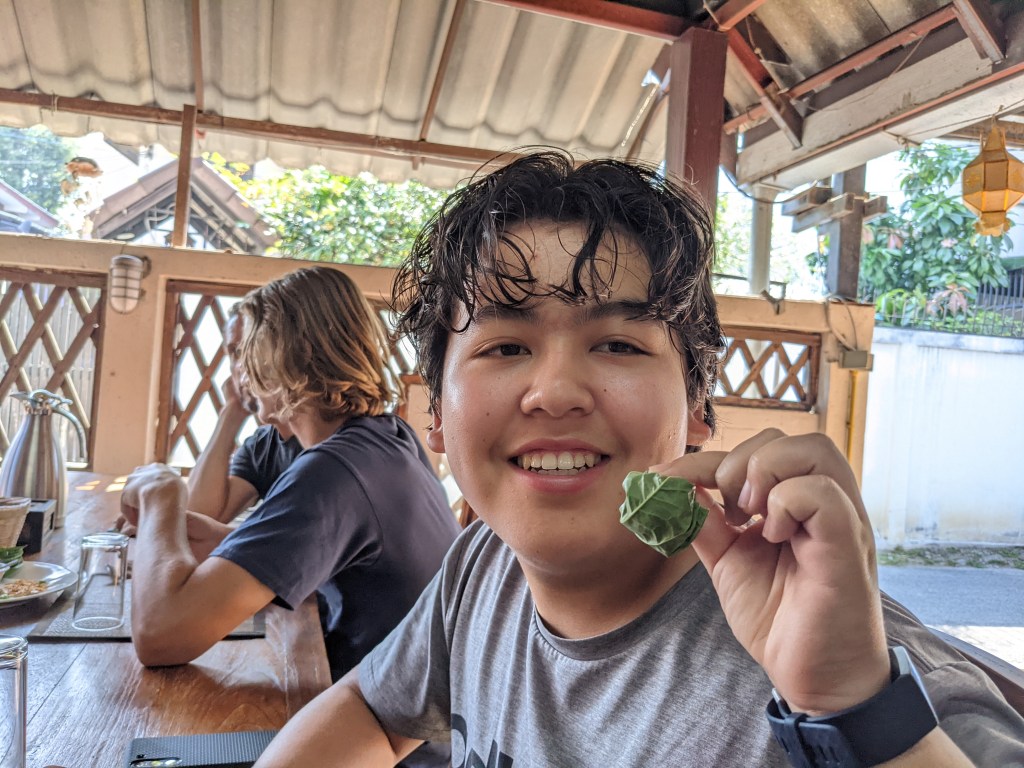
Corbin and I went to an amazing cooking class in Chiang Mai, Thailand. The set-up was terrific; each student had individual, fully-equipped stations for both prepping ingredients and cooking. We made multiple courses, and each student had a choice of what to cook from several options. Our teacher somehow managed to teach 4 different dishes simultaneously to 7 different students of different cooking skills, providing tips, adding an extra dash of this or that, and/or adjusting the burner slightly to make sure everything turned out perfectly. I can’t even carry a conversation about the weather and cook at the same time! Anyway, everything that we made turned out delicious. But before we even started cooking, they served us a welcome snack that is a Thai tradition. It was actually quite simple, and I was honestly pretty skeptical at first but then was absolutely delighted at the explosion of flavors that I ended up eating all the extras. It reminded me of my favorite scene from the movie Ratatouille, when Remy (the rat-chef), describing his love for food to his gluttonous but undiscerning cousin, closes his eyes and sees fireworks when combining ingredients: “Pow pow pow!”
Ingredients for shallot-ginger syrup:
½ cup palm sugar, chopped*
1 shallot, minced
2 cm piece ginger, grated
1/2 Tbsp fish sauce
1/4 cup water
Other ingredients
16 betel leaves*
½ cup shallots, diced to 0.5 cm
½ cup ginger, diced to 0.5 cm
½ cup lime pieces, diced to 0.5 cm**
8 small Thai chilis, left whole if very small or thinly sliced including the seeds if larger
½ cup unsalted peanuts
½ cup coconut flakes
Instructions:
In a dry wok over medium-low heat, toast the peanuts until light brown and remove to cool and wipe out wok.
In the same wok, toast the coconut until light brown and remove to cool and wipe out wok.
Make the syrup: simmer palm sugar, minced shallot, grated ginger, fish sauce and water over medium-high heat until shallots are soft and the syrup is thick. Let cool.
Pour the syrup in a bowl and place all the other ingredients in piles on one big platter, or create individual plates with a bit of each ingredient.
Instruct diners to assemble their own snack by placing a little bit of every ingredient in the middle of a leaf, pouring a bit of the syrup on top, folding the leaf into a little bundle, and popping the whole thing in their mouths. Enjoy!
Notes:
· Palm sugar: this is a common form of sugar in Thailand, and is made from the juice of palm fruit, and cooked down to form a syrup, paste or cake. Light brown sugar would be a good substitute.
· Betel leaves: Called bai chaplu in Thai, these glossy dark green leaves (the size of your palm) don’t have a very strong flavor so they really just serve as the edible packaging. If you can’t find these, you could substitute another palm-sized edible green leaf, but I would stick to something like red leaf lettuce, and avoid anything with a strong flavor (e.g. no kale). (Not to be confused with betel nut, which many people in Asian chew, like chewing tobacco, for its stimulant effects.)
· Lime: The Thai limes used in this recipe have very thin skin and are the size of a walnut. If you are using the variety of limes widely available in the U.S., which have a thicker skin, then zest the lime, peel it, cut the flesh into small bits and toss with the lime zest to get a similar flavor without the bitterness of the thicker white pith.
I was asked to do ANOTHER blog post so I decided I would do one about why I shouldn’t have to write more blog posts. And yes, who would’ve thought I didn’t like doing blog bosts.
Reason 1. When we first had a family meeting about doing a blog I very strongly vetoed the idea.
Reason 2. I am currently doing the most if not the second most blog posts, dad has done like 1 and Corbin has done I don’t know how many but he didn’t write all of the ones he posted, Mom has done like 6-10 and I’ve done 8(including this one). So I feel like until at least dad has done 5 posts then I shouldn’t have to do any more.



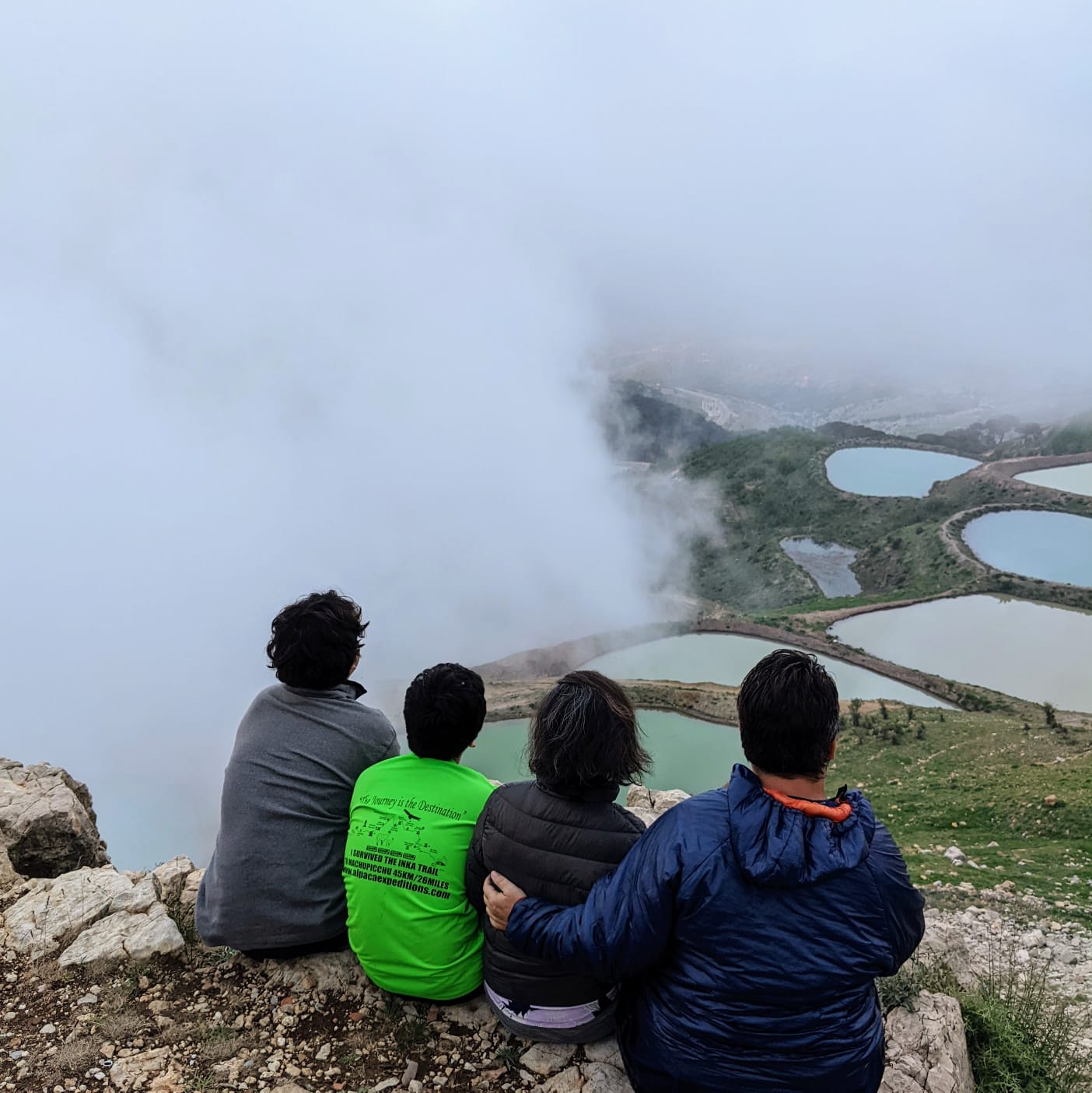 It was a beautiful three hours of hiking but best was the conversations with Ali, Rabih, Aya, and Zaki about the upcoming election, Lebanon’s unique power sharing government (President must be Maronite Christian, Prime Minister a Sunni Muslim, and the Speaker of Parliament a Shiite), the economic crash, the flight of young educated Lebanese to other countries and more.
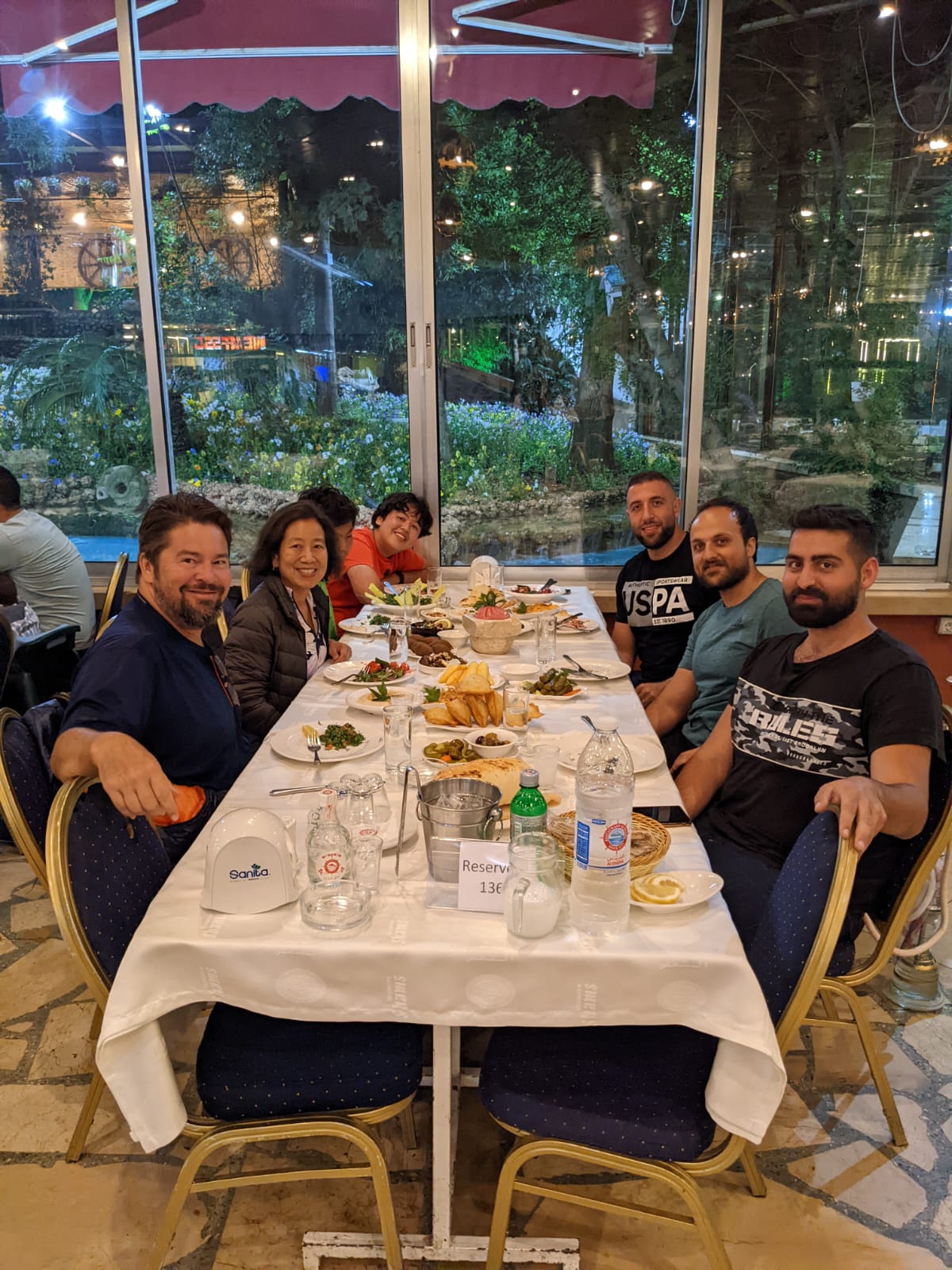 I can see why Drew Binsky (some blogger) rated Lebanese cuisine number 2 after visiting 190+ countries. Al Shams reminded me of Andres Carne De Res in Columbia as it had hundreds of tables and multiple eating areas. We ate, drank and talked for hours.
 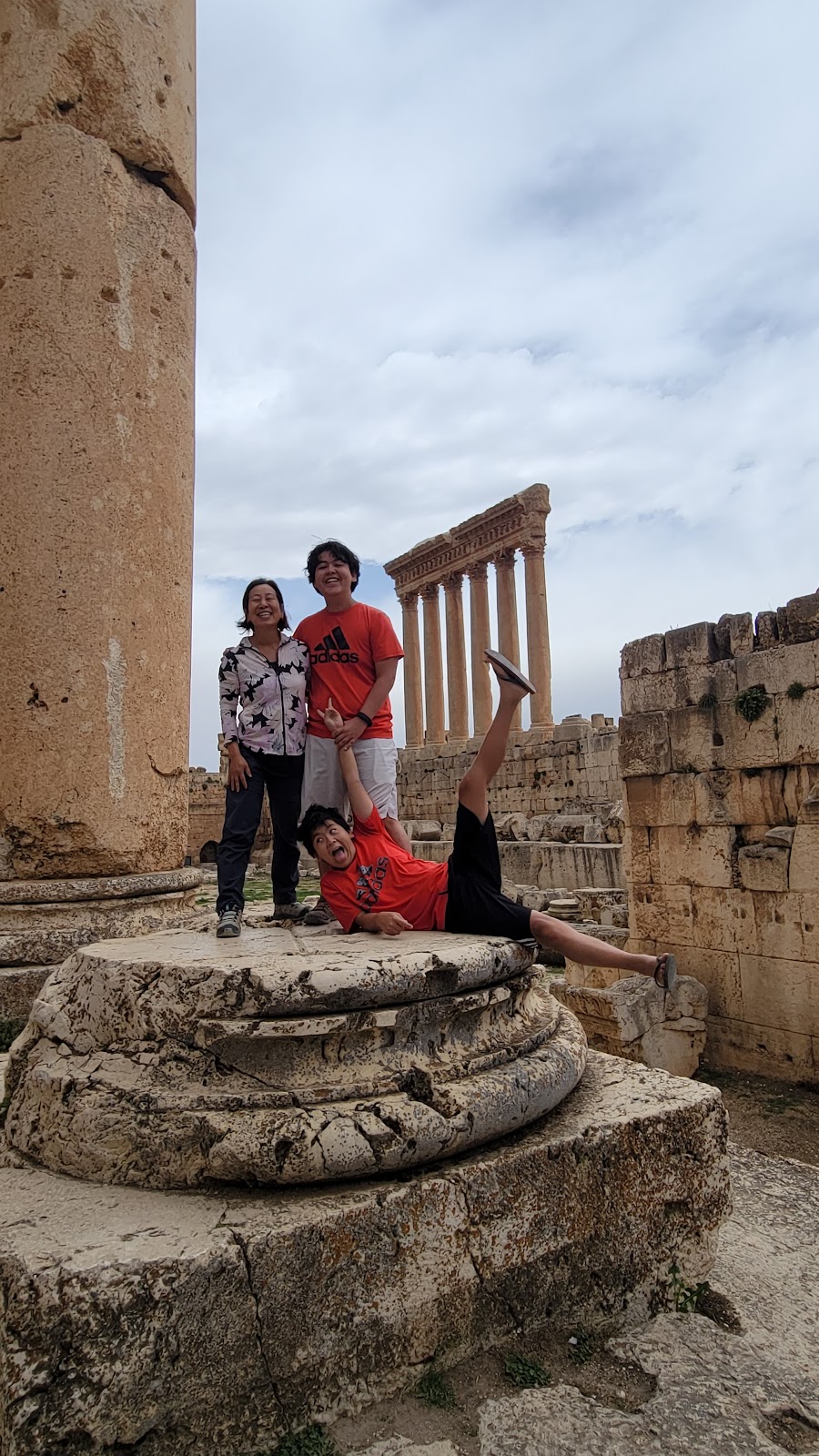 Having been to Ephesus, Jerash, and other famous ruins, I was most impressed with Baalbek.






 Chasing Chicharrones